



Most people have never heard of nitazenes. That’s part of what makes them so dangerous.
While public awareness has grown around fentanyl over the past decade, a new class of synthetic opioids has been quietly making its way into the illicit drug supply across the country, including here in Georgia. Nitazenes are compounds that make fentanyl look mild by comparison. Some variants are estimated to be up to 40 times more potent than fentanyl and hundreds of times stronger than heroin. And because they are often mixed into other drugs without anyone knowing, not even the person selling them, people are being exposed to them without any warning at all.
If you or someone you love uses any street drugs, this is information that could save a life.
What Are Nitazenes?
Nitazenes are a class of synthetic opioids originally developed in the 1950s as potential painkillers. They were never approved for medical use, researchers at the time determined they were too dangerous, and they largely disappeared from public consciousness for decades.
Since 2019, nitazenes have reemerged in the illicit drug supply, and their presence has been growing rapidly. Data from the Centers for Disease Control and Prevention on nitazene-involved overdose deaths show that cases continue to rise, with more than 1,100 fatalities confirmed through CDC’s State Unintentional Drug Overdose Reporting System, though experts believe the true number of Americans who have died from nitazenes since 2019 could be as high as 2,000.
Deaths are likely underreported because nitazenes were not routinely tested for, there are only limited forensic toxicology labs that test for them, meaning many cases may have been missed entirely.
Nitazenes come in multiple chemical variations, including isotonitazene, protonitazene, metonitazene, and etonitazene, each with slightly different potency profiles. Because they come in multiple chemical variations, regulators and researchers struggle to keep up, and many versions remain technically legal until individually scheduled.
How Potent Are Nitazenes Compared to Fentanyl?
The potency numbers are staggering. Nitazenes were developed in the 1950s as potential painkillers and were deemed unsafe for medical use. They can be up to 40 times more potent than fentanyl and 500 times stronger than heroin.
To put that in context: fentanyl itself is already approximately 50 times more potent than heroin. The fact that some nitazene compounds exceed even fentanyl’s potency by multiples means that a dose invisible to the naked eye, an amount so small it could fit on the tip of a finger, can be fatal.
Their extreme potency means even a tiny dose can be fatal. Because they are often cut into street drugs without disclosure, users may consume them unknowingly. Dealers themselves may not realize what’s in their supply, since there are currently no reliable, ground-level testing methods to detect nitazenes.
How Are Nitazenes Getting Into Georgia’s Drug Supply?
Nitazenes don’t typically arrive as a standalone product that someone intentionally seeks out. They arrive hidden inside other drugs, and that’s what makes the exposure so unpredictable and so dangerous.
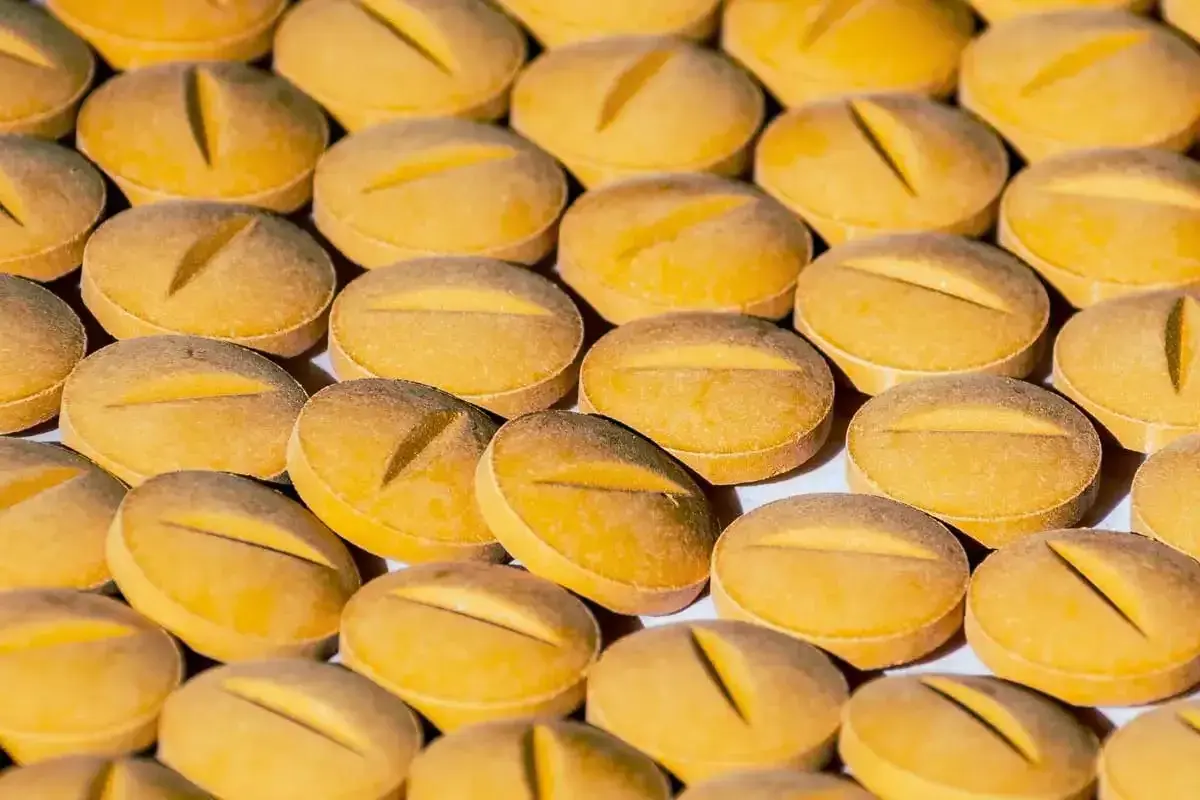
Nitazenes have been detected in counterfeit pills, heroin and fentanyl supplies, cocaine, and even synthetic cannabis. Someone buying what they believe to be a pressed oxycodone pill, a bag of heroin, or even cocaine may have no idea that a nitazene compound has been added.
Georgia has not been immune to this threat. The Drug Enforcement Agency handed out eight indictments to Chinese companies and employees in October 2023 for importing nitazenes, fentanyl, xylazine, and other substances into the U.S., and found that the companies had shipped two types of nitazenes to Georgia and Florida.
Nitazenes are predominantly sold online, both on the clear web and dark web, and are often laced into other substances to increase their potency. The people distributing them at the street level may genuinely not know what they’re handling.
Why Nitazenes Are So Much More Deadly Than Fentanyl
Beyond raw potency, several factors combine to make nitazenes uniquely lethal:
No warning. Because nitazenes are hidden in other drugs, there is no opportunity for a user to make an informed decision about exposure. The first sign that nitazenes were present is often an overdose.
Unpredictable dosing. Street drugs are not produced in controlled laboratory settings. The distribution of nitazene compounds within a batch of another drug is uneven, meaning one portion of a supply could contain a fatal concentration while another portion contains almost none. This unpredictability makes every exposure a gamble.
Rapid onset. Like fentanyl, nitazenes act quickly. Respiratory depression, the mechanism by which opioid overdose kills, can occur within minutes of exposure, leaving a very narrow window for intervention.
Naloxone may require multiple doses. Naloxone can be used to treat nitazene-related opioid overdoses, but multiple doses of Narcan may be needed if nitazenes are involved. This is a critical piece of information for anyone carrying naloxone, a single dose, which may be sufficient to reverse a fentanyl overdose, may not be enough when nitazenes are present. Administer additional doses if the person does not respond, and always call 911.
Difficult to detect. Standard drug testing strips do not detect nitazenes. Fentanyl test strips, which many harm reduction programs distribute, will not catch nitazene contamination. Even toxicology labs vary significantly in their ability to test for the many different nitazene analogs.
Recognizing a Nitazene Overdose
Because nitazenes are opioids, the signs of a nitazene overdose mirror those of any opioid overdose, but may progress faster and be more resistant to reversal:
- Unconsciousness or unresponsiveness
- Slow, shallow, or stopped breathing
- Choking or gurgling sounds
- Blue or gray lips, fingertips, or skin
- Pinpoint pupils
- Limp body
- Pale, clammy skin
If you witness these signs, act immediately:
- Call 911
- Administer naloxone (Narcan) right away, be prepared to give multiple doses
- Perform rescue breathing if the person is not breathing
- Place the person in the recovery position if they are breathing but unconscious
- Stay with them until emergency services arrive
Georgia’s 911 Good Samaritan Law provides legal protection for people who call 911 to report an overdose in good faith, do not let fear of legal consequences stop you from calling for help.
The Link Between Nitazenes and Opioid Use Disorder
The emergence of nitazenes is not just a public safety crisis, it is a deeply important reason why people struggling with opioid use disorder need professional treatment now more than ever.
Every person who continues to use street opioids in Georgia today faces an unpredictable supply that may include fentanyl, xylazine, nitazenes, or a combination of all three. The landscape has never been more dangerous. There is no way to know with certainty what is in any batch of street drugs, and the margin for error has effectively disappeared.
For someone in the grip of opioid use disorder, this reality makes the conversation about treatment more urgent, not less. The question is no longer whether the drug supply is safe enough to continue using while considering options. It isn’t. The question is how to access help before the next exposure becomes fatal.
Safe, Medically Supervised Opioid Detox in Georgia
At Cobb Outpatient Detox in Marietta, Georgia, we provide medically supervised outpatient detox for opioid use disorder, including dependence on fentanyl and the increasingly contaminated street opioid supply. Our ASAM Level 2.7 program uses FDA-approved medications including buprenorphine to manage withdrawal safely, reduce cravings, and help people get through the most difficult phase of opioid detox without putting their lives or their livelihoods on hold.
If you or someone you love is using street opioids in Georgia, regardless of what you believe you’re using, the risk of nitazene exposure is real and present. Treatment is available, it works, and it can begin quickly.
We serve clients throughout Marietta, Atlanta, Smyrna, Kennesaw, Acworth, Woodstock, Douglasville, and the greater Cobb County area. Most major insurance plans are accepted.
Don’t Wait for the Next Dose to Be the Last One
The nitazene crisis is not a distant threat. It is here, in Georgia, in the same supply chains that have been delivering fentanyl for years. And it is taking lives, often without any warning and often from people who had no idea what they were actually using.
If you’re ready to get out of that cycle, we’re ready to help.
Contact us here to speak with one of our admissions counselors. Your information is completely confidential, and our team will respond with the urgency and care your situation deserves.
Treatment works. And in the era of nitazenes, it can’t wait.