




Cocaine appears differently across its diverse forms. You’ll find powder cocaine as a fine, white crystalline substance with a pearlescent quality. Crack cocaine forms solid, off-white to yellowish rocks with a waxy texture. Cocaine paste presents as a damp, clay-like material ranging from off-white to brownish. Cutting agents considerably alter appearance, affecting color consistency and texture. Law enforcement uses specific reagents and spectroscopy to confirm what the naked eye cannot definitively identify.
Powder Cocaine: Appearance and Physical Characteristics
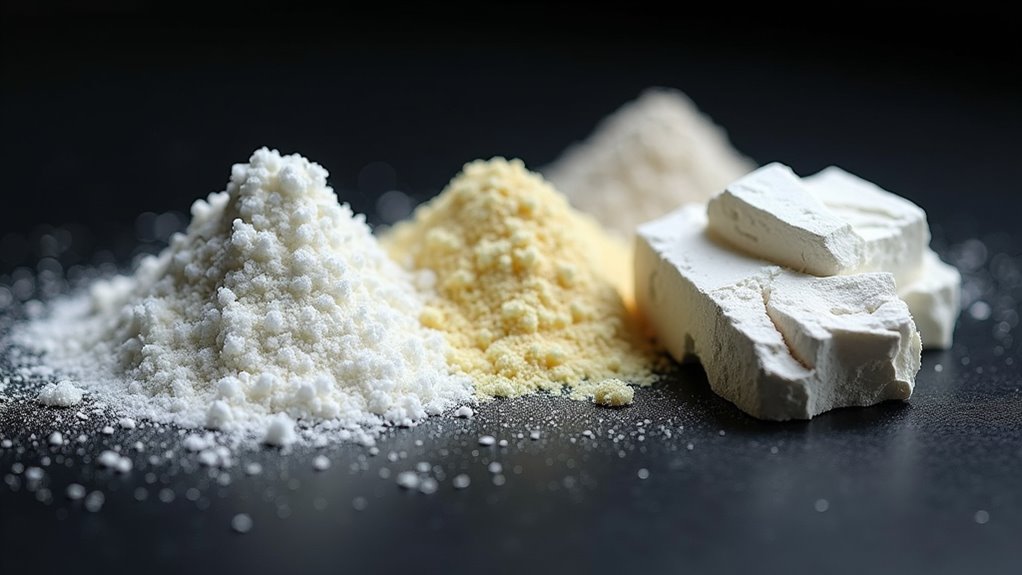
Powder cocaine, chemically known as cocaine hydrochloride, presents as a fine, crystalline white powder with a texture similar to confectioner’s sugar or talcum powder. When examining authentic samples, you’ll notice a slightly shiny or pearlescent quality under direct light, reflecting its crystalline structure. The powder characteristics include a tendency to clump in humid conditions due to its hygroscopic nature.
The substance’s color can indicate powder purity, pharmaceutical-grade cocaine appears uniformly white, while street samples may exhibit off-white, yellowish, or grayish hues due to impurities and cutting agents. Pure cocaine has a distinctive numbing effect when placed on mucous membranes and produces a subtle gasoline or chemical scent. You’ll find that genuine cocaine dissolves rapidly in water without leaving residue, distinguishing it from many adulterants.
Crack Cocaine: Identifying Rock Forms and Variations
Derived from powder cocaine through a base extraction process, crack cocaine presents as solid, irregularly shaped rocks or “stones” that typically range from off-white to yellowish-tan in color. These rocks exhibit a hard, waxy texture that can be broken apart, revealing crystalline structures inside. You’ll notice crack variations depending on manufacturing techniques and adulterants used.
Rock characteristics often include:
- Size: 0.1 to 3 cm in diameter
- Texture: Hard exterior with brittle properties
- Appearance: Sometimes porous with small holes or fissures
- Luster: Can appear slightly shiny or matte
Crack may occasionally display reddish or brownish hues indicating impurities or oxidation. When examining suspect material, you’ll find that higher-quality crack typically has a more uniform coloration and consistency, while heavily adulterated samples show inconsistent textures and coloring.
Cocaine Paste: Visual Properties Before Processing
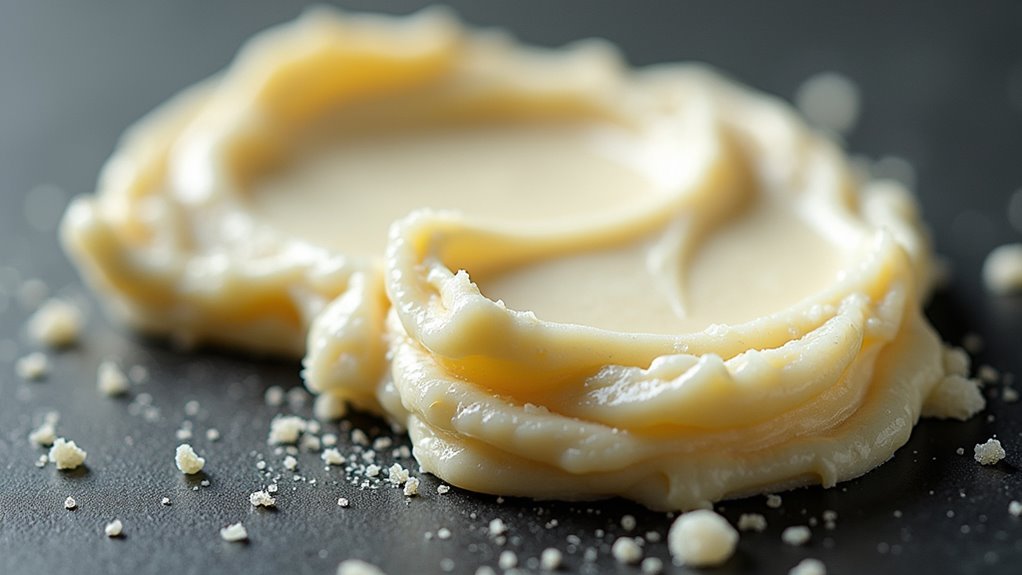
Unlike the finished rock form of crack cocaine, cocaine paste (also known as “pasta base” or “paco”) represents an intermediate stage in cocaine production. You’ll recognize this substance by its damp, paste-like consistency resulting from initial cocaine extraction processes. The coloration varies considerably based on production methods and solvent quality.
| Property | Description | Visual Indicator |
|---|---|---|
| Texture | Semi-solid, moist | Malleable, clay-like appearance |
| Color | Off-white to yellowish-brown | Darker hues indicate more impurities |
| Consistency | Varies by moisture content | Ranges from crumbly to sticky |
Natural variations occur due to differences in coca leaf alkaloid profiles and extraction techniques. The paste typically contains numerous chemical impurities not present in refined cocaine hydrochloride. You’ll observe these as discolorations, with higher-quality extractions appearing lighter and more homogeneous.
Cutting Agents: How Additives Alter Cocaine’s Appearance
When dealers adulterate cocaine with different substances, they greatly modify its visual characteristics, physical properties, and chemical composition. Common cutting agents like levamisole, benzocaine, and lactose transform the drug’s appearance from its natural pearly white sheen to varied consistencies and colors.
Additive effects are visible when mannite or inositol creates a crystalline sparkle, while lidocaine produces a flakier texture. You’ll notice that higher purity levels correlate with consistent coloration, typically off-white to slightly yellow. Lower-quality product often displays a chalky, dull finish with uneven coloring.
Some additives deliberately mimic cocaine’s numbing properties while visually blending seamlessly. Phenacetin adds a yellowish tint, whereas boric acid creates a fishscale-like sheen that falsely suggests higher quality.
Legal Identification Methods: Tools Used by Authorities
While cutting agents alter cocaine’s appearance, law enforcement agencies employ sophisticated testing methods to identify the drug regardless of adulterants. Field identification techniques include color-based presumptive tests like Scott’s reagent, which turns blue when cocaine is present. These rapid assessments provide probable cause for further investigation.
For definitive identification, forensic analysis employs chromatography and mass spectrometry to separate and identify cocaine molecules with near-perfect accuracy. Infrared spectroscopy creates molecular “fingerprints” by measuring how substances absorb light. You’ll find that modern laboratories can detect cocaine concentrations as low as nanograms per milliliter, while also identifying specific cutting agents. These technologies provide court-admissible evidence, distinguishing cocaine from legal substances that may appear similar to the untrained perspective.
Frequently Asked Questions
Can Cocaine Appearance Change When Stored Long-Term?
Yes, cocaine’s appearance can change during long-term storage. You’ll notice potential discoloration as white powder may yellow or brown over time. Cocaine degradation occurs when exposed to heat, humidity, light, or air, affecting both its visual characteristics and potency. The crystalline structure may clump or appear more powdery depending on storage conditions. Chemical breakdown can alter texture and color, particularly at edges or surfaces where environmental exposure is greatest.
How Does Pharmaceutical-Grade Cocaine Differ Visually From Street Samples?
Pharmaceutical-grade cocaine displays higher purity, appearing as uniformly white, crystalline powder with consistent texture and minimal discoloration. You’ll notice it lacks the off-white, yellowish, or grayish hues common in street samples. Street adulterants greatly alter visual characteristics, introducing variable textures, color inconsistencies, and irregular crystalline structures. The pharmaceutical version also exhibits distinctive light-reflective properties when examined microscopically, while street versions contain visible impurities that compromise its crystalline integrity and natural sheen.
Do Different Geographic Regions Produce Visually Distinct Cocaine?
Regional variations in cocaine’s appearance exist across producing areas. You’ll notice distinctive visual characteristics based on origin: South American cocaine often appears whiter with higher purity, while samples from different processing regions may exhibit subtle color variations from bright white to off-white or slightly yellowish tints. These differences result from varying production methods, chemical precursors, and purification techniques. Processing signatures can sometimes help forensic analysts determine geographical source through technical analysis of residual alkaloids and cutting agents.
Can Cocaine Be Visually Confused With Legal Substances?
You can easily mistake cocaine for several legal substances due to its white, crystalline appearance. Common visual resemblances include baking soda, powdered sugar, cornstarch, and certain medication powders. Drug dealers often exploit these similarities by adding cocaine adulterants like lidocaine or benzocaine that maintain the expected appearance. Legal substance similarities extend to texture and consistency, complicating visual identification. Only laboratory testing provides definitive confirmation, as visual inspection remains unreliable for distinguishing cocaine from legal white powders.
How Does Humidity Affect Cocaine’s Physical Appearance?
Humidity greatly alters cocaine’s physical properties through moisture absorption. You’ll notice powder cocaine becomes clumpy and sticky when exposed to high humidity, as it’s hygroscopic and readily absorbs atmospheric moisture. The substance’s crystalline structure deteriorates, resulting in reduced fluffiness and increased density. This moisture absorption affects both appearance and handling characteristics. In extreme cases, prolonged humidity exposure can initiate hydrolysis, potentially degrading the compound’s chemical stability and altering its visual presentation.