





You’ll find effective support for opioid addiction recovery through several evidence-based group programs. Narcotics Anonymous (NA) offers a structured 12-step approach with proven success rates of 81% sobriety after six months. SMART Recovery provides science-based tools drawn from cognitive behavioral therapy, while NAR-ANON helps families heal together. The combination of peer support and professional treatment creates the strongest foundation for long-term recovery. Understanding each program’s unique approach will help you choose the best path forward.
Understanding the Power of Peer Support in Recovery
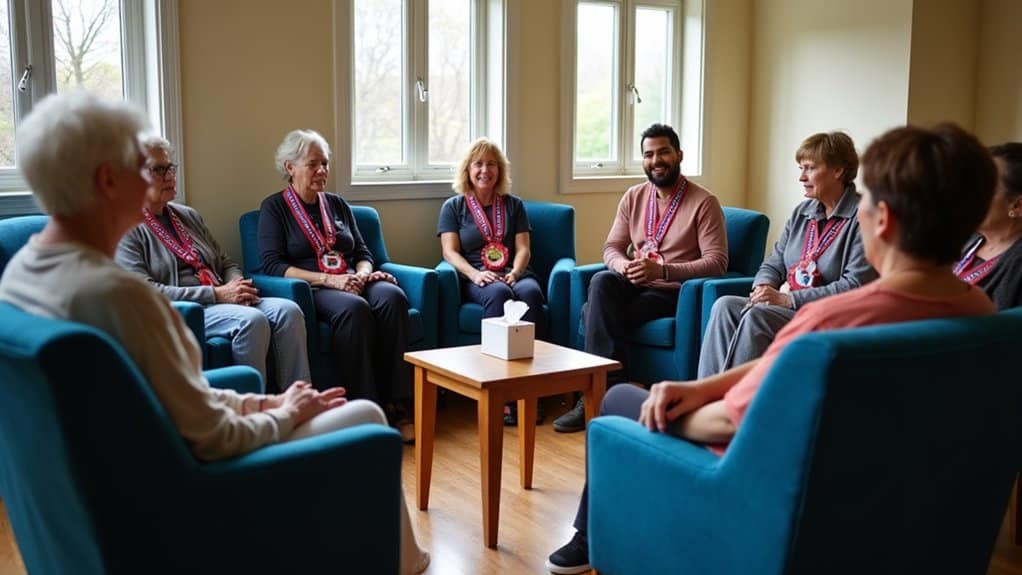
While many treatment approaches exist for opioid addiction, peer support groups have emerged as a powerful evidence-based intervention that considerably improves recovery outcomes. Research demonstrates multiple evidence-based benefits, including higher abstinence rates, reduced relapse risk, and enhanced treatment adherence compared to traditional approaches.
These community-centered practices create lasting impact through mentorship relationships that benefit both participants and mentors. You’ll find that peer support programs effectively combat isolation while building essential social connections that reinforce recovery. The helper therapy principle shows that those who provide support to others in recovery often experience therapeutic benefits themselves. The ability to share personal experiences of recovery from substance use disorder creates authentic connections that strengthen the healing process. Individuals who engage with a peer support mentor are more likely to maintain long-term sobriety through and after treatment.
Systematic reviews of 48 studies confirm that participants experience improved substance use outcomes, better mental health, and reduced healthcare system dependence. For individuals in criminal justice systems or those with complex recovery needs, peer support groups prove particularly effective at maintaining engagement and promoting sustained sobriety.
Narcotics Anonymous: A Closer Look at the 12-Step Approach
In Narcotics Anonymous, you’ll find a structured recovery path built on core meeting principles that emphasize honesty, open-mindedness, and willingness to change.
Through NA’s step-by-step approach, you systematically address your addiction by acknowledging powerlessness, developing faith in a higher power, and conducting thorough personal inventories. Jimmy K founded this proven framework in 1953 to help those struggling with drug addiction find lasting recovery. The program welcomes anyone with addiction, regardless of their specific substance of choice. Research shows that active engagement in meetings and step work leads to better substance use outcomes compared to merely attending meetings.
These foundational elements, combined with regular group attendance and peer support, create an extensive, all-encompassing, or wide-ranging framework for maintaining long-term sobriety while rebuilding your life on spiritual principles.
Core NA Meeting Principles
How does Narcotics Anonymous (NA) implement its foundational principles to support recovery? The program’s core structure integrates spirituality through personal applications that don’t require specific religious beliefs. You’ll find that NA meetings emphasize surrendering to a higher power of your understanding while focusing on moral inventory and honest self-assessment. Volunteer members lead every meeting, creating an environment of shared experience and understanding. The program was established in the early 1950s and modeled its approach after Alcoholics Anonymous.
The 12-step framework guides you through a systematic process of recovery, starting with acknowledging powerlessness over addiction and progressing to detailed character evaluation. You’ll work with sponsors who provide mentorship and accountability, participating in group discussions that foster transparency and trust. Through these meetings, you’ll engage in regular self-examination, share experiences with peers, and develop practical strategies for maintaining sobriety. Studies show 81% remain sober after six months of program completion. The community aspect strengthens your recovery journey through mutual support and diverse perspectives.
Building Recovery Through Steps
The 12-Step approach in Narcotics Anonymous operates through a detailed, wide-ranging, and all-encompassing three-dimensional framework that addresses physical compulsion, mental obsession, and spiritual self-centeredness.
Your self-discovery journey begins with acknowledging powerlessness over addiction and surrendering to a higher power of your understanding. You’ll progress through systematic steps of self-assessment, including moral inventory-taking and sharing your findings with trusted individuals. Studies have shown that this approach is as effective as cognitive behavioral therapy and other clinical interventions.
The spiritual transformation emphasis becomes evident as you work to remove character defects and make amends to those you’ve harmed. You’ll maintain your recovery through daily self-reflection, continuous inventory practice, and service to others. This structured approach transforms self-centeredness into moral consciousness while fostering meaningful connections within the recovery community through sponsorship and active participation.
SMART Recovery: Science-Based Alternative to Traditional Programs

SMART Recovery equips you with evidence-based tools drawn from cognitive behavioral therapy and rational-emotive behavior therapy to overcome opioid addiction. You’ll learn practical strategies to identify and manage triggers through proven techniques like cognitive restructuring and urge-coping methods.
The program’s scientific approach helps you develop concrete skills for maintaining sobriety while addressing the underlying thoughts and behaviors that contribute to addiction. Their commitment to self-empowerment sets them apart from traditional support groups. The program operates on a four-point system designed to build motivation and manage urges effectively. With meetings available in over 30 countries, SMART Recovery provides accessible support options globally.
Evidence-Based Tools For Recovery
While traditional recovery programs often emphasize spiritual components, SMART Recovery stands out as a science-based alternative that employs cognitive-behavioral techniques and evidence-based tools to support addiction recovery. The program’s structured approach addresses both addiction severity factors and dual diagnosis strategies through validated therapeutic methods. The focus on problem-solving skills helps participants develop practical strategies for long-term success. The program provides daily online meetings to ensure consistent support and accessibility for all participants. SMART Recovery places emphasis on self-empowerment rather than powerlessness in addressing addiction.
You’ll find practical tools designed to enhance your recovery journey:
- CBT-based worksheets and checklists to track progress and build self-efficacy
- Mindfulness techniques for managing triggers and reducing cravings
- Behavioral activation exercises that reinforce positive habits while addressing unhealthy patterns
These evidence-based interventions help you develop essential coping skills while offering flexibility in your recovery goals. Whether you’re pursuing abstinence or moderation, SMART Recovery’s tools adapt to your needs, supported by ongoing research demonstrating comparable success rates to traditional programs.
Managing Triggers Through CBT
Managing triggers effectively through Cognitive Behavioral Therapy (CBT) represents a cornerstone of SMART Recovery’s science-based approach. You’ll learn to identify personal triggers through structured worksheets and self-monitoring techniques, while developing targeted coping responses through role-playing exercises.
The program employs stimulus control techniques to help you modify or avoid trigger exposure, while teaching practical refusal skills for high-risk situations. You’ll challenge problematic beliefs about substance use through evidence-based questioning and cost-benefit analysis. Through behavioral activation and lifestyle stabilization strategies, you’ll increase engagement in meaningful activities that support your recovery.
CBT tools like the ABC Model help you systematically analyze trigger patterns, while mindfulness techniques provide immediate strategies for managing acute cravings. This all-encompassing approach builds your self-efficacy and reinforces long-term recovery skills.
Online vs. In-Person Support Group Meetings
As recovery support groups adapt to technological advances, both online and in-person meetings offer distinct advantages for individuals seeking addiction treatment. While digital support limitations include reduced non-verbal cues and potential moderation issues, online platforms provide 24/7 accessibility and eliminate geographical barriers.
In-person program benefits encompass structured accountability and immediate tactile community engagement.
Consider these key factors when choosing between formats:
- Financial accessibility: Online groups typically offer free participation without transportation costs
- Privacy needs: Virtual meetings allow pseudonymous participation for those concerned about stigma
- Professional oversight: In-person meetings generally provide trained facilitators and clinical supervision
Your choice should align with your specific needs, considering factors like work schedule, mobility constraints, and comfort with technology. Both formats can effectively support your recovery journey when properly utilized.
Family Support Groups: Healing Together Through NAR-ANON
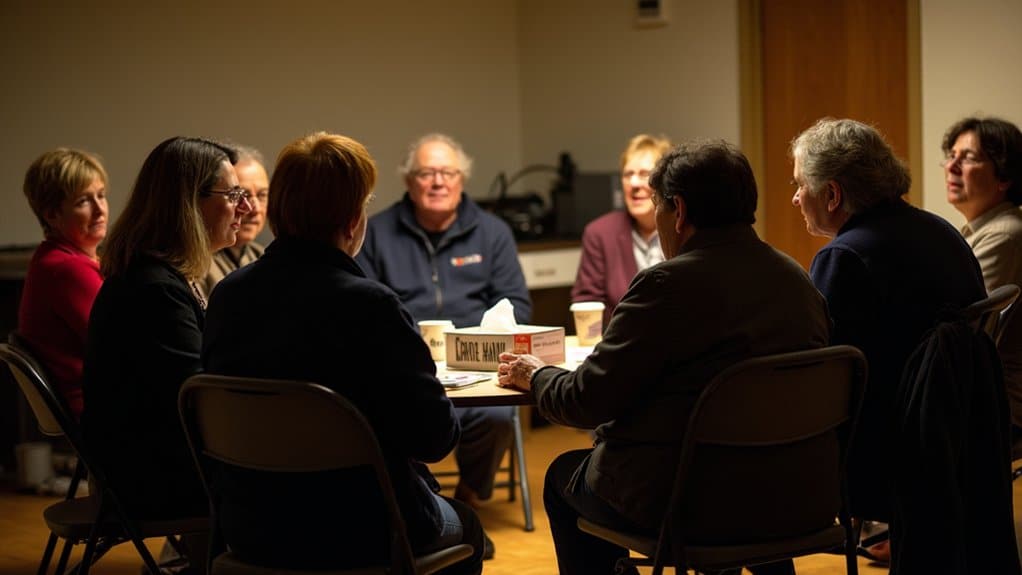
When you attend a NAR-ANON meeting, you’ll encounter a structured format that includes shared readings, personal stories, and guided discussions about addiction’s impact on families.
You’ll learn essential recovery skills like setting boundaries, practicing self-care, and understanding the difference between helping and enabling your loved one. Through regular participation, you’ll develop coping strategies alongside others who share similar experiences, creating a foundation for your family’s healing process.
Understanding NAR-ANON Meeting Formats
Family members seeking support through NAR-ANON will encounter a structured yet welcoming meeting format designed to foster healing and understanding. Each meeting follows established ritual significance, beginning with a moment of silence and the Serenity Prayer. Leadership responsibilities rotate among members who volunteer to chair sessions, ensuring shared participation without formal hierarchy.
You’ll find three primary meeting formats:
- Speaker meetings featuring personal stories from NAR-ANON, NA, or AA members
- Step meetings focused on working through the Twelve Steps systematically
- Discussion meetings allowing open sharing of experiences and challenges
All formats maintain core elements including the Blue Booklet readings and strict anonymity protocols. You’re encouraged to participate in crisis sharing when needed, as meetings prioritize immediate emotional support while maintaining their structured framework.
Building Family Recovery Skills
Learning to navigate addiction recovery requires specific skills that strengthen both individual and family resilience. Through NAR-ANON’s structured approach, you’ll develop essential coping strategies while building support networks with others facing similar challenges. The program emphasizes understanding addiction dynamics, establishing healthy boundaries, and breaking enabling patterns that may hinder recovery.
Key skill development focuses on self-care practices that foster emotional resilience, including stress management techniques and effective communication methods. You’ll learn to balance empathy with self-preservation while addressing co-dependency issues. The program provides tools for advocacy and helps you create sustainable support systems.
Whether you’re a parent, sibling, or partner of someone struggling with addiction, these skills enable you to participate actively in your own healing while supporting your loved one’s recovery journey.
Selecting the Right Support Group for Your Journey
Choosing an opioid addiction support group represents an essential step in your recovery journey, as different programs offer distinct approaches and philosophies that can profoundly impact your success. Community resources and professional referrals can guide you toward programs that align with your beliefs and needs.
Consider these key factors when selecting a support group:
- Treatment Philosophy: Determine if you prefer spiritual (NA/AA), secular (SMART/SOS), or religious (Celebrate Recovery) approaches
- Accessibility: Evaluate local availability and online options that fit your schedule
- Format Structure: Assess whether you’ll benefit more from structured programs with sponsors or self-directed recovery tools
Both in-person and virtual meetings offer evidence-based support, with studies showing comparable effectiveness between 12-step and secular programs. Your choice should reflect your personal recovery goals and comfort level with different group dynamics.
Building a Strong Recovery Network Through Group Participation
Building a strong recovery network through support group participation represents a cornerstone of successful opioid addiction treatment. You’ll find that active engagement in support groups considerably enhances your chances of long-term sobriety, with participants showing 25% higher treatment completion rates when combined with medication.
As you’re recovering from emotional isolation, you’ll benefit from various group formats that address both addiction and mental health needs. Whether you choose 12-step programs, SMART Recovery, or peer-led meetings, each option offers unique pathways for cultivating social reintegration. You can access resources for housing, employment, and coping strategies while building accountability through shared progress tracking.
Regular participation in community activities and service opportunities will strengthen your support network, reducing relapse risks and improving your overall treatment adherence.
Integrating Support Groups With Professional Treatment
The integration of support groups with professional treatment provides an extensive approach to opioid addiction recovery. By combining clinical expertise with peer support services, you’ll receive structured care that bridges gaps in long-term recovery.
Treatment facilities now incorporate educational components in support groups, where clinicians and peer facilitators work together to address addiction’s psychological and social aspects.
- Weekly group therapy sessions maintain accountability while complementing individual clinical treatment
- Peer support extends beyond clinic hours through both in-person and online modalities
- 12-step programs integrate seamlessly with inpatient rehabilitation facilities
This combined approach enhances treatment effectiveness by offering continuous support during recovery challenges. The structured environment of professional care, coupled with peer-based learning and accountability, creates a robust foundation for sustained recovery outcomes and relapse prevention.
The Role of Mentorship in Group Recovery Programs
Mentorship stands out as a cornerstone of successful group recovery programs, offering structured guidance and personalized support for individuals battling opioid addiction. Through mentor-led activities like goal setting and relapse prevention planning, you’ll receive evidence-based strategies that profoundly reduce substance use MAP participants average just 4.1 days of use compared to 16.6 days in standard treatment.
The mentor-mentee relationship dynamics create powerful accountability while connecting you to essential resources. Your mentor will help navigate support groups, recommend recovery literature, and provide crisis intervention when needed. They’ll share their own recovery journey, offering practical coping strategies and helping diminish stigma through shared experiences.
This structured approach, combined with regular check-ins and milestone celebrations, creates a sustainable framework for your long-term recovery success.
Maintaining Long-Term Sobriety Through Support Groups
Successful long-term sobriety hinges on an extensive support system that extends well beyond initial treatment phases. Research shows that consistent community engagement combined with medication assisted recovery can markedly improve your chances of maintaining abstinence over time.
Sustained recovery requires ongoing community support and medical care far more than just completing initial treatment programs.
Key elements for sustained recovery include:
- Regular participation in structured support groups that complement your treatment plan
- Building strong social networks through peer-led programs and sober living environments
- Maintaining accountability through group attendance and medication adherence
Evidence indicates that individuals who remain active in support groups demonstrate 25% higher treatment completion rates and show sustained abstinence patterns between 1-5 years. You’ll find that beyond-meeting connections and community belonging provide essential protection against relapse triggers, while structured recovery plans help integrate both your medical and social support needs.
Frequently Asked Questions
How Do I Handle Confidentiality Concerns When Attending Local Support Groups?
You’ll find strong privacy protections in place at support groups through confidentiality agreements and anonymous participation options. Don’t hesitate to ask about the group’s specific confidentiality policies before sharing.
You’re protected by federal regulations like 42 CFR Part 2, which restricts information disclosure. You can participate without using your full name, and you’re never required to share more than you’re comfortable with. Trust that what’s shared in group stays in group.
What Should I Wear to My First Support Group Meeting?
For your first support group meeting, choose comfortable attire that’s both casual and respectful. Opt for loose-fitting pants or knee-length skirts paired with layered tops like a t-shirt and light sweater.
Following proper group etiquette, avoid clothing with provocative messages or substance-related imagery. You’ll want to skip revealing cuts or distracting accessories. Remember to wear closed-toe shoes and keep fragrances minimal to respect others’ sensitivities.
Can I Switch Between Different Support Groups During My Recovery Journey?
Yes, you can absolutely switch between different support groups throughout your recovery journey.
In fact, switching meeting venues and rotating group leaders can provide valuable diverse perspectives and coping strategies. You’ll benefit from experiencing different approaches whether it’s trying 12-step, secular, or specialized groups.
Many people find that combining multiple support systems strengthens their recovery toolkit. Remember, there’s no single “right” path, and you’re empowered to explore what works best for you.
Are There Age Restrictions for Joining Opioid Recovery Support Groups?
Most recovery support groups don’t have strict minimum age requirements, allowing you to attend regardless of your age. While traditional 12-step meetings are adult-oriented, you’ll find youth-specific options like YPAA that offer more relatable environments.
Parental consent guidelines vary by location, but you’re generally welcome to attend with or without a guardian. If you’re under 18, you might feel more comfortable in teen-focused groups where you can connect with peers facing similar challenges.
How Do Support Groups Handle Medical Emergencies During Meetings?
Support groups follow strict emergency protocols during medical emergencies. Since they don’t have on-site medical personnel, they’ll immediately call 911 for life-threatening situations.
You’ll find that groups maintain established contact plans with local emergency services and treatment providers. They’ll also use crisis helplines like the Alcohol & Drug Helpline (1-800-923-4357) when needed.
After any incident, you’ll receive referrals to appropriate community mental health programs or recovery networks.