




Oxycodone remains in your system for varying periods depending on the test type. Urine tests can detect it for 3-4 days after your last dose, while blood tests have a shorter window of approximately 24 hours. Hair follicle tests offer the longest detection period, identifying oxycodone use for up to 90 days. These timeframes vary based on your metabolism, kidney function, frequency of use, and dosage. Understanding these factors can help you navigate medical or employment screenings more effectively.
What Is Oxycodone and How Does It Work?
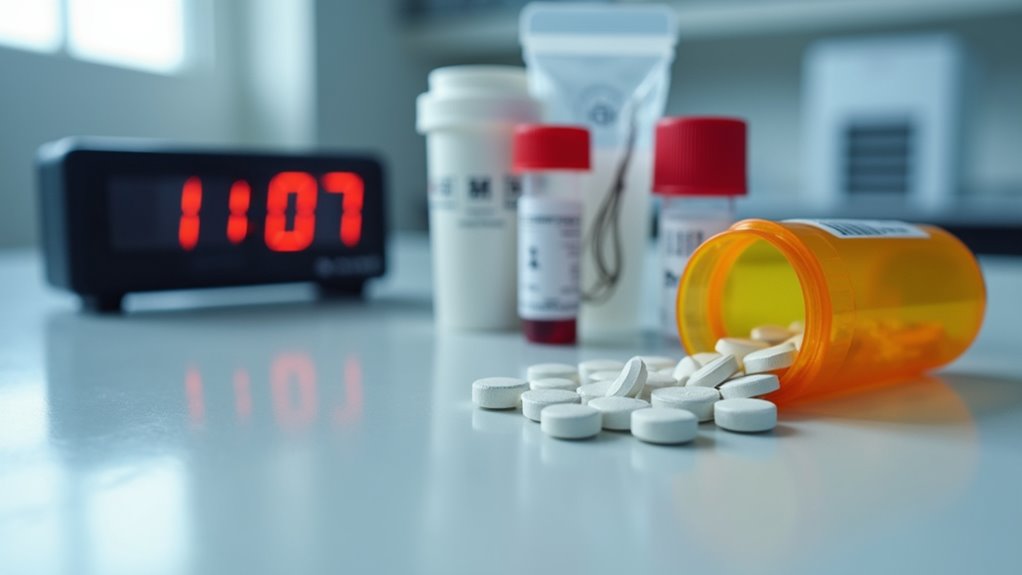
Oxycodone, a potent synthetic opioid analgesic, belongs to the class of medications known as narcotic analgesics. It works by binding to μ-opioid receptors in your brain and spinal cord, inhibiting the transmission of pain signals and altering your perception of pain. This mechanism makes it effective for moderate to severe pain management following surgeries or injuries.
When you take oxycodone, it enters your bloodstream and crosses the blood-brain barrier, triggering the release of dopamine, a neurotransmitter associated with pleasure and reward. This dopamine surge contributes to both its therapeutic effects and potential for dependence. The oxycodone effects typically manifest within 20-30 minutes of oral administration, peaking at 1-2 hours, with pain relief lasting approximately 4-6 hours depending on the formulation (immediate vs. extended-release).
Detection Windows for Oxycodone in Different Drug Tests
Oxycodone remains detectable in your system for varying periods depending on the type of drug test administered. Urine tests typically identify oxycodone for 3-4 days after use, while blood tests offer a narrower detection window of 24 hours, and hair follicle tests can detect the drug for up to 90 days. Multiple factors affect detection timeframes, including your metabolism rate, kidney function, hydration levels, and dosage frequency.
Test Type Timeframes
Four primary test types exist for detecting oxycodone in your system, each with distinct detection windows. Urine tests, the most common method, detect oxycodone for 3-4 days after your last dose. Urine test sensitivity varies based on oxycodone metabolism, which typically produces noroxycodone and oxymorphone metabolites that remain detectable longer than the parent compound.
Blood tests offer a shorter detection window of 24 hours but provide precise concentration measurements. Saliva tests can identify oxycodone for 1-4 days depending on usage patterns and individual factors. Hair testing provides the longest detection period, capturing drug use for up to 90 days after ingestion, as oxycodone metabolites become incorporated into hair follicles during growth. Detection times extend with higher doses and chronic use.
Metabolite Detection Factors
Several factors influence how long oxycodone metabolites remain detectable in your system beyond the standard detection windows. The primary metabolite types, noroxycodone, oxymorphone, and their conjugates, have varying detection thresholds in different testing methodologies.
Detection sensitivity depends on:
- Metabolic rate: Your liver’s CYP3A4 enzyme efficiency directly affects oxycodone clearance rates, with genetic variations causing up to 4x differences
- Urine pH: Acidic urine (pH 5.5-6.5) accelerates excretion, while alkaline urine extends detection windows
- Kidney function: Decreased glomerular filtration rates considerably prolong metabolite presence
- Dosing pattern: Chronic use creates metabolite accumulation in adipose tissue, extending detectability beyond acute use timeframes
Advanced laboratory techniques like LC-MS/MS can detect trace metabolites at concentrations as low as 10 ng/mL, greatly extending identification windows beyond standard cutoffs.
Factors That Influence How Long Oxy Stays in Your System
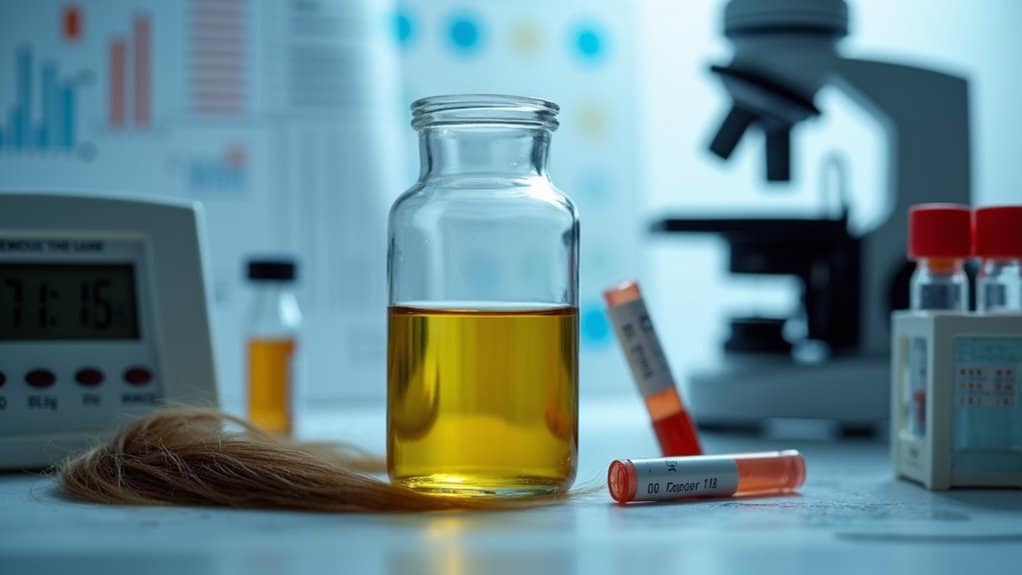
While the average timeline for oxycodone detection provides general guidance, numerous physiological and behavioral factors greatly influence how long the drug remains detectable in your system. Your metabolism rate considerably impacts elimination speed, with faster metabolizers clearing oxycodone more rapidly than individuals with slower metabolic processes. Genetics, maturity, and liver function directly affect this metabolic efficiency.
Hydration levels play an essential role in urinary excretion rates. When you’re well-hydrated, you’ll produce more dilute urine, potentially accelerating drug elimination. However, testing facilities account for dilution by measuring creatinine levels. Supplementary influential factors include your body mass index, frequency of use, dosage amount, and concurrent medication use, particularly those competing for the same metabolic pathways in the liver’s cytochrome P450 enzyme system.
Oxycodone Detection in Urine Tests: Timeline and Considerations
Urine testing remains the most common method for detecting oxycodone in clinical and forensic settings due to its extended detection window compared to blood screening. Standard urine tests can identify oxycodone metabolites for 3-4 days after last use, though chronic oxycodone abuse may extend this window considerably.
Key considerations for urine detection include:
- Metabolite specificity – Tests must target noroxycodone and oxymorphone, not just the parent compound
- Detection thresholds – Standard cutoff levels range from 100-300 ng/mL, depending on test sensitivity
- False positives – Certain medications including rifampin and dextromethorphan may trigger false results
- Post-detection variables – Hydration levels, urinary pH, and withdrawal symptoms can all affect metabolite concentration in urine samples
Clinicians should consider these factors when interpreting test results or establishing monitoring protocols.
Blood Testing for Oxycodone: Detection Periods and Accuracy
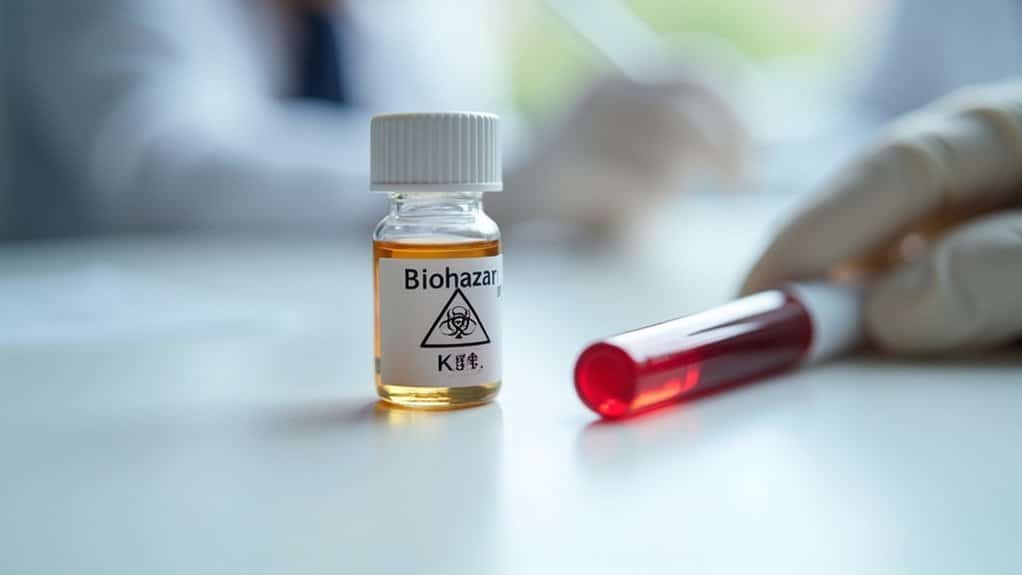
Blood testing provides a narrower but more accurate detection window for oxycodone compared to urine screening methods. When you undergo a blood test, oxycodone can typically be detected for approximately 24 hours after your last dose, though this timeframe may extend to 36 hours in cases of heavy or prolonged use.
The high blood test accuracy stems from its ability to identify both oxycodone and its metabolites in precise concentrations. Your liver metabolizes oxycodone into noroxycodone and oxymorphone through cytochrome P450 enzymes, creating detectable markers in your bloodstream. These metabolites appear within 30 minutes of ingestion.
Factors affecting detection include your metabolic rate, liver function, dosage, and frequency of use. Blood tests remain particularly valuable in clinical settings where immediate verification of oxycodone presence is required.
Hair Follicle Testing: Long-Term Detection of Oxycodone Use
Hair follicle testing can detect oxycodone use for up to 90 days after your last dose, providing a considerably longer detection window than blood or urine tests. Your hair sample collection involves cutting approximately 100 strands of hair from close to the scalp, with each 1.5-inch segment representing about 90 days of drug use history. Factors affecting detection include your dosage frequency, metabolic rate, hair treatments (bleaching/dyeing), and external contamination that might influence test accuracy.
Detection Window Timeframe
Among the diverse testing methodologies for oxycodone detection, hair follicle analysis provides the most extensive detection window. When you submit to hair testing, you’re allowing examiners to access a chronological record of your drug use that considerably exceeds other detection methods. The testing accuracy of follicular analysis remains consistently high across the detection period.
Hair samples reveal your oxycodone use history according to the following timeline:
- First appearance – Drug metabolites become detectable approximately 7-10 days after use
- Standard sample length – 1.5 inches of hair captures approximately 90 days of use history
- Extended detection – Specialized laboratories can test up to 12 inches (1 year of history)
- Segmental analysis – Month-by-month usage patterns when samples are divided into segments
Factors Affecting Detection
While numerous variables influence the detection of oxycodone through hair follicle testing, several physiological and external factors specifically impact the reliability and sensitivity of this long-term screening method. Hair testing offers detection windows spanning months rather than days, capturing your historical usage patterns through trapped drug metabolites.
| Factor | Impact | Detection Implication |
|---|---|---|
| Hair color | Darker hair binds more drug compounds | Higher positive rates in dark-haired users |
| Growth rate | Typical growth of 1cm/month | Affects timeline interpretation |
| External treatments | Bleaching, dyeing, chemical processing | May reduce detection accuracy |
| Individual metabolism | Enzymatic differences in drug processing | Varies detection thresholds by person |
Individual variations in metabolic enzyme activity considerably alter how quickly your body processes oxycodone, creating differences in detection methods’ effectiveness across different populations.
Sample Collection Process
When undergoing hair follicle testing for oxycodone detection, you’ll experience a standardized collection protocol designed to maintain sample integrity while ensuring sufficient material for thorough analysis. The sample collection process follows strict testing procedures to prevent contamination and establish chain-of-custody documentation.
Technicians typically follow these steps:
- Cutting approximately 100-120 strands (50mg) of hair from close to your scalp, usually from an inconspicuous area
- Securing the sample in specialized collection materials with proper orientation markers to distinguish root end from tip
- Sealing and labeling the specimen with identifying information and timestamps
- Transferring to the laboratory under documented chain-of-custody conditions to preserve evidentiary value
This methodical approach provides a detection window of up to 90 days, surpassing urine and blood testing timeframes.
How to Safely Manage Prescription Oxycodone Use and Testing Concerns
If you’ve been prescribed oxycodone for legitimate medical purposes, understanding proper management techniques becomes essential for both therapeutic effectiveness and compliance with potential drug testing. Always follow your physician’s dosing instructions precisely, never exceeding prescribed amounts or frequency. Safe usage requires storing medication in secure, temperature-controlled locations away from others, particularly children.
Prescription management involves maintaining accurate documentation of your medication schedule, dosage, and healthcare provider information. Consider using digital medication trackers or written logs to monitor consumption patterns. If you anticipate drug testing, proactively disclose your prescription to testing administrators, providing verification from your healthcare provider. When discontinuing oxycodone, follow your doctor’s tapering schedule to minimize withdrawal symptoms and avoid potential complications.
Frequently Asked Questions
Can a False Positive Occur With Over-The-Counter Medications?
Yes, over-the-counter medications can cause false positives in drug screenings. Certain antihistamines, decongestants, and NSAIDs may trigger inaccurate results due to chemical structure similarities with targeted substances. Medication testing accuracy varies considerably based on the screening method’s specificity and sensitivity. You’ll need to disclose all OTC medications before testing to help technicians interpret results correctly. These over-the-counter interactions particularly affect immunoassay tests, which are commonly used as preliminary screening tools before confirmation testing.
Do Poppy Seeds Cause False Positives for Oxycodone?
Poppy seeds typically don’t cause false positives for oxycodone in drug testing. While poppy seed consumption can trigger false positives for morphine and codeine (opiates naturally found in poppy plants), oxycodone is a semi-synthetic opioid detected through different immunoassay antibodies. Modern drug tests can distinguish between these compounds. You shouldn’t rely on the “poppy seed defense” if you’ve used oxycodone. If you’re concerned about false positives, inform your test administrator about any food or medications consumed.
Does Second-Hand Exposure to Oxycodone Affect Drug Test Results?
Second-hand exposure to oxycodone is highly unlikely to affect your drug test results. Unlike substances like marijuana, oxycodone doesn’t produce significant airborne particles when used as prescribed. The oxycodone effects from incidental exposure through touch or proximity are negligible for detection purposes. Standard drug screenings require direct ingestion of meaningful quantities to trigger positive results. You’d need to directly handle and accidentally ingest the substance to register detectable levels in your system during testing.
Can I Test Positive After Using Legal CBD Products?
You can potentially test positive after using legal CBD products due to THC contamination. Even legal CBD may contain trace amounts of THC (under 0.3%), which could accumulate with regular use. CBD drug interactions with testing methodologies may create false positives in immunoassay screens. For confirmation, request mass spectrometry testing to distinguish between opioid metabolites and CBD compounds. Quality matters, choose CBD products with third-party lab verification to minimize this risk.
Will Hospitals Report Positive Oxycodone Tests to Law Enforcement?
Hospital policies regarding drug testing typically don’t involve automatic reporting to law enforcement when you test positive for oxycodone. Healthcare facilities primarily use test results for treatment purposes, not legal action. Most hospitals adhere to HIPAA regulations, keeping your medical information confidential. However, exceptions may exist in specific scenarios like driving under influence cases or when required by court order. Your test results generally remain part of your protected medical record rather than becoming police information.