





Intensive outpatient treatment typically lasts 8 to 12 weeks, though some programs extend up to six months for more complex situations. You’ll attend sessions three to five days per week, committing 9 to 15 hours total. Your specific timeline depends on factors like your diagnosis, progress through treatment phases, and support system. Substance use disorders often show better outcomes when treatment extends beyond 90 days, while co-occurring disorders may require 12 to 16 weeks or longer to address your unique needs.
Standard Duration of Intensive Outpatient Programs

Most intensive outpatient programs run between 8 and 12 weeks, though your specific timeline will depend on your individual needs and progress. Some structured programs range from 30 to 90 days, while others extend up to six months for more complex situations.
Your participant engagement directly influences how quickly you move through treatment phases. When you actively commit to the process, you’re more likely to achieve treatment completion within standard timeframes. Programs typically require 9 to 19 hours of weekly participation, including individual therapy, group sessions, and psychoeducation.
Research shows that programs lasting at least 90 days produce the best outcomes for lasting behavioral change. Shorter durations remain possible but often prove less effective. Your treatment team will assess your progress regularly and adjust your timeline accordingly, ensuring you receive adequate support without rushing your recovery journey. Some individuals may attend IOP for a year or longer, depending on their unique recovery needs and circumstances.
Weekly Time Commitment and Session Structure
Intensive outpatient programs typically require you to show up three to five days per week, with each session lasting between three and four hours. Your session attendance adds up to approximately nine to fifteen hours weekly, meeting ASAM’s minimum threshold of nine hours for this level of care.
Each day combines group participation with individual therapy, psychoeducation, and wellness activities. You’ll engage in relapse prevention training, drug education, and weekly psychiatry sessions as needed. This level of care provides more substance abuse counseling than traditional outpatient programs, giving you concentrated therapeutic support during early recovery. Treatment teams conduct weekly reviews to assess your response and adjust your program accordingly.
Programs offer scheduling flexibility to respect your daily responsibilities. You can choose morning, daytime, or evening options that accommodate work or school commitments. As you progress, many programs reduce your required days from four to three weekly. This structure supports your recovery while allowing you to maintain important life obligations.
Program Phases From Stabilization to Maintenance
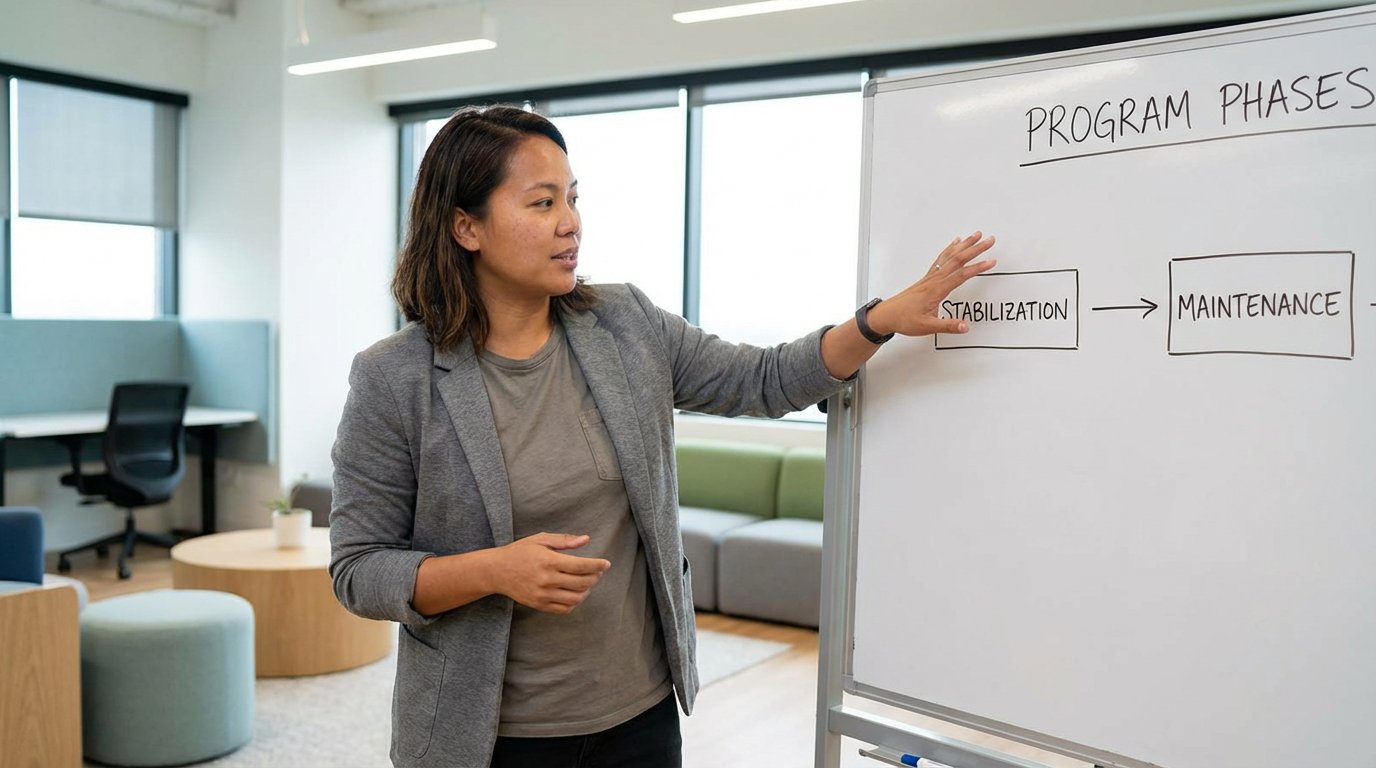
When you enter an intensive outpatient program, you’ll move through four distinct stages that build upon each other: treatment engagement, early recovery, maintenance, and community support.
| Phase | Duration | Focus |
|---|---|---|
| Treatment Engagement | Several weeks | Crisis stabilization, program orientation |
| Early Recovery | 6 weeks to 3 months | Skill development, structured activities |
| Maintenance | 2 months to 1 year | Relapse prevention, lifestyle integration |
During engagement, your treatment team uses progress monitoring to assess your presenting problems and stabilize immediate concerns. This critical phase carries the highest dropout risk, making tailored goal setting essential for retention.
As you advance through early recovery, you’ll participate in educational groups and develop substance-free behaviors. Throughout this phase, cognitive behavioral therapy helps you attain meaningful behavioral change that supports lasting sobriety. The maintenance phase then solidifies your gains while broadening your sober support network before shifting to ongoing community support. These stages serve as the foundation for recovery across all levels of addiction care, from intensive outpatient to higher levels of treatment.
Timeline Variations Based on Condition and Diagnosis
Because your specific diagnosis shapes how long you’ll stay in intensive outpatient treatment, understanding these timeline differences helps you set realistic expectations for your recovery journey.
If you’re addressing a primary substance use disorder, you’ll typically attend more frequent weekly sessions over 8, 12 weeks, with research showing better outcomes when treatment extends beyond 90 days. For primary mental health conditions like major depression or bipolar disorder, expect longer average stays around 44 days with emphasis on symptom stabilization. Research indicates that after 16 days of care, the protective benefits of IOP against hospitalization reach a plateau, meaning additional treatment days don’t significantly reduce your risk further.
Co-occurring mental health and substance use disorders require the longest timelines, often 12, 16 weeks or more. Your level of clinical complexity increases when managing dual diagnoses, requiring integrated relapse prevention strategies throughout treatment. Programs adjust intensity based on your progress, ensuring you receive adequate therapeutic dosage while building sustainable recovery skills. Those with limited social support or chronic relapse history may benefit from extended programs lasting 16 weeks or longer to establish stronger foundations for lasting recovery.
How IOP Compares to Other Treatment Levels

IOP delivers a minimum of 9 hours weekly, positioning it between standard outpatient (2-4 hours weekly) and partial hospitalization programs (5-6 hours daily). Research shows IOP achieves equivalent reductions in problem severity compared to inpatient treatment at 3-18 month follow-ups, with 50-70% abstinence rates. With over 6,000 IOP programs operating across the United States, this treatment option has become widely accessible to those seeking structured recovery support.
IOP matches inpatient treatment outcomes while requiring just 9 hours weekly, proving intensive care works without leaving your life behind.
Treatment intensity matters greatly. While residential programs show higher completion rates (64.5% versus 51.9% for outpatient), IOP’s structured approach allows you to maintain daily responsibilities. Nearly 45% of outpatient stays end with clinician advised discharge, indicating successful treatment progression. Many individuals choose to continue their recovery by enrolling in standard outpatient treatment after completing IOP, which can mean spending 5 months or more in combined outpatient care.
If you’re stepping down from higher care levels, IOP provides essential structure while supporting your reintegration back to community living.
Frequently Asked Questions
Can I Continue Working or Attending School While Enrolled in an IOP?
Yes, you can absolutely continue working or attending school while enrolled in an IOP. The program’s flexible scheduling is specifically designed to accommodate your part time commitments and daily responsibilities. With evening and daytime options available, you’ll find sessions that fit around your existing schedule. Most programs average about 2.5 treatment days weekly, giving you the structure you need for recovery while maintaining the independence to keep building your life.
What Happens if I Miss Sessions During My Intensive Outpatient Treatment?
If you miss sessions during IOP, you’ll face consequences of missed sessions that can drastically affect your recovery journey. The impact on treatment progress includes slower skill development, reduced peer support, and potential setbacks in your goals. Programs typically require makeup sessions to maintain therapeutic momentum. Don’t worry, communicate openly with your counselors about absences. They’ll work with you to adjust schedules and keep you on track toward successful completion.
Does Insurance Typically Cover the Full Duration of IOP Treatment?
Insurance often covers IOP, but you’ll likely face insurance coverage limitations that affect full-duration coverage. Most plans authorize treatment in short segments, requiring periodic reviews to continue. Your insurer may approve extensions based on documented medical necessity and your progress. You should also expect out of pocket expenses like copays and coinsurance for each session. Contact your insurance provider directly to understand your specific benefits and authorization requirements before starting treatment.
How Do I Know When I’m Ready to Graduate From an IOP?
You’ll know you’re ready to graduate when you’ve met specific progress indicators like sustained abstinence, consistent application of coping skills, and completion of core therapeutic modules. Your treatment team recommendations play a pivotal role, they’ll evaluate your symptom stabilization, aftercare plan development, and support system strength through collaborative reviews. Trust the process; graduation happens when you’ve demonstrated real-world recovery skills and your multidisciplinary team confirms your readiness together.
What Aftercare Options Are Available Once I Complete My IOP Program?
Once you complete your IOP, you’ll have several aftercare paths to explore. Support group options like AA, NA, or peer networks help maintain accountability and reduce isolation, research shows 50% of participants sustain abstinence through these connections. Ongoing therapy recommendations typically include weekly individual or family sessions using CBT or DBT approaches. You might also consider continuing care programs offering 1-8 hours weekly for 3-12 months, strengthening your relapse prevention skills.