






Heroin detection varies considerably by test type. You can expect detection for 1-3 days in urine (up to 7 days for regular users), 4-6 hours in blood, 24-48 hours in saliva, and up to 90 days in hair follicles. Your metabolism, usage frequency, body mass, and hydration levels all affect these timeframes. Modern tests can distinguish between prescription opioids and heroin through specific metabolite identification. The following sections provide detailed insights for each testing method.
The Metabolism of Heroin in the Human Body
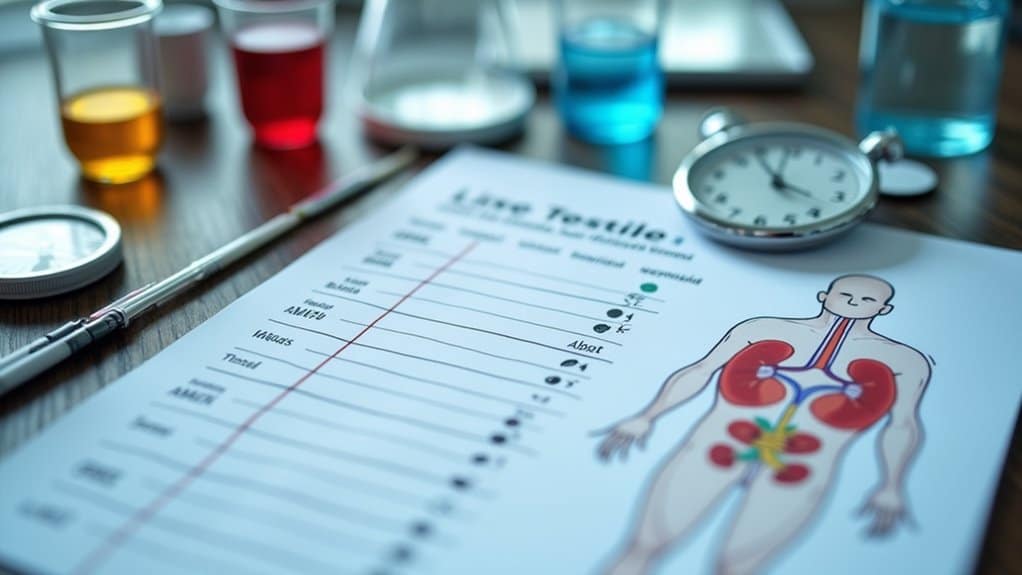
When heroin (diacetylmorphine) enters the human body, it rapidly undergoes a two-step metabolic process. Initially, it’s converted to 6-monoacetylmorphine (6-MAM) through deacetylation, which occurs within minutes of administration. This happens primarily in your blood and liver.
Next, 6-MAM further metabolizes into morphine, which your body then converts into morphine-3-glucuronide and morphine-6-glucuronide. This second conversion takes approximately 15-30 minutes. These metabolites, not heroin itself, are what drug tests typically detect.
Your liver manages most heroin metabolism, with kidneys handling excretion. The rate varies based on factors including your metabolism, body mass, hydration level, and liver/kidney function. Understanding heroin metabolism in the human body explains why detection windows differ across test types.
Urine Testing: Detection Windows and Accuracy
Urine tests remain the most commonly employed method for detecting heroin use, identifying the metabolites discussed previously rather than the parent drug itself. Urine composition affects detection reliability, while test sensitivity determines the minimum concentration required for a positive result.
| Factor | Detection Window | Impact on Accuracy | Considerations |
|---|---|---|---|
| Occasional Use | 1-3 days | Moderate accuracy | May produce false negatives after 48 hours |
| Regular Use | 5-7 days | High accuracy | Metabolites accumulate in system |
| Heavy Use | Up to 10 days | Very high accuracy | Detectable in urine composition longer |
| Hydration | Variable | Can reduce accuracy | Dilution may affect test sensitivity |
You’ll find that hydration levels, metabolism rate, and individual physiological factors can influence your test results. Modern immunoassay screening tests offer 95-98% sensitivity, though confirmatory testing via mass spectrometry provides definitive identification of heroin metabolites.
Blood Testing: Short-Term Detection Capabilities
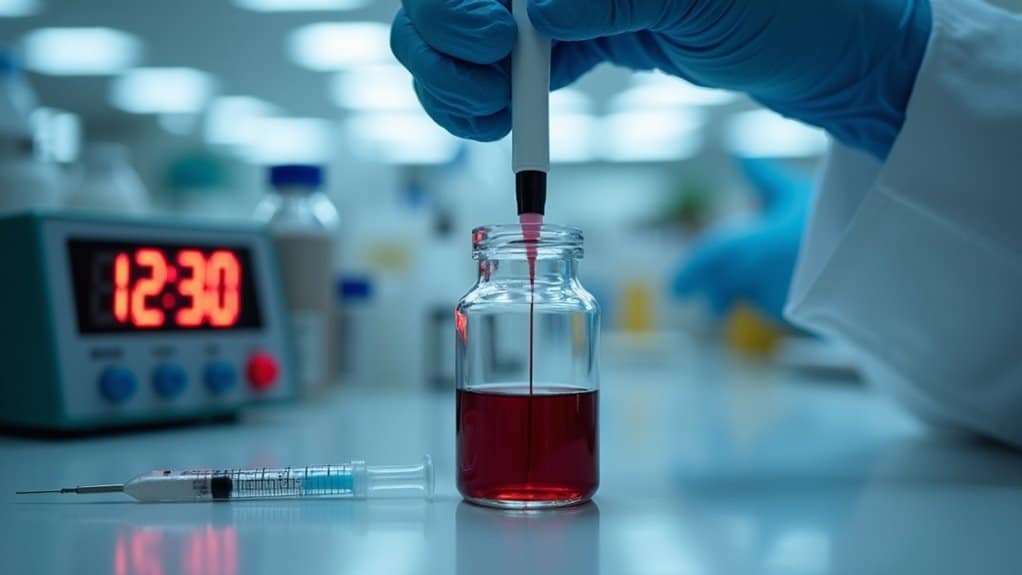
Blood tests detect heroin and its metabolites for only 4-6 hours after use, making them suitable for identifying very recent drug consumption. Your metabolism influences the clearance rate, with 6-acetylmorphine (6-AM) disappearing initially, followed by morphine and other metabolites. You’ll find that factors like liver function, maturity, hydration status, and general health can considerably affect how quickly these compounds are eliminated from your bloodstream.
Detection Window Breakdown
Unlike other testing methods, blood testing provides the most accurate but shortest detection window for heroin use. When you’re undergoing blood testing for heroin, you’ll find that the detection timeline follows a predictable pattern based on metabolism rates and the drug’s half-life.
- 0-6 hours: Peak detection period when heroin effects are most evident in your bloodstream
- 6-12 hours: Detection becomes more challenging as your body metabolizes the substance
- 12-24 hours: Only trace metabolites remain detectable for most users
- 24+ hours: Virtually undetectable in blood, though withdrawal symptoms may begin to appear
This narrow window makes blood tests primarily useful for confirming recent use rather than historical patterns, particularly in medical emergencies or overdose situations where immediate verification is essential.
Metabolite Clearance Factors
Several biological and physiological factors greatly influence how quickly heroin metabolites clear from your bloodstream, explaining the remarkably short detection window. Your liver function, metabolism rate, and hydration levels directly affect the metabolite half-life, which ranges from just 3-8 minutes for heroin itself.
| Factor | Impact on Clearance Rate | Clinical Significance |
|---|---|---|
| Age Group | Older adults: 15-30% slower | Extended detection time |
| Liver Function | Impaired: 2-3x longer clearance | Metabolites remain detectable longer |
| Hydration | Well-hydrated: 10-20% faster | Accelerated elimination |
| Body Mass | Higher BMI: varied effects | Fat-soluble metabolites persist |
| Metabolism | Fast metabolizers: 20-40% quicker | Shorter detection window |
You’ll experience more rapid clearance if you’re younger, well-hydrated, and have efficient liver function. Chronic use greatly extends these timeframes due to accumulation in fatty tissues despite the rapid clearance rate of primary metabolites.
Hair Follicle Testing: Long-Term Evidence of Use
Hair follicle testing can detect heroin use for up to 90 days after last consumption, providing a considerably longer detection window than blood or urine tests. Your test results’ accuracy depends on several factors including hair color, chemical treatments, and external contamination that laboratories must account for during analysis. When you’re subjected to hair testing, the sample size typically needed is 100-120 strands cut close to the scalp, with each 1.5 centimeters of hair representing approximately 30 days of drug use history.
Detection Window Explanation
The most extensive detection window for heroin use comes from follicular testing, where metabolites remain trapped within hair strands for months after use. When you consume heroin, your body metabolizes it into 6-acetylmorphine and morphine compounds that become embedded in your growing hair.
Hair grows approximately 0.5 inches per month, allowing technicians to create a timeline of your heroin addiction history:
- Each 0.5-inch segment represents roughly 30 days of use history
- Standard 1.5-inch samples provide a 90-day detection window
- Extended samples can reveal usage patterns up to 12 months prior
- Hair nearest the scalp indicates your most recent usage patterns
This prolonged detection window makes hair testing particularly valuable for monitoring long-term sobriety efforts and detox strategies, unlike shorter-duration tests that only capture recent use.
Test Accuracy Factors
While highly reliable for establishing patterns of heroin use, follicular testing accuracy depends on multiple biological and environmental variables that can affect your results. Your hair growth rate, melanin content, and exposure to external contaminants directly influence test sensitivity. Darker hair typically binds more drug metabolites than lighter hair, potentially producing higher concentrations.
The accuracy of hair tests also varies with the laboratory’s equipment calibration and the technician’s expertise. You’ll find that most facilities use a 0.5-inch hair sample that represents approximately 30 days of growth. This length allows detection well beyond heroin’s short half-life of 2-3 minutes in your bloodstream. However, you should note that washing your hair or using treatments won’t eliminate embedded metabolites, as they’re incorporated into the hair shaft’s structure during formation.
Saliva Testing: Immediate Detection Methods
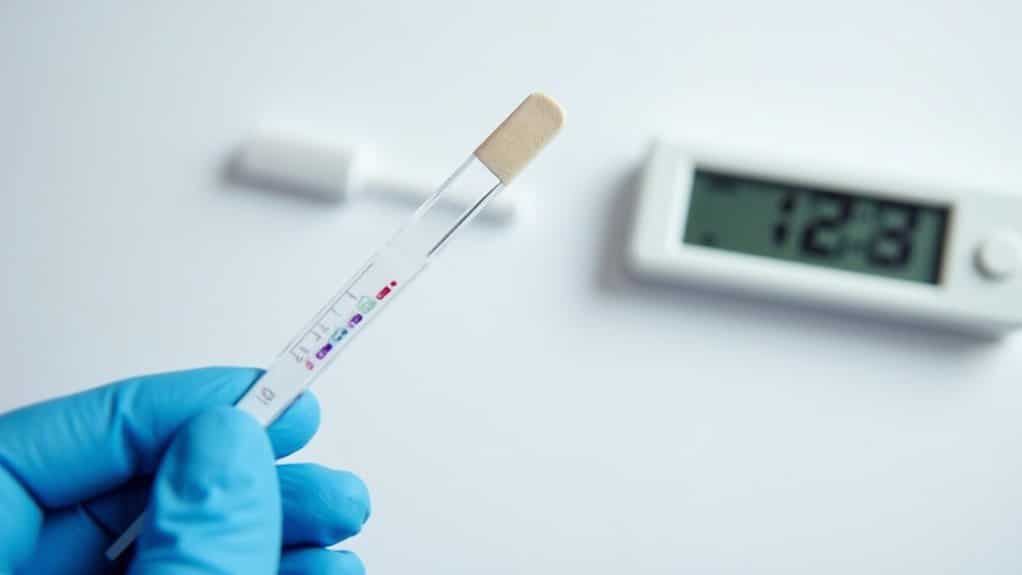
Three distinct saliva testing technologies have emerged as reliable methods for immediate heroin detection in clinical and field settings. When providing a saliva sample, you’ll encounter testing protocols designed to enhance detection reliability while minimizing false positives.
Modern oral fluid testing systems offer:
- Immunochromatographic assays that detect heroin metabolites within 30-60 minutes of use
- Lateral flow technology delivering results in 5-10 minutes with 95-98% accuracy
- Portable spectrometry devices capable of distinguishing between heroin and prescription opioids
- Digital readers that eliminate subjective interpretation of faint result lines
These methods typically detect heroin use within a 24-48 hour window, though detection times vary based on dosage, frequency of use, and individual metabolism. Healthcare professionals prefer saliva testing for its non-invasive collection process and resistance to sample adulteration.
Factors That Influence Heroin Detection Times
Multiple physiological and consumption-related variables greatly affect how long heroin remains detectable in your system. Your metabolism rate, determined partly by genetic variations, considerably impacts how quickly your body eliminates the drug. A faster metabolism typically results in shorter detection windows.
Your body mass index, hydration level, and liver function directly influence heroin processing. Frequent users experience longer detection periods due to drug accumulation in fatty tissues. The amount consumed and administration method also matter, intravenous use creates shorter but more intense detection windows than smoking.
Lifestyle choices play essential roles too. Regular exercise can accelerate metabolic clearance, while poor nutrition may extend detection times. Your lifespan matters as well, older individuals typically process heroin more slowly than younger people with similar usage patterns.
Heroin Detection Windows Compared to Other Opioids
When compared to other opioids, heroin’s detection window differs greatly due to its unique pharmacokinetic profile. While heroin addiction presents detection challenges similar to other substance use disorders, its rapid metabolism distinguishes it in opioid comparison testing.
Detection windows vary greatly across common opioids:
- Heroin: Detectable in urine for 1-3 days, blood for 6 hours, saliva for 24-36 hours
- Morphine: Appears in tests for 2-4 days, nearly twice as long as heroin
- Oxycodone: Remains detectable for 3-4 days in standard tests
- Methadone: Has the longest detection window at 7-10 days
These differences stem from heroin’s rapid conversion to 6-monoacetylmorphine (6-MAM), then morphine. Your metabolism, dosage frequency, and liver function all affect detection timeframes.
False Positives: What Else Can Trigger a Positive Result
False positive results in heroin drug tests can occur due to several common medications and substances that share chemical resemblances with opioids. These cross-reactive substances include poppy seeds, which contain trace amounts of morphine and codeine that your body metabolizes likewise to heroin. Certain antibiotics like quinolones and rifampin may also trigger false positives.
Medication interactions can greatly impact test results. Over-the-counter cough suppressants containing dextromethorphan, prescription pain relievers like tramadol, and some antipsychotics including quetiapine have been documented to cause false heroin positives. Even common antihistamines like diphenhydramine (Benadryl) may cross-react with immunoassay tests.
If you’re taking any medications, always disclose them before testing. Confirmatory testing methods like gas chromatography-mass spectrometry (GC-MS) can verify initial positive results and eliminate false positives.
Strategies for Supporting Recovery and Detoxification
Beyond testing considerations, effective recovery from heroin addiction requires extensive treatment approaches. Evidence-based interventions should form the foundation of your detoxification and long-term recovery plan.
- Medication-Assisted Treatment (MAT) – Medications like methadone, buprenorphine, and naltrexone can reduce withdrawal symptoms and cravings while stabilizing brain chemistry
- Cognitive Behavioral Therapy (CBT) – Addresses underlying thought patterns contributing to addiction and develops relapse prevention strategies
- Support Networks – Engagement with peer groups, 12-step programs, and family therapy strengthens recovery resources and accountability
- Holistic Approaches – Integration of nutrition, exercise, meditation, and sleep hygiene optimizes physical healing and reduces vulnerability to relapse
Successful recovery typically combines professional medical supervision during detoxification with ongoing psychological support and lifestyle modifications customized to your specific needs.
Frequently Asked Questions
Can Second-Hand Exposure to Heroin Smoke Trigger a Positive Test?
Second-hand exposure to heroin smoke is unlikely to trigger a positive drug test in most circumstances. Research shows that passive exposure typically doesn’t produce high enough concentrations in your system to exceed testing thresholds. However, prolonged exposure in poorly ventilated spaces might potentially lead to minimal absorption. Most drug testing protocols are designed with cutoff levels specifically to differentiate between active use and incidental environmental exposure. You shouldn’t test positive from brief, casual second-hand smoke contact.
Do Prescription Medications Affect Heroin Detection Accuracy?
Yes, prescription medications can affect heroin detection accuracy. Prescription opioids like codeine, morphine, and hydrocodone may trigger false positives in initial screening tests since they share similar chemical structures with heroin. These cross-reactions depend on the specific detection methods used. More advanced confirmatory tests like GC-MS can usually distinguish between prescription opioids and heroin metabolites. You should always disclose all medications to testing facilities to guarantee accurate interpretation of your results and prevent misidentification of legitimate prescriptions as illicit use.
How Quickly Can Someone Develop Physical Dependence on Heroin?
Physical dependence on heroin can develop remarkably quickly. You may experience tolerance development within just 2-3 days of repeated use, requiring higher doses to achieve the same effect. Full physical dependence, marked by withdrawal symptoms upon cessation, typically emerges within 1-2 weeks of regular use. However, this timeline varies based on your dosage, frequency of use, individual metabolism, and genetic factors. The rapid onset of dependence contributes to heroin’s high addiction potential.
Will Exercise or Drinking Water Help Clear Heroin Faster?
While exercise and increased water intake are common detox methods, their effectiveness for accelerating heroin elimination is limited. Exercise may marginally improve metabolism, but won’t greatly reduce detection times. Hydration effects primarily impact urine concentration rather than actual elimination rates. You’ll find that heroin’s metabolites follow a relatively fixed elimination timeline regardless of these interventions. Medical supervision is essential during heroin detoxification, as self-directed attempts can be dangerous and potentially ineffective.
Can Employers Distinguish Between Heroin and Prescribed Opioid Medications?
Yes, employers can distinguish between heroin and prescribed opioids through specialized testing. Standard drug tests detect morphine, a heroin metabolite, but can’t differentiate its source. However, advanced testing identifies 6-monoacetylmorphine (6-MAM), which is specific to heroin metabolism. For opioid differentiation, laboratory confirmation tests like GC/MS or LC-MS/MS can identify specific medications. You’ll need to disclose prescription medications before testing, as they’ll appear positive on initial screenings but can be verified with proper documentation.