






Buprenorphine remains detectable in your system for varying periods depending on the testing method. Blood tests can identify it for 2-3 days, urine tests for 6-14 days, and hair analysis for up to 3 months. Your stage of life, dosage, frequency of use, and liver function all affect clearance rates. Long-term users may experience extended detection windows due to tissue accumulation. Understanding these factors becomes essential when shifting between medications or preparing for drug testing.
What Is Buprenorphine and How Does It Work?

Buprenorphine is a semi-synthetic opioid medication that functions as a partial agonist at mu-opioid receptors and an antagonist at kappa-opioid receptors in the brain. Unlike full agonists such as heroin or methadone, it produces a ceiling effect, limiting respiratory depression and euphoria while still managing withdrawal symptoms and cravings.
Buprenorphine benefits include reduced overdose risk, decreased illicit opioid use, and improved treatment retention. Its high binding affinity displaces other opioids, potentially precipitating withdrawal if administered too soon after full agonist use. The medication’s long half-life (24-60 hours) allows for flexible dosing schedules.
Despite its therapeutic value, buprenorphine risks include dependency, mild euphoria potential, and possible liver function impairment. It’s classified as a Schedule III controlled substance, reflecting its lower abuse potential compared to traditional opioids while acknowledging its pharmacological activity.
Detection Windows for Different Testing Methods
Buprenorphine can be detected in your blood for approximately 2-3 days after your last dose, with precise detection times varying based on dosage and metabolism. Your urine may test positive for buprenorphine metabolites for 6-8 days, making this the most common testing method in clinical and monitoring settings. Hair sample analysis offers the longest detection window, with the potential to identify buprenorphine use for up to 3 months, as the drug becomes incorporated into the hair shaft as it grows.
Blood Test Timelines
When healthcare providers need precise measurement of buprenorphine levels, they typically turn to blood testing, which can detect the drug for approximately 24-48 hours after your last dose. This testing method offers superior blood test accuracy compared to other screening options, particularly when monitoring therapeutic levels or potential overdose situations.
The detection window varies based on several factors, including your metabolism, dosage, and frequency of use. If you’re taking other medications, be aware that certain substances can affect buprenorphine interactions in your bloodstream, potentially altering detection timeframes. Liver function greatly impacts clearance rates, with impaired hepatic function extending detection periods.
Blood tests primarily identify both buprenorphine and its metabolite norbuprenorphine, providing a thorough assessment of your recent use pattern rather than historical consumption.
Urine Detection Periods
While blood tests offer precise measurement over short timeframes, urine screening stands as the standard method for detecting buprenorphine in clinical settings. Standard urine testing can identify buprenorphine and its metabolite norbuprenorphine for approximately 7-14 days after your last dose, though this window varies based on several factors including dosage, metabolism, and frequency of use.
- Metabolite detection: Norbuprenorphine often remains detectable longer than the parent compound
- Sensitivity variations: Enzyme immunoassay screening may detect buprenorphine at concentrations as low as 5 ng/mL
- Confirmation methods: Gas chromatography/mass spectrometry (GC/MS) provides definitive identification
- Extended detection: Chronic high-dose users may test positive for up to 2-3 weeks
Advanced urine testing methods can detect ultra-low concentrations, making evasion of detection difficult even after extended periods.
Hair Sample Analysis
Unlike other testing methods, hair analysis offers the most thorough detection window for buprenorphine and its metabolites. When you undergo hair testing, metabolites remain detectable for up to 90 days after your last dose. Advanced hair analysis techniques can identify norbuprenorphine and other metabolites at concentrations as low as 10 pg/mg.
| Factor | Hair Test | Significance |
|---|---|---|
| Detection Window | 90 days | Longest timeline |
| Sample Required | 1.5 inches | 90-day history |
| Cut-off Level | 10 pg/mg | High sensitivity |
| Metabolites Detected | Buprenorphine, norbuprenorphine | Extensive |
| False Positive Rate | <0.2% | High reliability |
Your hair grows approximately 0.5 inches per month, with each 0.5-inch segment representing about 30 days of drug use history. External contamination can occasionally affect results, requiring confirmatory testing to validate positive findings.
Factors That Affect How Long Buprenorphine Stays in Your System
Your body’s clearance rate of buprenorphine varies considerably based on several physiological factors. Metabolism slows with advancing maturity, while higher dosages and frequent use lead to extended detection periods due to accumulation in fatty tissues. Impaired liver function directly extends buprenorphine’s presence in your system since hepatic metabolism serves as the primary pathway for processing and eliminating the drug.
Metabolism and Age
Because metabolism naturally slows with advancing milestones, older adults typically eliminate buprenorphine more slowly than younger individuals. Your liver’s metabolism rates gradually decline by approximately 1% annually after milestone 40, extending the drug’s half-life and detection window. Milestone effects on buprenorphine clearance become particularly significant after milestone 65, when hepatic blood flow may decrease by up to 40%.
- Adults over 65 may retain buprenorphine 1.5-2 times longer than individuals under 40
- Reduced kidney function in older adults impairs elimination of metabolites like norbuprenorphine
- CYP3A4 enzyme activity diminishes 25-35% in elderly populations
- Milestone-related changes in body composition (decreased muscle, increased fat) alter drug distribution and clearance rates
These physiological changes necessitate dose adjustments for older patients to prevent buprenorphine accumulation and potential toxicity.
Dosage and Frequency
The amount and frequency with which buprenorphine is administered considerably impact how long the medication remains detectable in your system. Higher dosages typically result in longer detection windows across all testing methods. For example, a 16mg daily dose will remain in your system longer than an 8mg dose.
Buprenorphine administration frequency also plays an essential role. Daily users maintain higher steady-state concentrations in their bloodstream compared to occasional users. If you’ve been taking buprenorphine regularly for months or years, the drug’s metabolites can accumulate in your system, potentially extending detection times beyond standard windows.
Studies show that patients on maintenance therapy (typically 8-24mg daily) will consistently test positive on urine screens for 7-10 days after their last dose, while single-dose or short-term users may clear the drug more quickly.
Liver Function Impact
Liver function greatly influences buprenorphine metabolism and elimination rates, as this opioid medication undergoes extensive hepatic processing through the cytochrome P450 3A4 enzyme system. When your liver’s capacity is compromised, buprenorphine clearance slows considerably, extending detection timeframes and potentially increasing the risk of adverse effects.
- Patients with hepatic impairment typically exhibit 50-70% reduction in buprenorphine clearance rates
- Liver enzyme fluctuations can alter metabolite production, affecting both efficacy and detection periods
- Hepatic metabolism of buprenorphine produces norbuprenorphine, an active metabolite with longer half-life
- Cirrhosis and hepatitis markedly prolong elimination, necessitating dosage adjustments
Your healthcare provider should evaluate your liver function before prescribing buprenorphine, as impaired hepatic function requires careful dosing modifications to prevent accumulation while maintaining therapeutic efficacy.
Metabolism of Buprenorphine: The Science Behind Elimination
Understanding buprenorphine‘s metabolic pathway requires knowledge of its complex pharmaceutical process through your body. Initially, buprenorphine absorption rates vary depending on administration route, sublingual applications achieve 30-55% bioavailability while transdermal delivery offers steady prolonged absorption.
Your liver primarily processes buprenorphine through N-dealkylation via the cytochrome P450 3A4 enzyme, converting it to norbuprenorphine, its primary metabolite. Both compounds then undergo glucuronidation, where UGT enzymes attach glucuronic acid molecules to create water-soluble compounds for elimination. These metabolic pathways produce several metabolites with varying elimination half-lives (24-42 hours for parent compound).
Approximately 70% of metabolized buprenorphine exits through fecal elimination, while 30% is excreted through urine. This dual excretion system explains why buprenorphine remains detectable in biological samples days after discontinuation.
Buprenorphine Detection in Urine Tests

Standard urine drug screens often miss buprenorphine due to its unique pharmacological profile, requiring specialized immunoassay testing specifically calibrated for this partial opioid agonist. When you undergo treatment, you’ll need to understand that detection accuracy depends on several pharmacokinetic factors affecting urine concentration levels.
- Detection windows typically range from 3-14 days post-administration, with longer periods for chronic users
- Metabolite norbuprenorphine often appears in higher urine concentration than the parent compound
- Cutoff thresholds vary by laboratory, usually set between 5-10 ng/mL for optimized detection accuracy
- False negatives may occur with diluted samples or when compounds like naloxone interfere with binding
The sensitivity of buprenorphine testing has improved considerably with liquid chromatography-tandem mass spectrometry (LC-MS/MS) methods, which can detect concentrations as low as 0.5 ng/mL.
Blood Testing for Buprenorphine: Timeline and Considerations
Blood tests can detect buprenorphine for approximately 24-96 hours after your last dose, with higher doses and chronic use typically resulting in longer detection windows. Your individual metabolism, liver function, maturity, and body composition will greatly influence how quickly buprenorphine and its metabolite norbuprenorphine clear from your bloodstream. Modern laboratory methods employ liquid chromatography-tandem mass spectrometry (LC-MS/MS) to detect even trace amounts of buprenorphine with high specificity, distinguishing it from other opioids in your system.
Detection Windows in Blood
When considering drug tests that may detect buprenorphine, blood testing offers a relatively narrow window of detection compared to other biological samples. Buprenorphine typically remains detectable in blood for 1-3 days after your last dose, though this varies based on metabolism, dosage, and frequency of use. Blood concentration levels provide more precise information about recent consumption, with detection accuracy highest within the initial 24 hours.
- Blood tests can detect both buprenorphine and its primary metabolite, norbuprenorphine
- Peak blood concentration occurs approximately 1-4 hours after sublingual administration
- Elderly patients and those with hepatic impairment may exhibit extended detection windows
- Blood testing provides quantitative results that can distinguish between therapeutic use and misuse
Healthcare professionals typically order blood tests when precise timing of buprenorphine use is required for clinical or legal purposes.
Factors Affecting Blood Detection
Several physiological and pharmaceutical variables influence how long buprenorphine remains detectable in your bloodstream. Individual variations in buprenorphine metabolism markedly impact detection timeframes, with liver function playing an essential role in clearance rates. Genetic polymorphisms affecting CYP3A4 enzymes can alter metabolic efficiency by 20-40%.
| Factor | Influence | Clinical Significance |
|---|---|---|
| Liver Function | Primary metabolic site | Impairment extends detection by 1.5-3x |
| Dosage | Direct correlation | Higher doses increase detection window |
| Concurrent Medications | Enzyme competition | CYP3A4 inhibitors prolong presence |
Your maturity, body composition, and hydration status further modify detection periods. Patients over 65 typically exhibit 30% slower clearance rates than younger individuals. Furthermore, acidic urine can accelerate buprenorphine excretion, potentially shortening the detection window in blood samples.
Laboratory Testing Methods
Testing laboratories employ multiple analytical approaches to detect buprenorphine in blood samples with varying sensitivity thresholds. Blood analysis typically utilizes liquid chromatography-mass spectrometry (LC-MS/MS), offering superior laboratory accuracy with detection limits as low as 0.1 ng/mL. Your healthcare provider will select appropriate testing methodology based on clinical requirements and detection timeframes.
- Immunoassay screening provides rapid initial results but may yield false positives with certain medications
- LC-MS/MS confirmation testing delivers definitive identification with high testing sensitivity
- Gas chromatography-mass spectrometry (GC-MS) offers alternative high-resolution detection capabilities
- Point-of-care blood tests provide faster turnaround but sacrifice some precision compared to laboratory methods
Most laboratories establish a cutoff concentration between 0.5-5 ng/mL, depending on their equipment calibration and testing protocols. When interpreting results, clinicians must consider both the detection window and metabolite presence.
Saliva and Hair Follicle Detection Periods
Both saliva and hair follicle tests provide distinct windows for buprenorphine detection. Saliva testing can identify buprenorphine use for approximately 24-48 hours after administration, making it useful for detecting recent consumption. This method offers less invasive collection compared to urine or blood sampling, though environmental contamination may affect results.
Hair analysis extends the detection window considerably, capturing buprenorphine use for up to 90 days or longer. Each 1.5-inch hair segment represents approximately 90 days of drug history. This method detects the drug’s metabolites that become incorporated into the hair shaft during growth. However, hair testing cannot identify very recent use (within 7-10 days) as the drug requires time to be incorporated into newly grown hair strands.
Half-Life of Buprenorphine and Its Metabolites
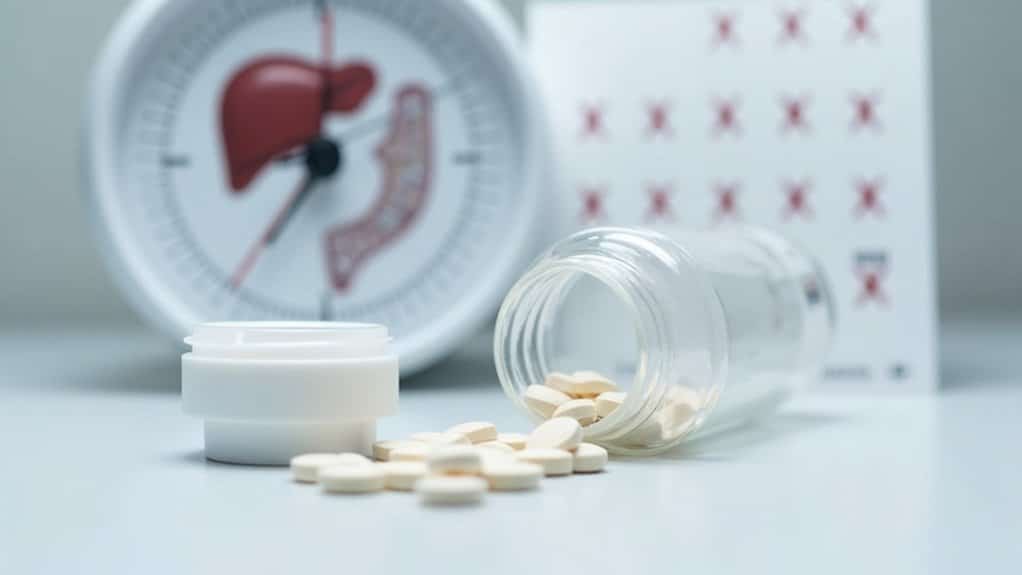
Buprenorphine exhibits a relatively long half-life compared to other opioids, ranging from 24 to 42 hours in most patients. This extended duration results from its complex buprenorphine metabolism, which produces active metabolites that contribute to its prolonged effects. The primary metabolite, norbuprenorphine, has considerable biological activity and undergoes further transformation before elimination.
- Hepatic cytochrome P450 3A4 enzyme is responsible for N-dealkylation of buprenorphine to norbuprenorphine
- Both parent drug and metabolites undergo glucuronidation in the liver before excretion
- Age group, liver function, and genetic variations can considerably alter elimination processes
- Norbuprenorphine’s half-life (30-57 hours) exceeds that of the parent compound
You’ll experience prolonged detection periods due to these pharmacokinetic properties, especially if you’re on maintenance therapy where steady-state concentrations develop after repeated dosing.
Special Considerations for Long-Term Buprenorphine Users
Patients undergoing long-term buprenorphine treatment face unique considerations regarding drug accumulation and elimination kinetics. When you’ve been on buprenorphine maintenance for months or years, the drug’s lipophilic properties can lead to significant tissue reservoirs, extending detection times beyond standard estimates.
| Factor | Impact on Long-Term Users |
|---|---|
| Tissue Accumulation | 30-40% higher depot levels |
| Metabolic Adaptation | Enzyme upregulation possible |
| Elimination Rate | Often slower than naive users |
| Psychological Factors | Stress may alter metabolism |
| Detection Windows | Extended by 1-3 days per year of use |
Your body’s handling of buprenorphine changes with chronic exposure. Research indicates long-term effects include altered receptor sensitivity and potential metabolic adaptations. These physiological changes aren’t typically observed in short-term or intermittent users. If you’re discontinuing long-term therapy, expect extended clearance times compared to published averages.
Safe Transition Protocols Between Buprenorphine and Other Medications
Shifting between buprenorphine and other medications requires careful clinical protocols to prevent withdrawal symptoms, adverse drug interactions, and therapeutic disruption. When you’re moving from buprenorphine to full opioid agonists or vice versa, your healthcare provider will implement a medication management plan customized to your specific needs.
- For shifts to full opioid agonists, you’ll need to discontinue buprenorphine 24-36 hours before initiating new therapy to prevent precipitated withdrawal.
- When switching from methadone to buprenorphine, your methadone dose should be tapered to ≤30mg daily before changeover.
- Safe changeover protocols typically require clinical monitoring during the initial 24-72 hours after medication changes.
- Cross-titration schedules must account for buprenorphine’s extended elimination half-life of 24-60 hours.
These evidence-based approaches minimize complications while maintaining therapeutic efficacy during medication shifts.
Frequently Asked Questions
Can I Drive a Vehicle While Taking Buprenorphine?
While taking buprenorphine, your driving ability may be impaired, especially during initial treatment or dosage adjustments. The medication effects include potential drowsiness, dizziness, and slowed reaction times that compromise driving safety. You shouldn’t operate vehicles until you’ve stabilized on your prescribed dose and your physician confirms it’s safe. Individual responses vary based on dosage, duration of treatment, and your body’s adaptation. Always consult your healthcare provider before driving while under this medication’s influence.
Will Buprenorphine Show up as an Opiate on Standard Drug Tests?
Buprenorphine won’t typically register as an opiate on standard drug tests. Due to its unique molecular structure and metabolism, buprenorphine requires specific testing methods for detection. Standard opiate panels target morphine-based substances, not buprenorphine’s distinct metabolites. However, specialized tests can detect buprenorphine and its primary metabolite norbuprenorphine in urine, blood, and hair. If you’re concerned about drug testing, you should disclose your prescribed medication to the testing facility beforehand.
How Does Buprenorphine Affect Pregnancy and Breastfeeding?
Buprenorphine effects during pregnancy require careful medical supervision. While safer than untreated opioid addiction, it may cause neonatal abstinence syndrome. You’ll need specialized prenatal care to monitor both your health and fetal development. During breastfeeding, small amounts transfer to breast milk, but benefits often outweigh risks when clinically indicated. Pregnancy safety involves balancing treatment needs against potential complications. Never discontinue buprenorphine without medical guidance, as withdrawal poses greater risks to pregnancy than maintained treatment.
What Happens if I Miss a Dose of Buprenorphine?
If you miss a dose of buprenorphine, take it as soon as you remember unless it’s nearly time for your next scheduled dose. Missing doses can trigger withdrawal symptoms within 24-72 hours due to buprenorphine’s long half-life. Don’t double up to compensate for a missed dose, this requires proper dosage adjustment under medical supervision. Contact your healthcare provider promptly to determine appropriate next steps, as individual treatment plans may vary based on your specific maintenance regimen and clinical history.
Can Buprenorphine Cause Liver Damage With Long-Term Use?
Yes, long-term buprenorphine use can potentially cause liver damage. Your liver handles buprenorphine metabolism, and ongoing use may raise liver enzymes. Research shows hepatotoxicity is more common if you have pre-existing liver conditions, hepatitis, or use other medications simultaneously. Regular liver function monitoring is essential during extended treatment. The risk appears relatively low in healthy individuals compared to full opioid agonists, but you should report symptoms like jaundice, dark urine, or abdominal pain to your healthcare provider immediately.