






Benzodiazepines trigger addiction by interfering with your brain’s GABA system, binding between α and γ subunits of GABA_A receptors to increase chloride channel opening. They artificially elevate dopamine release in reward circuits while simultaneously reducing your natural dopamine production. Over time, your brain adapts through receptor desensitization and reward pathway rewiring, requiring increasing doses to achieve the same effect. Understanding these neurochemical changes reveals the complex mechanisms behind benzodiazepine dependence.
The Natural GABA System and How Benzos Interfere
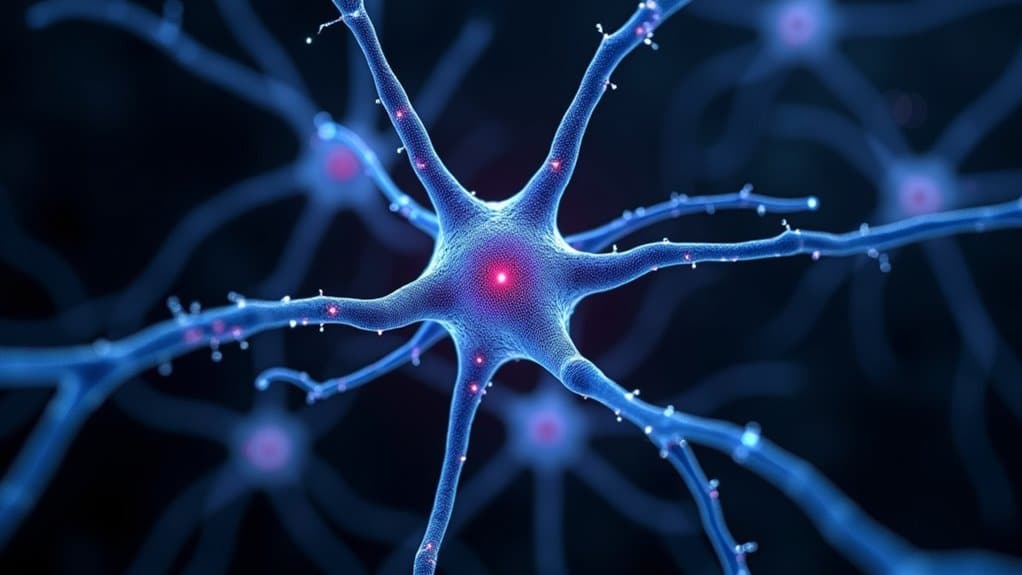
While the brain relies on a delicate balance of excitatory and inhibitory signals, GABA (gamma-aminobutyric acid) serves as the primary inhibitory neurotransmitter by binding to GABA_A receptors throughout the central nervous system. These receptors form pentameric complexes with distinct receptor subtype compositions, featuring diverse combinations of α, β, and γ subunits that determine their function and drug sensitivity. The receptor’s physiological function depends on reversal potential -70mV, which enables effective inhibitory signaling.
When you take benzodiazepines, they bind to a unique site between α and γ subunits, separate from GABA’s binding location. This interaction amplifies GABA signaling mechanisms by increasing chloride channel opening frequency, though benzos can’t activate the receptors independently. Crucially, this process leads to the passage of chloride ions into neurons, making them less likely to fire. While this augments natural inhibitory signaling, your brain adapts to this artificial amplification, potentially leading to reduced receptor expression and creating a dependency on drug-mediated inhibition.
Dopamine’s Role in Benzodiazepine Dependence
When you take benzodiazepines, they trigger dopamine release in your brain’s reward circuits, though less intensely than other addictive substances. Your brain’s natural dopamine production begins to decline with continued use, leading to tolerance and the need for higher doses to achieve the same effects. The pleasurable feelings from benzos create reinforced behavior patterns that can quickly lead to psychological dependence.
You’ll experience structural changes in your brain’s reward pathways as benzos repeatedly activate dopamine systems, creating lasting associations that reinforce drug-seeking behavior. This interaction occurs because benzodiazepines affect alpha-1 GABAA receptors, disrupting the natural balance of neurotransmitters in the brain.
Dopamine Release Mechanisms
Through complex interactions with GABA receptors, benzodiazepines trigger a cascade of neurochemical events that dramatically affect dopamine release in the brain’s reward circuitry. When you take benzodiazepines, they bind specifically to α1-containing GABA_A receptors on VTA interneurons, disrupting inhibitory tone maintenance. Studies suggest that these receptors directly contribute to α1GABAARs dependence during chronic benzodiazepine use.
This disinhibition allows dopamine neurons to fire more frequently, producing surges of the neurotransmitter throughout mesolimbic pathways. Environmental factors like co-abuse with opiates can significantly amplify these dopaminergic effects, increasing addiction risk.
With repeated exposure, you’ll experience dopamine neuron desensitization as your brain adapts to these artificial surges. The process involves AMPA receptor upregulation and long-term potentiation-like changes in VTA synapses, similar to changes seen with other addictive substances.
These neuroadaptations final lead to decreased natural dopamine production and increased drug-seeking behavior to maintain reward system equilibrium.
Reward Circuit Alterations
The dopamine surge triggered by benzodiazepines sets in motion lasting changes across reward circuitry pathways. When you take these drugs, they cause synaptic homeostasis disruption by altering how your brain’s GABAergic interneurons function in the ventral tegmental area. This leads to reward pathway sensitization, making your brain increasingly reactive to drug-related cues while becoming less responsive to natural rewards. The process requires gradual dose reduction during treatment discontinuation to avoid severe withdrawal effects.
- Your dopamine neurons shift their firing patterns, responding more strongly to drug anticipation than to the drug itself
- Your VTA undergoes rapid synaptic plasticity changes, affecting glutamate signaling and AMPA receptor ratios
- Your mesolimbic pathways experience persistent sensitization, potentially creating long-term vulnerability to relapse
These neuroadaptive changes explain why you’ll find it increasingly difficult to maintain normal reward processing without the drug’s presence.
Brain Changes During Long-Term Benzo Use
When you chronically use benzodiazepines, your brain undergoes significant adaptive changes as GABA receptors become desensitized and require increasing amounts of the drug to function.
Your dopamine circuitry experiences profound rewiring, with synaptic connections degrading in key regions responsible for cognition and emotional regulation. Recent studies reveal that activated microglia cells contribute to this degradation of neural connections. These structural changes can persist even after discontinuation, leading to lasting deficits in memory, attention, and problem-solving abilities that affect over 80% of long-term users.
Research shows that approximately one in five long-term benzodiazepine users develop serious neurological complications that can persist for months or even years after stopping the medication.
GABA System Adaptive Changes
Long-term benzodiazepine use sets off a cascade of adaptive changes in the brain’s GABA system, fundamentally altering neural signaling patterns. Your brain responds by downregulating GABA-A receptors and initiating receptor subunit shifts, replacing benzodiazepine sensitive components with non-responsive variants.
These adaptations impair your brain’s natural inhibitory mechanisms and create persistent neurotransmitter imbalances between GABA and glutamate systems. Research indicates that gray matter reduction occurs in patients using benzodiazepines for extended periods, particularly affecting areas like the motor cortex.
- GABA-A receptors become functionally uncoupled, reducing both drug effectiveness and natural GABA signaling
- Your neurons undergo subunit composition changes, swapping α1/α2/α5 subunits for α4/α6 variants that don’t respond to benzos
- The disrupted GABA/glutamate balance leads to a hyperexcitable nervous system, increasing withdrawal risk and symptom severity
These neuroadaptive changes explain why you’ll need increasingly higher doses for the same therapeutic effect and why stopping benzos can trigger severe withdrawal symptoms.
Dopamine Circuit Rewiring Effects
Benzodiazepines set off complex changes in your brain’s dopamine circuitry, fundamentally altering how reward and pleasure signals are processed. Through synaptic adaptation mechanisms, your brain’s VTA region undergoes significant rewiring, leading to persistent dopamine homeostasis disruption.
| Time Period | Neural Adaptations |
|---|---|
| Initial Use | Immediate dopamine surge in reward pathways |
| 24 Hours | VTA synaptic plasticity begins |
| Weeks | Reduced natural dopamine release |
| Months | Severe circuit restructuring |
You’ll experience diminished pleasure from natural rewards as your brain adapts to require benzos for baseline function. The prefrontal cortex’s ability to regulate behavior weakens, while stress hormones amplify drug-seeking responses. These adaptations create a self-perpetuating cycle where your brain prioritizes benzo-induced dopamine release over normal reward processes, making addiction increasingly difficult to overcome.
GABA Receptor Adaptations and Tolerance
Through chronic exposure to benzodiazepines, GABA receptors undergo complex adaptations that diminish drug effectiveness over time. You’ll find that receptor recycling dynamics shift dramatically, with alpha2-containing GABA receptors experiencing increased lysosomal degradation rather than normal membrane recycling. This degradation leads to a significant reduction in surface receptor levels, while compensatory GABA upregulation attempts to maintain neural homeostasis.
Alpha1 and alpha5 subunits play pivotal roles in tolerance development, affecting sedation and withdrawal symptoms. Lysosomal degradation, not trafficking changes, drives the decrease in surface-level receptors. Glutamatergic systems adapt by increasing excitatory signaling to counterbalance chronic GABA inhibition.
These adaptations culminate in reduced benzodiazepine efficacy and contribute to both tolerance and dependence, requiring increasingly higher doses to achieve the same therapeutic effect.
The Reward Circuit Takeover
The reward system’s vulnerability to benzodiazepines emerges through a complex cascade of neurological events, primarily centered in the ventral tegmental area (VTA). When you take benzodiazepines, they activate VTA dopamine neurons by inhibiting GABAergic interneurons, triggering addiction reinforcement mechanisms similar to those of opioids and cocaine.
Your brain’s α1-GABA receptor subunits drive self-administration behaviors through persistent dopamine release, which creates powerful associations between drug use and pleasure. You’ll experience rapid neuroadaptations, as even single doses can modify dopamine signaling for up to 72 hours. These changes strengthen excitatory synapses on dopamine neurons, converting voluntary use into compulsive behavior.
As tolerance develops, you’ll need increasing doses to maintain baseline dopamine levels, while drug-related cues become hypersensitive triggers for relapse through dopamine system hyperactivation.
From Therapeutic Use to Physical Dependence
While dopamine system changes drive addiction potential, physical dependence emerges through distinct neurobiological mechanisms during therapeutic use. When you take benzodiazepines as prescribed, your brain undergoes receptor internalization and neurotransmitter adjustments within 3-6 weeks.
Physical dependence on benzodiazepines develops naturally through brain adaptations, distinct from addiction mechanisms, even when taking medication exactly as prescribed.
This adaptation means your body now requires the medication to maintain normal function, even without addictive behaviors.
- GABA receptors downregulate and internalize, while NMDA receptors increase, creating a compensatory neural state that requires careful withdrawal symptom management
- Gene expression changes alter long-term brain function, making abrupt discontinuation perilous
- Physical dependence occurs in 20-100% of long-term users at therapeutic doses, necessitating supervised tapering
The distinction between physical dependence and addiction is vital – you can develop dependence while following prescription guidelines perfectly, requiring medical supervision for safe discontinuation.
Neurological Impact and Cognitive Consequences
Benzodiazepines take hold of your brain’s neural architecture, triggering widespread changes that compromise cognitive function and emotional stability. These neuroplastic brain changes manifest through hippocampal shrinkage and prefrontal cortex alterations, while motor coordination disruption impacts your daily functioning.
| Brain Region | Primary Impact | Clinical Manifestation |
|---|---|---|
| Hippocampus | Memory Formation | 86.9% Report Memory Loss |
| Prefrontal Cortex | Decision-Making | Impaired Risk Assessment |
| GABA Systems | Neural Adaptation | Tolerance Development |
| Motor Centers | Coordination | Slurred Speech/Balance Issues |
| Sensory Processing | Pain Perception | Altered Sensory Response |
You’ll experience persistent cognitive decline, with 85.3% reporting concentration difficulties. These changes aren’t just temporary they can last months or years after stopping use, leading to permanent alterations in brain communication pathways and executive function.
Frequently Asked Questions
Can Genetics Influence How Quickly Someone Becomes Addicted to Benzodiazepines?
Yes, your genetic makeup can markedly influence how quickly you develop benzodiazepine addiction. Your genetic predisposition affects drug metabolism, receptor sensitivity, and neurotransmitter function.
If you carry specific variants of GABA receptor genes or CYP450 enzymes, you may process benzodiazepines differently than others. These genetic factors, combined with environmental factors like stress and family history, can expedite the progression from use to dependence.
Do Benzodiazepines Affect Men and Women Differently in Terms of Addiction Risk?
Yes, you’ll find significant differences in how benzodiazepines affect men and women. Due to hormonal factors, particularly estrogen levels, women may metabolize benzodiazepines differently than men.
Metabolic differences, including women’s typically smaller body size and higher body fat percentage, can lead to more intense drug effects. You’ll notice women often develop tolerance faster and face higher overdose risks, despite similar misuse rates between genders.
How Do Benzodiazepine Withdrawals Compare to Alcohol or Opioid Withdrawals?
When comparing withdrawals, you’ll find benzodiazepine withdrawal is distinctively dangerous due to its rapid onset withdrawal risk and potentially fatal seizures, similar to alcohol but more severe than opioids.
While opioid withdrawal causes intense discomfort for 1-2 weeks, and alcohol withdrawal peaks within 4 days, benzo withdrawal can produce prolonged withdrawal symptoms lasting months to years, including cognitive impairment and sensory hypersensitivity that neither alcohol nor opioids typically cause.
What Percentage of Prescribed Benzodiazepine Users Eventually Develop an Addiction?
While addiction rates for prescribed benzodiazepine users aren’t precisely known, research indicates that approximately 2% of all benzodiazepine users develop addiction, with the rate likely lower for those taking prescribed doses.
You’ll find that dosage dependence can develop even with prescribed use, but true addiction is considerably higher among those who misuse these medications.
Can Alternative Medications Provide Similar Benefits Without the Addiction Potential?
Yes, you can find effective alternatives to benzodiazepines that offer anxiety relief with lower addiction risk. Non-benzodiazepine options like buspirone, hydroxyzine, and certain antidepressants work through different mechanisms that don’t create physical dependence.
Alternative therapies, including cognitive behavioral therapy and sleep management strategies, can also provide significant benefits. You’ll want to work with your healthcare provider to find the right combination of medication and non-pharmacological approaches for your specific needs.