






Evidence-based addiction education works best when you combine interactive approaches that engage both families and students. The most effective activities include life skills role-playing, family prevention workshops, community health fairs, peer leadership programs, decision-making exercises, hands-on overdose response training, and whole-school prevention initiatives. These programs can reduce substance use by up to 75% when properly implemented. Understanding how each component works together creates your strongest defense against addiction.
Interactive Life Skills Training Through Role-Playing and Practice

Role-playing serves as a cornerstone of Life Skills Training (LST), providing students with practical experience in drug resistance and social competency. Through behavior modeling and youth empowerment, you’ll find that LST’s interactive sessions help develop pivotal self-management and social skills. The program emphasizes refusal skills training, which research shows is a crucial protective factor against substance use. The comprehensive curriculum includes 30 total sessions spread across three years of instruction.
You can expect to participate in 15 classroom sessions lasting 40-45 minutes, where you’ll practice analyzing situations, making decisions, and using assertiveness techniques. The program’s hybrid or online delivery options make it accessible for all learning environments. The program’s effectiveness is remarkable; studies show it reduces tobacco, alcohol, and marijuana use by 50-75%. What’s more, these benefits last long-term, with follow-up studies demonstrating up to 66% reduction in polydrug use six years after intervention.
Family-Based Prevention Workshops and Discussion Forums
While individual interventions show promise, family-based prevention workshops deliver the strongest long-term impact on reducing adolescent substance use. These structured programs, featuring 6-14 interactive sessions, strengthen family bonds through facilitated sharing sessions and skill-building activities. Families participating in these workshops demonstrate increased parent-child attachment, creating a vital protective factor against youth substance abuse.
You’ll find these workshops incorporate social marketing strategies to enhance engagement, offering flexible scheduling, childcare, and culturally adapted materials. The format combines parent training in monitoring and communication with youth instruction in peer refusal and emotional control. Research shows participants experience improved family dynamics, reduced behavioral issues, and lower substance use rates that persist beyond 12 months.
Programs specifically designed for Hispanic and African American youth have shown culturally-adapted approaches yield particularly strong outcomes. The cost-benefit analysis supports implementation, with returns exceeding program expenses by $655-$1,672 per family while fostering lasting protective factors against addiction and related risk behaviors.
Community Health Fairs and Overdose Response Education
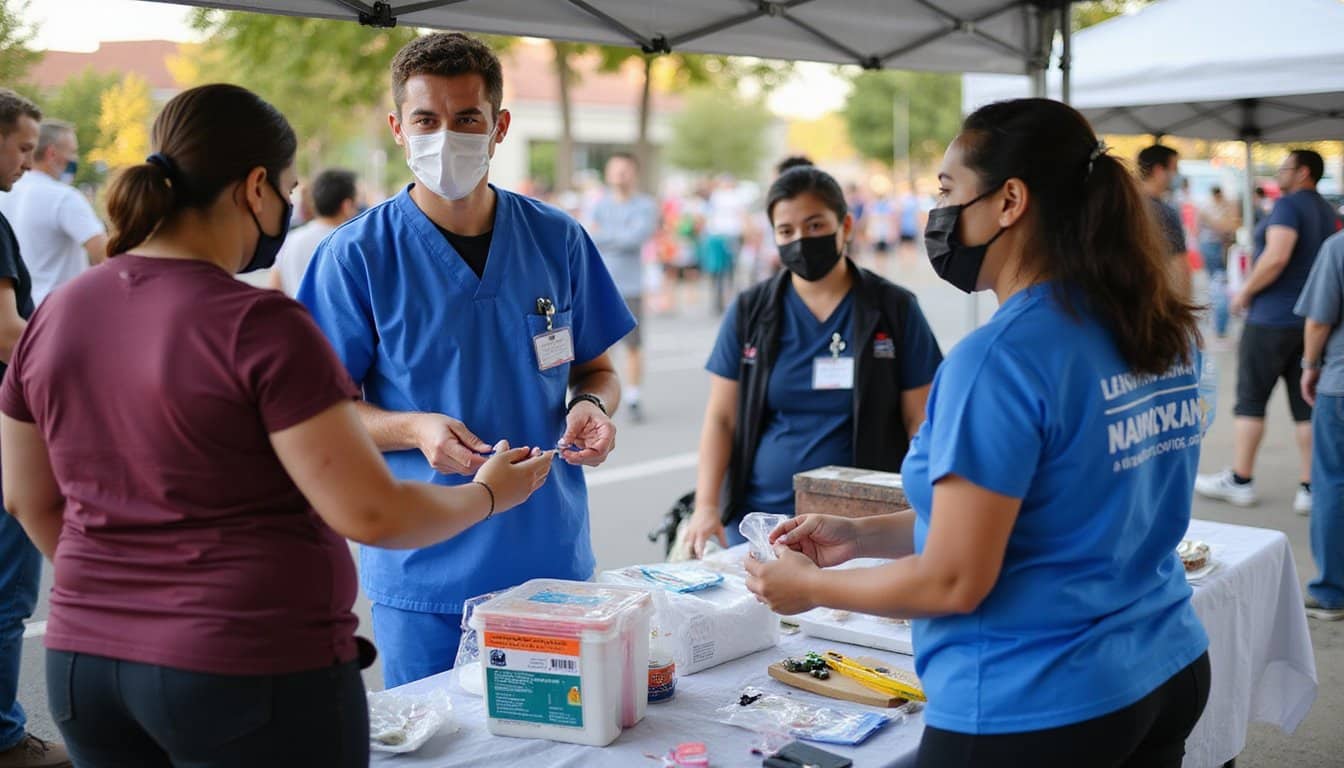
Beyond family-centered programs, community health fairs serve as powerful platforms for addiction education and overdose response training. You’ll find economical access to indispensable health screenings and addiction resources, with hands-on naloxone demonstrations and emergency response guidance that’s proven to save lives. Modern programs emphasize interactive skill-building rather than traditional lecture-based education. Student volunteers provide essential clinical experience under professional supervision while supporting these vital community services.
These events excel at targeted outreach, bringing essential education to underserved populations while connecting participants to local treatment services. While follow-up care access can be challenging due to insurance limitations, health fairs effectively bridge this gap through resource referrals to clinics and mental health providers. Data shows these initiatives contribute to declining overdose rates, especially when they include interactive workshops and family engagement components. These fairs particularly benefit Black and Hispanic communities, as demonstrated by demographic data from successful health ministry initiatives. To optimize impact, you’ll want to participate in comprehensive screenings and educational sessions that address both prevention and emergency response.
Peer Leadership Programs for Drug Prevention
When you’re looking to create lasting change in youth substance use prevention, peer leadership programs offer a powerful evidence-based approach that harnesses natural social networks and influence. You’ll find that carefully selected and trained peer mentors, drawn from both prosocial and at-risk student populations, can effectively model healthy behaviors and deliver prevention messaging that resonates authentically with their fellow students. Research shows that self-persuasive advocacy by peer leaders can create positive shifts in their own substance use behaviors. Since 90 percent of adults with addiction began using substances as teenagers, targeting youth through peer programs is crucial. Your program’s success will improve dramatically when you combine structured peer training with digital tools, family involvement, and school-wide support systems to build sustainable youth prevention leadership. Studies demonstrate that peer leadership initiatives can lead to reduced absenteeism and improved school attendance among participating students.
Peer Mentors Drive Change
Since peer mentoring programs demonstrate remarkable success in substance use prevention, educators and healthcare providers increasingly rely on these evidence-based interventions to combat addiction. You’ll find the most effective mentor training approaches emphasize formal preparation, clear role definitions, and structured curricula adherence. Technology-enabled engagement through mHealth platforms and social media augments program reach and participation. Research shows that a four-to-one reach is achieved when using mobile-based mentoring compared to traditional paper methods. Research at the Laboratory of Psychosocial Processes has shown that structured mentor training significantly improves intervention outcomes. The program’s effectiveness is enhanced when strong emotional bonds are developed between mentors and mentees.
When you implement peer mentoring initiatives, focus on early intervention phases and goal attainment scaling personalized to individual needs. Studies show programs with high mentor involvement can reduce illicit drug use by up to 46%. To optimize impact, maintain consistent session attendance and utilize mobile platforms for ongoing support. The evidence confirms that peer mentors effectively identify and address substance use concerns, especially when they receive proper training and sustain strong relationship quality with mentees.
Building Youth Prevention Leaders
Building on the success of peer mentoring, youth prevention leadership programs offer a powerful approach to substance use prevention. These initiatives drive community-wide empowerment by developing essential leadership, communication, and decision-making skills that help young people resist substance use.
You’ll find that leadership programs excel at systemic resilience building through extensive engagement of families, schools, and neighborhoods. When you involve youth as program leaders, you’ll see increased effectiveness in prevention messaging and higher participation rates. The programs are particularly impactful for initially low-functioning youth, who show the greatest gains in self-assertive efficacy and community engagement. Studies show that providing youth with safe and creative spaces helps foster personal growth and development while strengthening their leadership abilities.
Teen-Led Drug Education Success
Research consistently demonstrates that teen-led drug prevention programs deliver superior outcomes compared to traditional adult-driven approaches. When you engage youth leaders in early intervention efforts, they effectively connect with their peers through culturally relevant messaging about current substance use trends.
- Interactive activities and peer testimonials build trust and encourage honest dialogue about drug use
- Role-playing scenarios help students develop practical skills for resisting peer pressure
- Small group sessions create supportive environments where teens feel safe discussing concerns
- Harm reduction principles make the education more credible by acknowledging both risks and perceived benefits
- Skills-focused programming leads to significant reductions in cannabis use and non-medical pill consumption
This peer-led approach sustains engagement through relatable content delivery while fostering the development of essential decision-making and refusal skills that protect against substance use.
Decision-Making and Refusal Skills Development
The development of solid decision-making and refusal skills forms a critical foundation in addiction prevention and recovery. Through evidence-based curriculum integration, you’ll learn to identify high-risk situations and develop effective responses that align with your personal values and health goals.
You’ll strengthen your cognitive skills through role-playing exercises and group activities that amplify your ability to resist peer pressure and social influences. These practical sessions reinforce informed choice by addressing common misconceptions about substance use while building your confidence in refusing offers. The program’s cognitive-behavioral approach helps you recognize triggers and develop alternative coping strategies.
Working with your family, you’ll improve communication and collective decision-making skills, creating a supportive environment that boosts long-term success in maintaining healthy choices and boundaries.
Hands-On Overdose Recognition and Response Training

While opioid overdoses continue to impact communities nationwide, hands-on training equips you with life-saving recognition and response skills. Through practical simulation scenarios and regular skills reinforcement, you’ll learn proper overdose management techniques that can increase survival rates.
Hands-on overdose response training provides essential skills that save lives, empowering communities to address the ongoing opioid crisis.
- Master essential response steps, including sternal rubs, recovery positions, and CPR
- Practice naloxone administration using training devices and demonstration manikins
- Participate in interactive case studies that build confidence and decision-making abilities
- Learn to identify overdose symptoms and risk factors with 73% higher accuracy
- Gain hands-on experience through mock emergency scenarios with your family members
When you’re trained alongside family members, you’ll develop a stronger support network of prepared responders. Research shows these skills stay with you for months after training, especially when reinforced through ongoing practice sessions and community workshops.
Whole School Approach to Substance Use Prevention
A supportive school culture forms the foundation for effective substance use prevention by emphasizing shared responsibility, clear policies, and universal engagement across all grade levels. You’ll need to coordinate prevention training that equips staff with evidence-based strategies while building their confidence to address substance use concerns through early intervention and referral. This whole-school approach creates a unified prevention framework where teachers, counselors, and administrators work together to reinforce healthy behaviors and provide consistent support for students at different risk levels.
Building Supportive School Culture
Building a supportive school culture requires three essential components: broad policies, positive relationships, and active community engagement. Through whole school curriculum integration and family engagement practices, you’ll create an environment that promotes student well-being and reduces substance use risks.
- Implement inclusive policies that prioritize health and safety while maintaining clear intervention guidelines
- Foster strong connections between students, teachers, counselors, and families to build trust and open communication
- Engage parents through regular education sessions and involvement in policy development
- Create partnerships with community services to expand support networks beyond school grounds
- Establish consistent messaging across all school activities and events to reinforce prevention efforts
These evidence-based strategies work together to create an extensive support system that empowers students while providing the structure needed for effective substance use prevention.
Coordinated Staff Prevention Training
Successful implementation of coordinated staff prevention training requires a systematic, evidence-based approach that unifies your school’s addiction education efforts. Your data-driven training design should integrate mental health, social-emotional learning, and risk prevention across eight core domains while ensuring sustained implementation support through regular sessions.
| Training Component | Implementation Strategy |
|---|---|
| Core Competencies | Integrate WSCC framework domains |
| Session Frequency | Schedule regular skill maintenance |
| Content Design | Customize based on school-specific data |
| Support Systems | Establish ongoing professional development |
| Success Metrics | Deploy standardized assessment tools |
You’ll need to address common barriers like resource constraints and staff engagement through clear leadership endorsement and participatory models. Incorporating family and community partnerships strengthens your prevention outcomes while fostering student resilience. Regular evaluation helps maintain program fidelity and demonstrates impact on both health and academic indicators.
Frequently Asked Questions
How Can Schools Fund Comprehensive Addiction Education Programs?
You can safeguard funding for school addiction programs through diverse channels. Start by exploring federal and state grant funding opportunities like SAMHSA’s block grants. Partner with local health departments, nonprofits, and hospitals to establish community-based partnerships that provide financial support. Don’t overlook private foundations and PTA contributions. You’ll enhance your funding potential by documenting program outcomes and combining multiple funding streams to guarantee long-term sustainability.
What Qualifications Should Addiction Education Facilitators Have?
You’ll need a certified counseling background with state-recognized credentials like LADC or CFAA. You should complete at least 60 hours of specialized addiction training and maintain 40 hours of continuing education every two years. Your extensive training experience must include 50-300 supervised practical hours and documented recovery-related work (2,000-6,000 hours). You’ll also need strong facilitation skills, professional ethics compliance, and proven ability to create psychologically safe learning environments.
How Can Rural Communities Access Addiction Education Resources?
You can access addiction education resources in your rural area through community outreach campaigns, mobile health units, and telehealth education sessions. Don’t hesitate to connect with local churches, schools, and healthcare providers who often coordinate educational programs. You’ll find confidential helplines and online support groups particularly helpful if transportation is challenging. Your local government’s resource guide can direct you to available services, and virtual platforms let you learn at your own pace.
When Is the Optimal Age to Begin Addiction Education?
You’ll want to begin addiction education as early as preschool and elementary school years, since childhood risk factors emerge during major changes like starting school. It’s vital to establish protective family dynamics and healthy coping strategies before adolescence, when substance use risks dramatically increase. You can incorporate developmentally-appropriate lessons on emotional awareness, self-control, and positive decision-making through interactive activities both at home and school.
How Can Educators Support Students Who Have Addicted Family Members?
You can support students with addicted family members by creating a safe, nonjudgmental classroom environment where they feel comfortable sharing their struggles. Connect them with student support groups and family counseling services through your school’s counselors or social workers. Practice active listening, watch for behavioral changes that may signal distress, and implement trauma-informed teaching approaches. Remember to maintain appropriate boundaries while ensuring students know they’re not alone in their experiences.