





Intensive outpatient treatment (IOP) provides structured therapy, typically 9 to 30 hours weekly across 3-5 sessions, while you maintain your daily responsibilities at home or work. You’ll participate in group therapy, individual counseling, and evidence-based approaches like cognitive behavioral therapy. IOP works well if you’re stepping down from inpatient care, managing moderate mental health or substance use challenges, or need more support than standard outpatient offers. Understanding the full structure and eligibility process can help you determine if it’s right for you.
What Is Intensive Outpatient Treatment?

When you’re struggling with a mental health condition, substance use disorder, or eating disorder but don’t need round-the-clock supervision, an Intensive Outpatient Program (IOP) can provide the structured support you need while letting you maintain your daily life.
This treatment approach delivers a minimum of nine hours of therapy weekly, typically spread across three to five days. Each session runs two to four hours, combining group therapy, individual counseling, and psychoeducation. Many programs also incorporate complementary therapies such as yoga, art therapy, or meditation to support the healing process.
Unlike inpatient programs, IOPs offer a high level of independence. You’ll receive care from a multidisciplinary team, including psychiatrists, therapists, and social workers, who create personalized treatment plans addressing your specific symptoms and goals. This structure works well if you’re experiencing acute mental illness or moderate to severe issues requiring intensive support. IOPs are ideal settings for implementing cognitive-behavioral therapy, as your normal environment provides real-world material for problem-solving exercises and homework assignments.
Where IOP Fits on the Treatment Continuum
Understanding where IOP sits within the broader treatment landscape helps you make informed decisions about your care. The American Society of Addiction Medicine classifies IOP as Level II.1, positioning it between standard outpatient services and residential programs.
You might enter IOP through a step up referral pathway when outpatient care isn’t providing enough structure to maintain your recovery. Alternatively, IOP serves as a bridge when you’re moving from inpatient treatment through step down planning, helping you maintain gains while adjusting to less intensive support. Clinicians should adopt the mindset of admitting you into the continuum of care rather than just their specific program, which helps them plan ahead for your next treatment steps.
IOP requires a minimum of nine hours weekly for adults and six hours for adolescents. This structure allows you to receive thorough therapeutic support while maintaining daily responsibilities like work or family commitments. Regular reassessments verify you’re receiving the appropriate level of care as your needs evolve. Programs typically last 21-50 days, giving you sufficient time to develop coping mechanisms and relapse prevention skills.
Structure and Schedule of IOP Sessions
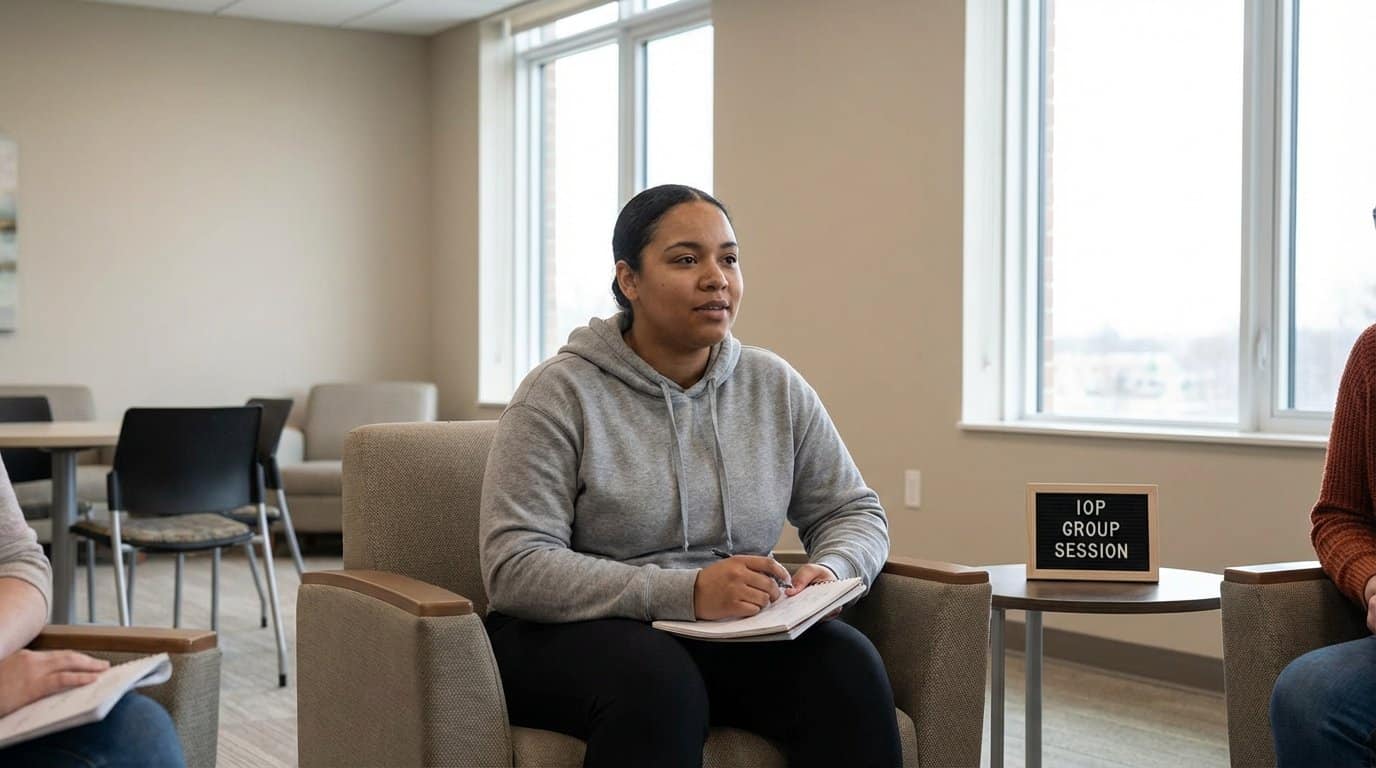
Understanding IOP’s structure helps you plan your daily life around treatment and set realistic expectations for your recovery journey. You’ll typically commit 9 to 30 hours weekly across three to five sessions, with each session lasting two to five hours and offering flexible morning, afternoon, or evening options. Most programs run 8 to 12 weeks and combine group therapy, individual counseling, psychoeducation, and skills training to address your specific needs. Group therapy sessions typically include 6 to 15 participants, creating a supportive environment where you can connect with others facing similar challenges. Throughout the program, you’ll also engage in at least three individual therapy sessions where your therapist develops a personalized treatment plan tailored to your unique challenges.
Weekly Time Commitment
Committing to an IOP means setting aside a significant but manageable portion of your week for treatment. You’ll typically dedicate at least 9 hours weekly to structured therapy, though early phases may require 19-30 hours depending on your needs. This time breaks down into 3-5 sessions lasting 2-5 hours each.
Your program adapts to your personal routines and family obligations. Morning, afternoon, and evening options, including virtual sessions, let you maintain work, school, or caregiving responsibilities while receiving care. As you progress, your weekly commitment gradually decreases, often stepping down from 15 to 9 to 6 hours.
This structure provides intensive support without requiring you to pause your life completely. You’ll build accountability through consistent attendance while applying skills in real-world situations between sessions. Group therapy serves as the focal point of these sessions, allowing you to learn from and find support among others facing similar challenges.
Typical Session Components
Each IOP session weaves together several therapeutic components designed to address your recovery from multiple angles.
Your sessions typically last three to four hours, beginning with group therapy focused on relapse prevention or psychoeducation. This cornerstone element harnesses group dynamics to create accountability while you share experiences and receive peer feedback. The participant interaction during these sessions builds community and strengthens your support network.
Following group work, you’ll move to individual counseling where you’ll address personal challenges, develop coping strategies, and evaluate your treatment progress using evidence-based approaches like CBT or DBT.
Sessions often conclude with skills training, covering mindfulness, trigger management, or stress reduction, or family support elements when applicable. This structured flow guarantees you receive comprehensive care that targets emotional regulation, education, and relational healing within each session.
Program Duration Expectations
When you enter an IOP, you’ll typically commit to three to five sessions per week, with each session lasting between two and four hours. Most programs run 8 to 12 weeks, though research supports 90 days as the minimum for ideal outcomes.
Your personalized treatment duration depends on several factors influencing program length, including co-occurring disorders, your progress toward clinical milestones, and individual recovery needs. Regular assessments are conducted to evaluate your progress and adjust your treatment plan accordingly.
| Factor | Impact on Duration |
|---|---|
| Co-occurring disorders | Extends treatment length |
| Clinical progress | Allows earlier step-down |
| Work/family commitments | Shapes weekly schedule |
| Initial assessment findings | Determines starting intensity |
As you advance in recovery, you’ll move to fewer weekly sessions. Complex cases may require six months or longer, while others complete treatment within the standard timeframe. Some individuals may attend IOP for a year or longer, depending on their unique circumstances and recovery progress.
Evidence-Based Therapies Used in IOP

Because intensive outpatient programs rely on proven methods to support lasting recovery, they incorporate several evidence-based therapies that research has shown to be effective.
You’ll encounter treatments that address the cognitive, behavioral, and emotional patterns driving addiction. These approaches have undergone thorough program evaluation through controlled studies, demonstrating measurable results in reducing substance use and preventing relapse. SAMHSA TIP 47 outlines the evidence-based approaches that guide IOP design and implementation across treatment settings.
Key therapies you may experience include:
- Cognitive Behavioral Therapy (CBT): Helps you identify and change thought patterns contributing to substance use
- Motivational Interviewing: Enhances your engagement through personalized goals and progress tracking
- Specialized trauma interventions: Address co-occurring PTSD using EMDR or prolonged exposure, with studies showing 86% symptom reduction
These therapies work together to build coping strategies, manage stress, and develop resilience skills essential for your recovery journey. A multidisciplinary team coordinates your care to ensure each therapy aligns with your individualized treatment plan and supports long-term stability.
Who Benefits Most From Intensive Outpatient Care
Intensive outpatient care isn’t right for everyone, yet research shows it delivers strong outcomes for specific groups of people. You’ll benefit most if you’re stepping down from inpatient treatment and need a bridge to independent living. Research confirms this changeover approach reduces readmission rates substantially.
Through individual needs assessment, clinicians identify whether you need more support than weekly therapy but don’t require residential care. If you’re managing moderate substance use or mental health challenges while maintaining work, school, or family responsibilities, IOP’s flexible scheduling fits your life. Programs also work well when you face transportation challenges or housing instability, as multidisciplinary teams can help arrange vouchers and assist with applications to remove these barriers. Studies consistently demonstrate that IOPs produce comparable outcomes to inpatient treatment for most individuals, making them an effective choice when residential care isn’t necessary.
Recovery environment maintenance matters too. When your home provides healthy support, staying connected to your community bolsters progress. Younger adults (18-25) thrive with peer group components, while those with self-harm histories respond particularly well to DBT-informed programming.
Eligibility Requirements and Assessment Process
If you’re considering intensive outpatient treatment, understanding whether you qualify helps you take the right next step. IOP is designed for individuals with mental health or substance use conditions that considerably interfere with daily functioning but don’t require 24-hour supervision. A structured clinical assessment determines your eligibility and verifies the program matches your specific treatment needs. Good candidates often include those who have recently been discharged from hospital or residential treatment and need continued support to prevent relapse.
Who Qualifies for IOP
Getting into an intensive outpatient program requires meeting specific clinical criteria that demonstrate you need more support than traditional weekly therapy provides. Your psychiatric diagnoses must be formally documented, typically including conditions like depression, anxiety disorders, bipolar disorder, or substance use disorders that considerably interfere with your daily functioning.
To qualify, you’ll need to meet these core requirements:
- A physician’s certification confirming you need at least 9 hours of structured services weekly
- Functional stability allowing you to participate actively without requiring 24-hour supervision
- Evidence that less intensive care hasn’t adequately addressed your symptoms or prevented relapse risk
Treatment duration depends on your progress, with recertification occurring every 60 days. You’re also eligible if you’re stepping down from hospitalization or residential care and need continued structured support.
Clinical Assessment Steps
Once you’ve determined that IOP might be the right fit for your needs, the clinical assessment process begins with an in-depth intake conversation. During this clinical intake evaluation, you’ll meet with a healthcare professional who’ll ask about your addiction history, substances used, frequency of use, and previous treatment attempts.
Assessment thoroughness matters, your provider will conduct a thorough mental health evaluation screening for conditions like depression, anxiety, or PTSD. You’ll also undergo a physical examination and laboratory tests to identify any health issues related to substance use.
This information guides your personalized treatment plan, which includes SMART goals and relapse prevention strategies. Your physician will certify that you need a minimum of nine hours of weekly treatment, and the team will complete prior authorization documentation for your insurance.
Steps to Enroll in an IOP Program
The phone call that starts your IOP journey doesn’t need to feel overwhelming. When you contact an admissions navigator, you’ll share your substance use history, what triggered your decision to seek help, and your current circumstances. Many navigators have personal recovery experience, bringing genuine understanding to these conversations.
After initial screening, you’ll gather essential documents:
- Government-issued ID for identity verification
- Insurance policy details for coverage and payment flexibility options
- Medical records related to mental health or co-occurring conditions
Your clinical team will use ASAM criteria to determine if IOP fits your needs. Once they’ve secured pre-authorization from your insurance, you’ll finalize your treatment plan and discuss family involvement in your recovery process. Most programs begin within days of approval, meeting three to seven times weekly.
Advantages of Choosing IOP Over Other Treatment Options
While residential treatment remains valuable for severe cases, intensive outpatient programs deliver comparable results for many people seeking recovery. Research shows 50-70% of IOP participants report abstinence at follow-up, matching residential care outcomes.
The cost savings potential makes IOP accessible when finances limit your options. You’ll typically pay under $10,000 compared to $40,000 for inpatient care, while receiving equivalent therapeutic benefits.
Real world applicability sets IOP apart from other treatment levels. You’ll practice coping strategies immediately in your actual environment, building sustainable recovery skills while maintaining work and family connections. This isn’t theoretical learning, you’re applying evidence-based techniques to daily challenges as they arise.
IOPs also address co-occurring conditions like depression, anxiety, and PTSD simultaneously, preventing relapse triggers from untreated mental health issues.
Building Long-Term Recovery Skills Through IOP
- Recognizing and regulating difficult emotions like anxiety, shame, and anger
- Practicing communication and conflict resolution in group settings
- Building problem-solving strategies you can apply immediately
You’re not just learning concepts, you’re testing new behaviors while working, parenting, or attending school, then refining them with clinical support. Group accountability strengthens your commitment, while peer connections create a sober network that outlasts treatment. This structured practice builds the self-efficacy you’ll rely on long after IOP ends.
Frequently Asked Questions
Can I Continue Working or Attending School While Enrolled in IOP?
Yes, you can often continue working or attending school while in IOP. Many programs schedule sessions during evenings, early mornings, or weekends to fit around your commitments. You might consider part time enrollment or request academic accommodations through your school’s disability services. Under the ADA, you may qualify for workplace flexibility too. Talk with your treatment team about balancing your schedule, they’ll help you manage both recovery and responsibilities successfully.
Does Insurance Cover Intensive Outpatient Treatment Programs?
Yes, most insurance plans cover intensive outpatient treatment programs. Medicare Part B, Medicaid, TRICARE, and major private insurers like Anthem, Aetna, Cigna, and UnitedHealthcare typically provide coverage. However, you’ll want to verify your premium coverage requirements and understand any treatment program limitations, for example, Medicare currently excludes telehealth IOP options. We recommend contacting your insurance provider or an admissions specialist to confirm your specific benefits before enrollment.
What Happens if I Relapse During the IOP Program?
If you relapse during IOP, your treatment team will provide immediate counseling for relapses without judgment, it’s a learning opportunity, not a failure. You’ll work together to identify triggers and adjust your plan accordingly. Your team may strengthen your relapse prevention strategies or increase session frequency. Since 40-60% of people in recovery experience relapse, your providers understand this and will support you through honest, compassionate care.
Are Family Members Allowed to Participate in My IOP Treatment?
Yes, family members can participate in your IOP treatment. Family involvement serves as a key component, especially in teen programs, though it’s encouraged for adults too. Your loved ones may join therapy sessions, attend family education workshops, and engage in counseling alongside your individual work. This participation helps build emotional support, accountability, and healthier communication patterns. While not always mandatory, having your family involved often strengthens your recovery journey.
How Do I Know When I’m Ready to Graduate From IOP?
You’re ready to graduate from IOP when you’ve met your program completion goals and satisfied individualized assessment criteria established with your treatment team. This typically means you’ve maintained sustained abstinence, developed a solid relapse prevention plan, built a supportive sober network, and demonstrated improved coping skills. Your clinical team will assess your progress across all treatment dimensions to ascertain you’re prepared for continuing care at a lower intensity level.