






Narcan (naloxone) has minimal effects on you if you’re sober. Unlike its dramatic impact on opioid users, in a sober person, it simply can’t find opioid molecules to displace from receptors. You might experience mild side effects like headache, dizziness, or slight nausea that resolve within 30-90 minutes. Your cognitive function remains intact, and no impairment occurs. This safety profile explains why Narcan can be administered without concern when overdose is suspected but uncertain.
The Science Behind Narcan: How It Works in the Body
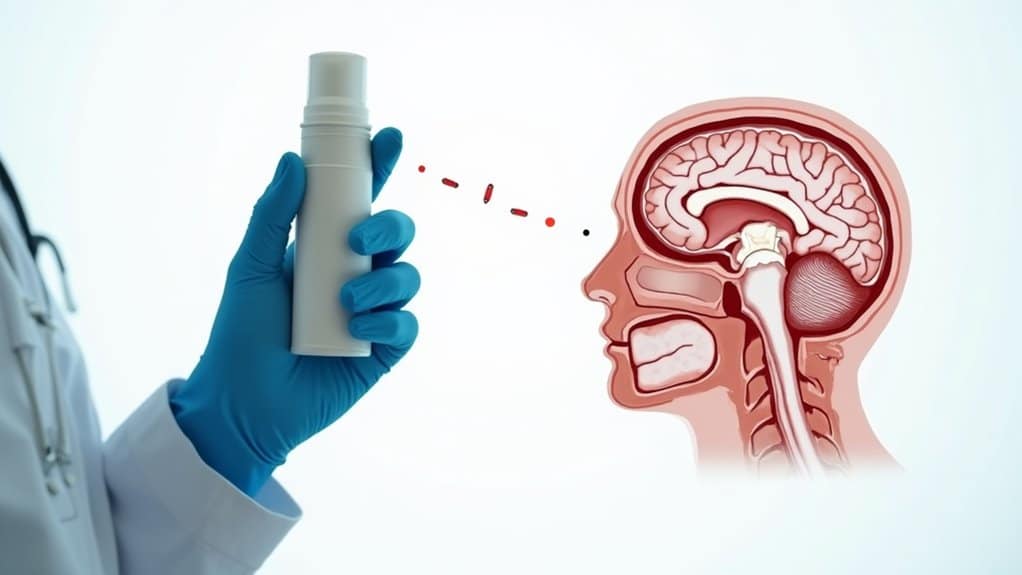
When administered to a person experiencing an opioid overdose, Narcan (naloxone) rapidly reverses the life-threatening respiratory depression by competitively binding to opioid receptors. This medication has a higher affinity for these receptors than opioids themselves, effectively displacing them and blocking their effects.
In a sober person without opioids in their system, Narcan finds no substances to displace. Your opioid receptors continue functioning normally with your body’s natural endorphins. Research demonstrates Narcan’s remarkable efficacy stems from its molecular structure, which allows it to bind firmly to μ-opioid receptors without activating them.
You’ll experience minimal to no physiological effects from Narcan administration when sober because it doesn’t interfere with normal neurotransmission, it specifically targets and neutralizes external opioids.
Physiological Effects of Narcan on People Without Opioids in Their System
If you don’t have opioids in your system, Narcan typically produces minimal physiological effects because it lacks substances to displace from opioid receptors. You might experience temporary responses such as mild headache, slight nausea, or brief dizziness after administration, though these reactions occur infrequently in opioid-free individuals. Research demonstrates that Narcan’s competitive antagonist properties remain largely inactive in sober persons, explaining why adverse reactions are considerably less pronounced than when administered during an actual opioid overdose.
Minimal Side Effects
Contrary to common misconceptions, naloxone (Narcan) administration to individuals without opioids in their system produces remarkably few physiological effects. When you receive Narcan as a sober individual, your body typically shows minimal response because there are no opioid molecules for the medication to displace from receptors.
Clinical studies demonstrate that non-opioid users may occasionally experience mild symptoms including slight increases in blood pressure, minor headache, or transient nausea. These effects generally resolve within minutes without intervention. The absence of significant adverse reactions occurs because naloxone functions specifically as a competitive antagonist at opioid receptor sites.
You’ll find that Narcan’s highly targeted mechanism of action explains why sober individuals remain largely unaffected by the medication, making it exceptionally safe for administration even when opioid use status is uncertain.
Temporary Physiological Responses
Despite Narcan’s generally benign profile in opioid-naive individuals, research documents several temporary physiological responses that you might experience following administration. These can include mild tachycardia, increased blood pressure, and sweating due to a temporary adrenaline response. Your body may react to naloxone as a foreign substance, triggering brief sympathetic nervous system activation.
Studies indicate you’ll maintain cognitive clarity effects throughout these responses, Narcan doesn’t impair mental function in sober individuals. Instead, you’ll remain alert while your body processes the medication, typically within 30-90 minutes. Some subjects report mild anxiety during this period, likely related to the adrenaline surge rather than direct pharmacological actions.
These reactions remain clinically insignificant for most recipients without underlying cardiovascular conditions and resolve completely without intervention.
Potential Side Effects for Sober Individuals

While Narcan (naloxone) remains remarkably safe when administered to individuals without opioids in their system, it can produce several mild physiological responses. You might experience temporary discomfort including dizziness, headache, or mild tachycardia. Some sober individuals report nasal irritation when using the intranasal formulation.
Rarely, Narcan effects in sober individuals include hypersensitivity reactions such as urticaria or angioedema. These typically resolve within minutes to hours without intervention. Pulmonary edema has been documented in exceptional cases, though causal links remain under investigation. Pregnant women may experience no supplementary risks, but limited research exists in this population.
Your body will metabolize naloxone rapidly, with a half-life of approximately 30-81 minutes, meaning these effects subside quickly without lasting consequences.
Comparing Narcan’s Impact on Opioid Users vs. Non-Users
When administered to opioid users, Narcan (naloxone) produces dramatically different physiological and neurological responses compared to its effects in non-users. In individuals with opioid tolerance, Narcan quickly reverses respiratory depression and can trigger immediate withdrawal symptoms. You’ll find that non-users experience minimal effects since there are no opioids to displace from receptors.
| Response | Opioid Users | Non-Users |
|---|---|---|
| Withdrawal | Severe symptoms | None |
| Respiratory | Rapid normalization | No significant change |
| Neurological | Consciousness restored | Minimal impact |
One of the common Narcan misconceptions is that it’s harmful to sober individuals. Research indicates that naloxone administration in those without opioids in their system produces negligible physiological effects. Your body simply metabolizes the medication within 30-90 minutes with minimal side effects, unlike the dramatic reversal seen in overdose situations.
Safety Profile and Risk Assessment for Accidental Administration
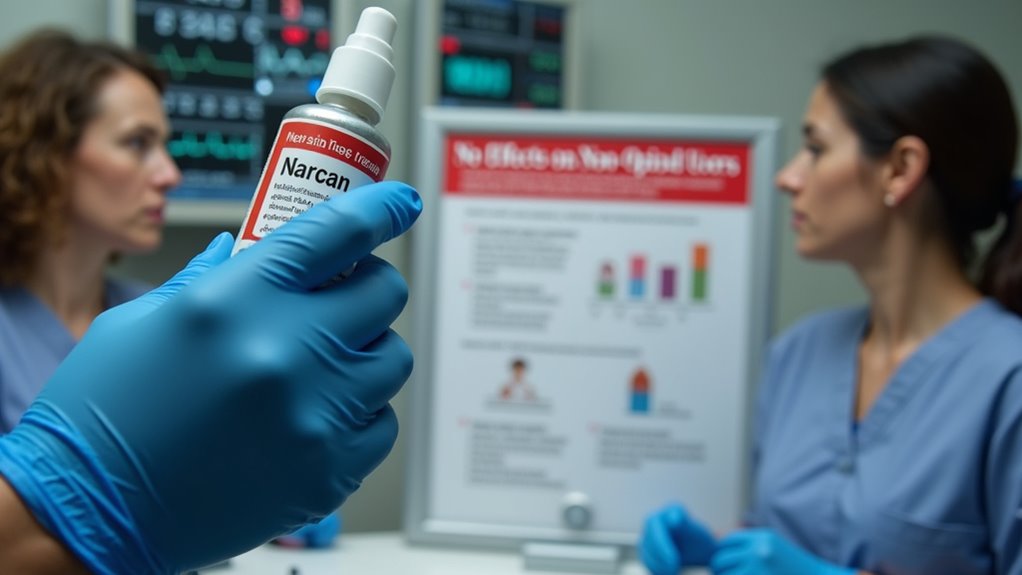
The safety profile of Narcan (naloxone) in cases of accidental administration has been extensively documented through clinical studies and real-world applications. If you’re not experiencing opioid toxicity, Narcan produces minimal physiological effects. Research demonstrates its remarkably benign impact on sober individuals, with transient side effects potentially including mild headache, nausea, or dizziness that resolve quickly without intervention.
In emergency situations, healthcare providers follow safety precautions that prioritize administering Narcan when opioid overdose is suspected, even if uncertainty exists. This approach reflects naloxone’s favorable risk-benefit ratio, the potential harm from withholding treatment far outweighs any risks from unnecessary administration. You should note that while Narcan cannot harm someone who hasn’t taken opioids, it won’t provide therapeutic benefit for non-opioid overdoses or medical emergencies.
Addressing Myths and Misconceptions About Narcan
Widespread misconceptions about Narcan (naloxone) continue to hinder its ideal public health utilization despite substantial scientific evidence supporting its safety profile. You’ll encounter several pervasive myths: that Narcan causes addiction, produces a “high,” or poses significant dangers to sober individuals. These claims lack scientific foundation.
Another common Narcan misconception suggests it encourages riskier opioid use behaviors, research demonstrates the opposite effect. Community Narcan distribution programs actually correlate with reduced opioid use and increased treatment-seeking behaviors.
Understanding Narcan benefits requires recognizing it as a non-addictive, non-psychoactive medication that temporarily blocks opioid receptors. You won’t experience notable effects if you’re opioid-free when receiving naloxone. Its minimal risk profile makes widespread availability a vital component in addressing the opioid epidemic.
Frequently Asked Questions
Can Narcan Be Used Preventively Before Potential Opioid Exposure?
Narcan isn’t recommended as a preventive measure before potential opioid exposure. It’s designed as an emergency response to reverse active overdoses, not as prophylactic protection. Instead, focus on preventive measures like opioid education, recognizing overdose signs, and avoiding high-risk situations. Narcan has a shorter duration of action than many opioids, so pre-administration wouldn’t provide lasting protection and could create a false sense of security while potentially causing unnecessary side effects.
How Long Does Narcan Stay in Your System?
Narcan (naloxone) has a relatively short duration in your system. After administration, Narcan effects typically last only 30-90 minutes, as your liver rapidly metabolizes the medication. Narcan metabolism occurs primarily through hepatic pathways, with a half-life of approximately 1-1.5 hours. You’ll clear most of the drug within 4-6 hours. This brief duration explains why multiple doses may be necessary during opioid overdose situations, as Narcan’s effects often wear off before the opioid is fully eliminated.
Can Children or Pregnant Women Safely Receive Narcan?
Yes, children and pregnant women can safely receive Narcan. The medication’s safety profile makes it appropriate for all stages of life and pregnancy classifications when opioid overdose is suspected. Narcan dosage is the same for children and pregnant women as for adults – typically 2-4mg intranasally or intramuscularly. There are no known harmful effects to fetuses, and the potential benefit outweighs any theoretical risk. You shouldn’t hesitate to administer Narcan in emergency situations regardless of stage of life or pregnancy status.
Is Narcan Available Without Prescription in All States?
Narcan accessibility varies by state. Currently, you can obtain naloxone (Narcan) without a prescription in all 50 U.S. states and Washington D.C. through multiple mechanisms, though specific Narcan regulations differ. Many states have standing orders, pharmacy-based distribution programs, or Good Samaritan laws facilitating access. You’ll find it available in most pharmacies, though insurance coverage and cost may vary. Some states also distribute it through community organizations and public health programs.
Does Narcan Interact With Common Medications Like Antidepressants?
Narcan (naloxone) has minimal interactions with most common medications, including antidepressants. You won’t experience significant adverse effects when these medications are combined. Narcan’s effects are specifically targeted at opioid receptors, so it doesn’t interfere with the mechanisms of antidepressants or most other drug classes. However, you should always inform healthcare providers about all medications you’re taking to guarantee safe administration, as individual medication profiles can vary and new medication interactions may emerge with clinical research.