





To safely taper off alcohol, initially consult a healthcare provider for personalized assessment and monitoring. Establish your baseline consumption by tracking for a week, then create a gradual reduction schedule of 10-20% every 3-7 days. Stock hydration supplies and comfort items for withdrawal symptoms. Implement healthy coping mechanisms like exercise and join support groups. Monitor your physical and emotional responses daily. Develop a written maintenance plan with relapse prevention strategies. These evidence-based steps form the foundation for your path to sustainable sobriety.
Consult a Healthcare Provider Before Beginning Your Taper

Before you attempt to taper off alcohol, consulting with a healthcare provider is essential for your safety. Alcohol withdrawal can be dangerous, even life-threatening, especially if you’ve been drinking heavily for an extended period.
Your doctor will conduct a thorough health assessment to determine your risk factors and create a personalized tapering plan. They’ll evaluate your drinking history, general health status, and potential complications that might arise during withdrawal.
A comprehensive medical evaluation creates your roadmap to safety when tapering alcohol use.
Medical guidance throughout this process guarantees you’re monitored for concerning symptoms like seizures, severe anxiety, or delirium tremens. Your provider might prescribe medications to ease withdrawal symptoms or recommend inpatient treatment if your situation warrants closer supervision.
Don’t underestimate the importance of professional oversight, it greatly increases your chances of a successful, safe change to sobriety.
Determine Your Current Alcohol Consumption Baseline
The initial critical step in creating an effective alcohol tapering plan involves accurately measuring how much you’re currently drinking. Keep a detailed log for at least one week, recording every beverage consumed, its alcohol content, and when you drank it. This baseline assessment provides essential data about your typical consumption patterns.
Be honest during this documentation phase, underreporting will merely lead to withdrawal symptoms during your taper. Note not just the quantity but also your drinking patterns: Do you drink more on weekends? Do certain situations trigger heavier consumption? Track physical symptoms that occur between drinks, as these might indicate dependency.
This self-monitoring serves two purposes: it creates accountability and provides the precise measurements you’ll need to calculate appropriate step-down amounts for your gradual reduction schedule.
Create a Gradual Reduction Schedule

Four key principles guide an effective alcohol reduction schedule: consistency, measurability, gradualness, and safety. After establishing your baseline consumption, create a tapering plan that reduces intake by 10-20% every 3-7 days, depending on your physical response. Your body needs time to adjust to decreasing alcohol levels without triggering severe withdrawal symptoms.
Gradual, measured tapering is essential, your body needs time to adjust without dangerous withdrawal effects.
- Track daily consumption in standard drinks (not subjective “glasses”) to guarantee accurate measurement
- Build schedule flexibility into your plan, slower tapering may be necessary if you experience concerning symptoms
- Maintain consistent drinking patterns during reduction, spread drinks evenly throughout the day rather than consuming all at once
- Schedule regular check-ins with healthcare providers who can monitor your progress and adjust tapering techniques as needed
Remember that successful tapering prioritizes your safety over arbitrary timelines.
Stock Essential Supplies for Managing Withdrawal Symptoms
Properly stocking essential supplies can greatly improve your comfort during alcohol withdrawal. Keep plenty of water, sports drinks, and electrolyte supplements on hand to combat dehydration, while gathering comfort items like comfortable clothing, soothing music, and relaxation tools to manage discomfort. Maintain an emergency contact list with your doctor, a trusted friend or family member, and local emergency services should your symptoms become severe.
Hydration and Electrolytes
Maintaining ideal hydration stands as a cornerstone in alcohol withdrawal management. As you taper off alcohol, your body needs consistent fluid intake to flush toxins and support organ function. Aim for 2-3 liters of water daily, adjusting based on your body weight and activity level.
Electrolyte balance becomes critical during withdrawal as alcohol disrupts these essential minerals. Consider these hydration tips to enhance recovery:
- Add electrolyte supplements or drinks containing sodium, potassium, and magnesium to prevent imbalances
- Monitor urine color, pale yellow indicates proper hydration
- Consume water-rich foods like cucumbers, watermelon, and celery alongside fluids
- Establish a regular drinking schedule with a water bottle marked with time indicators
Proper hydration reduces headache severity, muscle cramps, and general discomfort during your tapering process.
Comfort Items
Preparing a thoughtful collection of comfort items can greatly ease your alcohol withdrawal experience. Stock your home with soft blankets, comfortable clothing, and supportive pillows to create a nurturing environment during this challenging time. Consider adding a heating pad for muscle aches and cool compresses for potential headaches or fever.
Establish soothing rituals with herbal teas like chamomile or lavender, which promote relaxation without caffeine. Keep gentle entertainment available, audiobooks, music playlists, or light reading materials can provide healthy distraction. Many find that journaling supplies help process emotions that surface during tapering.
Essential oils like lavender or eucalyptus used in diffusers may reduce anxiety and promote better sleep. Keep in mind that these comfort items complement medical supervision but don’t replace it during your withdrawal process.
Emergency Contact List
Three critical contacts should form the foundation of your emergency list when tapering off alcohol: your primary care physician, a trusted friend or family member who understands your recovery process, and local emergency services. Create this list before beginning your taper to guarantee immediate access to support networks during challenging moments.
- Program your physician’s after-hours number for medical questions about withdrawal symptoms
- Identify at least two sober support people who can respond within 30 minutes if needed
- Save the Substance Abuse and Mental Health Services Administration (SAMHSA) helpline: 1-800-662-HELP
- Keep local urgent care and emergency room addresses readily accessible
Research shows that patients with strong emergency contacts experience fewer complications during alcohol withdrawal. Your support system isn’t just comforting, it’s medically necessary for safely guiding this challenging but worthwhile experience.
Implement Healthy Coping Mechanisms and Support Systems
As you reduce your alcohol consumption, you’ll need effective alternatives to manage stress and emotional challenges that previously triggered drinking. Consider adopting healthy hobbies like exercise, meditation, or creative pursuits that naturally enhance endorphins and provide constructive outlets for tension.
Equally significant is cultivating substantial social support. Connect with understanding friends and family members who respect your path. Consider joining support groups like SMART Recovery or AA where you’ll find others who comprehend your challenges. Many individuals find that therapy, particularly cognitive behavioral therapy, provides valuable tools for managing cravings and addressing underlying issues.
Remember that successful tapering involves not just removing alcohol but replacing it with life-affirming activities and relationships that fulfill the emotional needs alcohol once temporarily satisfied.
Monitor Your Physical and Psychological Responses Daily
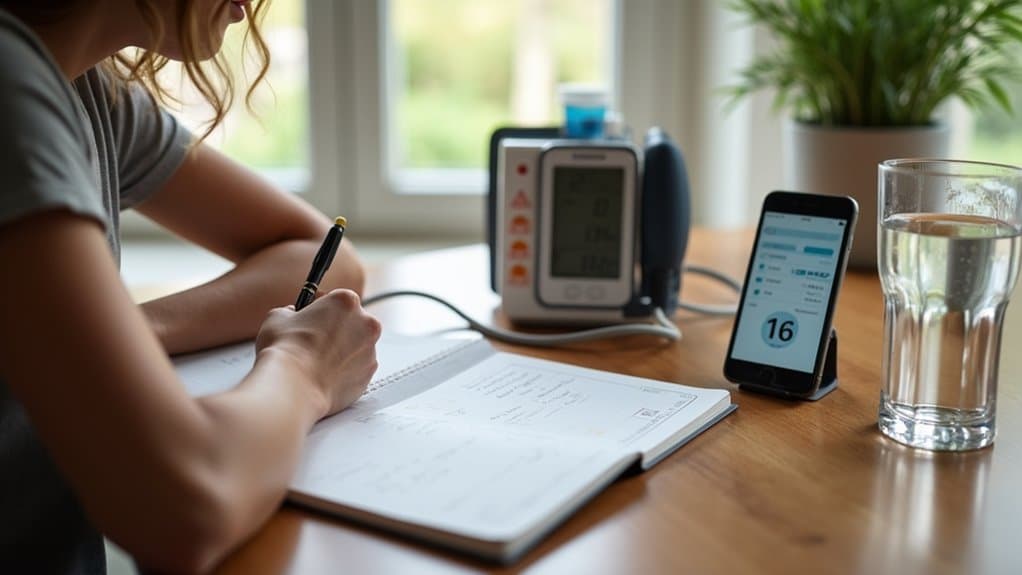
During your tapering process, daily monitoring of both physical and psychological responses becomes a critical component of successful alcohol reduction. Implementing a daily mood tracking system paired with a physical symptom journal allows you to identify patterns and make necessary adjustments to your tapering schedule.
- Record withdrawal symptoms like shakiness, sweating, or anxiety, noting their intensity and duration
- Track your daily mood fluctuations, sleep quality, and energy levels to identify emotional triggers
- Document cravings, when they occur, their intensity, and what helped you manage them
- Note positive changes like improved sleep or mental clarity as motivation
This systematic tracking provides valuable data for both you and healthcare providers, enabling evidence-based decisions about your tapering pace. When concerning symptoms arise, don’t hesitate to seek immediate medical attention, safety remains the priority throughout this process.
Plan for Long-Term Sobriety Maintenance After Tapering
Successfully completing your alcohol tapering schedule marks the beginning, not the end, of your recovery path. Now you’ll need to develop relapse prevention strategies that address your specific triggers and vulnerabilities. Consider creating a written maintenance plan that includes daily routines, healthy coping mechanisms, and emergency contacts.
Support group involvement provides critical accountability and understanding during this change. Whether you choose AA, SMART Recovery, or professional therapy, consistent participation greatly improves long-term outcomes. Research shows that individuals who maintain regular group attendance for at least one year have substantially higher sobriety rates.
Additionally, rebuild your lifestyle around alcohol-free activities and relationships. You’ll need to establish new habits that support your sobriety goals. Keep in mind that recovery isn’t linear, prepare for challenging days by identifying warning signs and having predetermined action steps ready.
Frequently Asked Questions
How Do I Hide My Tapering Efforts From Family or Coworkers?
Disguising consumption attempts may create supplementary stress and complicate your recovery. Instead of hiding your tapering efforts, consider managing perceptions through honest communication with trusted individuals. Research shows that social support improves treatment outcomes. You’re more likely to succeed with understanding allies than through secrecy. If privacy concerns are significant, consider professional help through telehealth options or scheduling appointments that don’t interfere with work. Your health deserves priority over concealment.
Can I Still Drink Socially After Completing an Alcohol Taper?
After completing a taper, social drinking requires careful consideration. Many find that moderation strategies are challenging as alcohol can trigger old patterns. You’ll need to honestly assess your relationship with alcohol. If you choose to try social drinking, set strict limits, track your consumption, and have an exit plan for triggering situations. Consider discussing this with a healthcare provider who understands your history and can help you weigh the risks against your personal recovery goals.
How Long Will Alcohol Cravings Persist After Tapering Completely?
Cravings can persist for weeks to months after you’ve tapered off alcohol completely. You’ll likely notice them diminishing gradually over time, though triggers may cause occasional intense urges. Effective craving management techniques include mindfulness practices, regular exercise, and avoiding high-risk situations. Seeking emotional support through therapy, support groups, or loved ones is essential during this period. Remember, persistent cravings don’t indicate failure – they’re a normal part of recovery that becomes easier to manage with time.
Should I Taper From Beer, Wine, or Spirits?
When tapering, beer often works best due to its lower alcohol content and consistent serving sizes. You’ll find beer alternatives like light or non-alcoholic options particularly helpful for gradual reduction. Wine choices can work too, but measuring precise amounts becomes trickier. Spirits aren’t recommended as their high concentration makes dosing difficult. Whatever you choose, consistency is key. Track your consumption carefully and reduce by 10-20% every few days. Always consult a healthcare provider before beginning any alcohol tapering plan.
Will Insurance Cover Medications Used During Alcohol Tapering?
Most insurance plans do cover medication options for alcohol withdrawal, but coverage varies widely. You’ll need to check your specific policy for details on deductibles, copays, and whether you need prior authorization. Common medications like benzodiazepines, gabapentin, and naltrexone are typically covered when prescribed appropriately. Contact your insurance provider directly or review your benefits summary online to understand your exact coverage before starting medication-assisted tapering. Always consult your healthcare provider about these options.