






Benzodiazepines serve as the primary medications for alcohol detox, with diazepam, chlordiazepoxide, and lorazepam being the most commonly prescribed options. You’ll typically receive these medications every 1-2 hours until your withdrawal symptoms improve. For special cases, your doctor may prescribe alternative medications like anticonvulsants, beta-blockers, or clonidine. The choice depends on factors like your liver function and specific symptoms. Understanding your medication options can help secure a safer, more comfortable withdrawal process.
Understanding the Role of Benzodiazepines in Alcohol Withdrawal

When treating alcohol withdrawal, benzodiazepines serve as the cornerstone medication due to their proven ability to prevent life-threatening complications. Common options include diazepam for severe cases, chlordiazepoxide for moderate symptoms, and lorazepam for patients with liver concerns. Patients requiring 20 mg doses typically receive medication every 1-2 hours until symptoms improve.
Your healthcare provider will choose between different treatment approaches based on your withdrawal severity. Fixed tapering dose regimens work well for mild outpatient cases, while symptom-triggered regimens require careful patient response monitoring in hospital settings. These medications work by enhancing GABA effects in the brain to promote relaxation and reduce withdrawal symptoms.
For severe cases with seizure risk, long-duration benzodiazepines provide sustained protection through optimized taper schedule optimization.
While other medications like anticonvulsants may supplement treatment, benzodiazepines remain the primary choice due to their established safety profile and effectiveness in managing withdrawal symptoms under proper medical supervision.
Long-Acting Vs Short-Acting Benzodiazepines: Making the Choice

The selection between long-acting and short-acting benzodiazepines represents a critical clinical decision in alcohol withdrawal management. Your medical interaction risk and specific health conditions will guide your provider’s choice for ideal withdrawal symptom management.
Long-acting options like diazepam offer smoother withdrawal with less frequent dosing and better seizure prevention due to steady blood levels. Short-acting medications such as lorazepam are safer if you have liver problems, as they’re cleared through your kidneys. Research suggests that both types of benzodiazepines are equally effective in reducing withdrawal symptoms.
Long-acting benzodiazepines provide steadier withdrawal and seizure protection, while short-acting options offer safer clearance for those with compromised liver function.
For severe respiratory issues, short-acting agents present lower risk of breathing complications. Long-acting benzodiazepines work well for outpatient treatment due to more predictable blood levels. Studies show that using symptom-triggered regimens results in less medication needed overall.
The equivalence ratio helps providers adjust doses (5mg diazepam equals 1mg lorazepam).
Your provider will weigh these factors against your medical history to determine the safest, most effective option for your detox treatment.
Medication Safety During Alcohol Detoxification
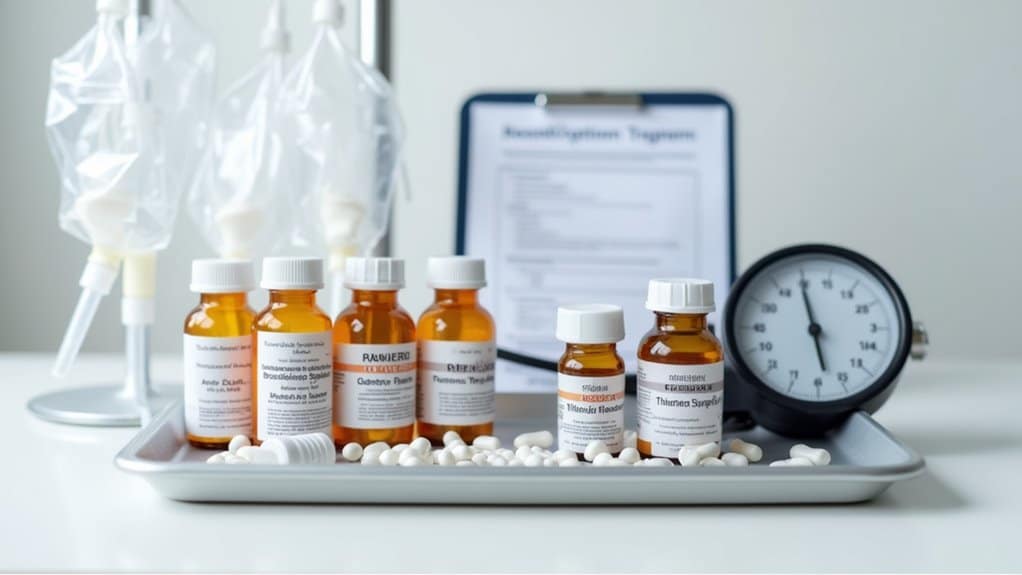
When administering benzodiazepines during alcohol detox, you’ll need to monitor essential signs hourly and assess sedation levels using standardized scales to prevent respiratory depression.
You must evaluate liver function tests before initiating benzodiazepine therapy, as impaired hepatic metabolism can lead to drug accumulation and increased toxicity risks.
Watch for signs of potential drug interactions, particularly with other CNS depressants or medications that compete for cytochrome P450 metabolism, as these combinations can dangerously amplify sedative effects.
Using benzodiazepines or barbiturates is crucial since they are sedative-hypnotic agents that demonstrate significantly lower mortality rates compared to other medication options.
Benzodiazepine Monitoring Guidelines
Monitoring benzodiazepine administration during alcohol detoxification requires systematic assessment using validated tools and individualized protocols. Through proper dosage individualization and patient risk stratification, you’ll guarantee safer outcomes while minimizing medication overuse.
Key monitoring requirements include:
- Using CIWA-Ar scores to guide symptom-triggered dosing, reducing treatment duration by up to 31%
- Implementing frequent assessments every 1-2 hours when scores exceed 15
- Watching for over-sedation signs, especially in elderly or hepatically impaired patients
- Monitoring high-risk patients with prior benzodiazepine use more intensively
- Transferring patients to inpatient care if CIWA-Ar scores remain above 25 despite treatment
Regular reassessment helps prevent complications while optimizing medication use. When using symptom-triggered protocols, you’ll typically achieve a 75% reduction in total benzodiazepine requirements compared to fixed schedules. Symptom-triggered approaches have proven equally effective while requiring only 37.5 mg of oxazepam compared to 231.4 mg with fixed-schedule dosing.
Liver Function Considerations
Since liver function substantially impacts medication metabolism during alcohol detoxification, selecting appropriate pharmacotherapy requires careful consideration of hepatic impairment. You’ll need dose adjustments for hepatic impairment, with lorazepam being the preferred benzodiazepine due to its minimal liver metabolism. Monitoring liver function during treatment is critical, particularly when using medications like naltrexone or disulfiram. To support recovery and prevent complications, lifelong abstinence is essential for patients with alcoholic hepatitis or cirrhosis. Baclofen efficacy has been well-demonstrated in patients with cirrhosis, making it a valuable treatment option.
| Medication | Liver Considerations | Recommended Action |
|---|---|---|
| Lorazepam | Minimal hepatic metabolism | Preferred primary |
| Acamprosate | Requires renal adjustment | Monitor GFR, adjust dose |
| Naltrexone | Risk in liver disease | Avoid if severe impairment |
| Disulfiram | Hepatotoxicity risk | Regular LFT monitoring |
| NSAIDs/Acetaminophen | Increased liver injury risk | Avoid or limit use |
Regular creatinine clearance monitoring and liver function tests help confirm medication safety throughout detoxification. You’ll need to differentiate between withdrawal symptoms and hepatic encephalopathy for proper treatment selection.
Drug Interaction Warning Signs
Multiple life-threatening drug interactions can occur during alcohol detoxification treatment, requiring vigilant monitoring for warning signs. Certain contraindicated combinations can lead to severe adverse effects that demand immediate medical attention.
Watch for these critical warning signs:
- Slowed or irregular breathing when combining alcohol with benzodiazepines or sleep medications
- Sudden onset of severe nausea, sweating, and muscle cramps suggesting opioid receptor blockade reactions
- Rapid heart rate, flushing, and dangerous blood pressure drops with disulfiram-alcohol interactions
- Dark stools, abdominal pain, or jaundice indicating NSAID/acetaminophen complications
- Excessive drowsiness, confusion, or impaired coordination from CNS depressant combinations
Long-acting benzodiazepines are considered the safest and most effective medications for managing withdrawal symptoms during detox treatment. If you experience these symptoms, seek emergency care immediately, as they may signal potentially fatal drug interactions during detox treatment.
Essential Vitamins and Supplements for Recovery
During alcohol detox, proper nutrition plays a vital role in supporting your body’s healing process. To restore essential nutrients, you’ll need specific vitamins and supplements that aid recovery. B-complex vitamins, particularly B1 (thiamine), help prevent neurological complications and support dopamine regulation, while B12 assists with neurotransmitter production.
Liver-supporting supplements like milk thistle and omega-3s help repair tissue damage and reduce inflammation. For stress reduction and improved sleep, magnesium supplementation can be advantageous. L-glutamine may help reduce cravings and support gut health, while antioxidants like vitamins C and A elevate your immune system and combat oxidative stress. Milk thistle’s antioxidant properties can provide additional protection for the liver during recovery.
Always consult your healthcare provider before starting any supplement regimen, as they’ll determine the appropriate dosages based on your specific needs.
The Science Behind Benzodiazepine Treatment
When you stop drinking alcohol, your brain experiences a dangerous chemical imbalance that benzodiazepines can effectively stabilize by enhancing GABA activity and reducing excessive neurotransmitter firing.
Your risk of withdrawal seizures decreases markedly with benzodiazepines because they maintain the inhibitory effects previously provided by alcohol, while simultaneously dampening the overactive nervous system response.
Long-acting benzodiazepines like diazepam provide more consistent protection against withdrawal symptoms compared to short-acting options, making them the preferred choice for medical detox protocols.
Brain Chemistry and Benzos
Understanding the brain chemistry behind benzodiazepine treatment reveals why these medications play an essential role in alcohol detoxification. When you’ve been drinking heavily, your brain undergoes GABAergic neuroadaptations, leading to significant receptor density changes that affect neural signaling.
They bind to specific sites on GABA-A receptors, enhancing the natural calming effects of GABA. They decrease the production of excitatory neurotransmitters that cause withdrawal symptoms. They compensate for alcohol-induced changes in your brain’s GABA system. They share receptor targets with alcohol, enabling effective substitution therapy. They stabilize neural activity by increasing chloride ion channel permeability.
This precise interaction with brain chemistry explains why benzodiazepines are the primary choice for managing alcohol withdrawal symptoms safely and effectively.
How Benzos Prevent Seizures
Benzodiazepines’ role in preventing seizures extends beyond their general effects on brain chemistry, specifically targeting the neurological mechanisms that lead to convulsions during alcohol withdrawal.
When you’re undergoing detox, benzos work through multiple pathways to increase your seizure threshold. They bind to GABA receptors, enhancing inhibitory neurotransmission while reducing excitatory neurotransmitters like glutamate. This neurotransmitter modulation helps stabilize membrane potentials and slow nerve impulses, preventing uncontrolled neuronal firing.
You’ll find that benzos are particularly effective because they address both immediate and underlying seizure risks. They suppress symptoms like anxiety and tremors while simultaneously preventing status epilepticus through chloride channel modulation. The medications also inhibit calcium channels and reduce neuronal excitability, providing inclusive protection against withdrawal-related seizures.
Long vs. Short Acting
While medical professionals have long debated benzodiazepine selection for alcohol withdrawal, the choice between long-acting and short-acting agents hinges on pivotal pharmacokinetic differences.
You’ll find that medication cost considerations often favor long-acting options like chlordiazepoxide, while predictable withdrawal control depends on your specific clinical scenario.
- Long-acting benzos (diazepam, chlordiazepoxide) provide smoother sedation and better rebound prevention due to extended half-lives
- Short-acting agents (lorazepam, oxazepam) offer more predictable clearance, especially beneficial in liver dysfunction
- Active metabolites in long-acting medications help maintain steady plasma levels
- Short-acting options require more frequent dosing but allow for precise symptom management
- Your choice should account for monitoring capabilities, liver function, and treatment setting (inpatient vs. outpatient)
Monitoring Protocol and Risk Management
Successful alcohol detox requires systematic monitoring protocols and careful risk assessment to guarantee patient safety. You’ll need to use the CIWA-Ar scale to assess withdrawal severity, with scores above 15 demanding frequent medication adjustments and hourly monitoring. For patients who can’t participate in CIWA-Ar assessments, the MINDS scale becomes essential.
Consider ambulatory care limitations carefully. Only patients with CIWA-Ar scores ≤8 and no risk factors qualify for outpatient treatment. For medically complex patients, especially those over 65 or with comorbidities, inpatient care is often necessary. You must monitor imperative signs regularly and watch for signs of over-sedation, particularly when administering multiple benzodiazepine doses. If severe symptoms develop, such as hallucinations or seizures, immediate transfer to inpatient care is required.
Alternative Medications for Special Cases
When you’re managing alcohol withdrawal in patients who can’t tolerate benzodiazepines, you’ll need to examine alternative medications like anticonvulsants for seizure prevention and beta-blockers for autonomic symptoms.
You can effectively use carbamazepine or valproate to reduce seizure risk while implementing propranolol or atenolol to control tremors and tachycardia.
In particularly resistant cases where standard protocols prove insufficient, you’ll find clonidine useful for managing severe autonomic hyperactivity and withdrawal symptoms.
Anticonvulsants for Seizure Control
Although benzodiazepines remain the initial treatment for alcohol withdrawal, anticonvulsants offer a valuable alternative for specific patient populations who can’t tolerate or shouldn’t receive traditional medications. Through neurotransmitter modulation, these drugs help stabilize brain circuits during the brain recovery timeline.
Clinical studies show that anticonvulsants like carbamazepine and gabapentin can effectively manage withdrawal symptoms while offering distinct advantages:
- Lower risk of dependency compared to benzodiazepines
- Reduced post-detox alcohol cravings and drinking behaviors
- Less sedation, allowing better daily functioning
- Particularly effective for patients with multiple prior detoxifications
- May create a biological bridge to sustained recovery
You’ll need careful monitoring while using anticonvulsants, with typical dosing of carbamazepine at 600-1200 mg/day or gabapentin at 900-1800 mg/day during acute withdrawal management.
Beta-Blockers for Tremors
Beta-blockers serve as valuable adjunct medications for managing alcohol withdrawal symptoms, particularly in patients who require targeted treatment for tremors and autonomic hyperactivity. Atenolol has demonstrated superior efficacy compared to propranolol effectiveness in clinical trials, especially for reducing withdrawal-related tachycardia and hypertension.
You’ll need careful monitoring of key signs and tremor severity while using these medications. While they’re effective for mild to moderate withdrawal symptoms, they won’t prevent seizures or treat delirium tremens. It’s imperative to contemplate cardiovascular contraindications before prescribing beta-blockers, as they’re not suitable for patients with significant bradycardia or decompensated heart failure. Your healthcare provider will typically prescribe selective β₁-blockers like atenolol when possible, as they offer a safer profile for patients with comorbidities.
Clonidine in Resistant Cases
For patients resistant to standard benzodiazepine therapy, clonidine emerges as a valuable adjunctive medication in alcohol withdrawal syndrome (AWS) management. Clinical evidence supports its efficacy in addressing autonomic hyperactivity while potentially reducing benzodiazepine requirements.
- Reduces elevated blood pressure and heart rate more effectively than haloperidol
- Works synergistically with benzodiazepines in severe AWS cases
- Requires careful monitoring through CIWA protocols during administration
- Demonstrates particular effectiveness in veteran populations
- Long term clonidine safety data remains limited in AWS treatment
When implementing clonidine dosing regimens, you’ll need to plan gradual tapering to prevent rebound symptoms. While it’s shown promise in resistant cases, you should maintain close medical supervision throughout the detox process. Current data indicates lower alcohol consumption rates among clonidine users (27%) compared to non-users (33%), supporting its role in inclusive withdrawal management.
Treatment Settings and Duration Considerations
Choosing the right treatment setting plays an essential role in successful alcohol detoxification. You’ll need to consider whether inpatient or outpatient care best suits your needs.
Inpatient settings provide 24/7 medical supervision during withdrawal, while outpatient programs offer flexibility for those with stable home environments and less severe symptoms.
Medical supervision in a controlled environment supports safe withdrawal, while flexible outpatient care works for milder cases with stable home support.
Treatment duration varies based on individual factors and program type. If you’re starting with inpatient care, you’ll typically move to outpatient services as your condition stabilizes. This step-down approach ensures continuity of care while gradually reducing treatment intensity.
Home environment stability is pivotal for outpatient success, requiring an alcohol and drug-free living space. Your healthcare team will develop a transition care plan that coordinates services across treatment levels, including medication management and ongoing support.
Combining Medications for Optimal Results
The strategic combination of medications during alcohol detoxification can amplify treatment outcomes and address multiple aspects of withdrawal management. Evidence-based medication combinations require careful consideration of ideal dosing strategies and potential interactions between different pharmaceutical agents.
FDA-approved medications like acamprosate, naltrexone, and disulfiram can be strategically combined based on individual patient needs and specific withdrawal symptoms. Careful monitoring of medication timing and dosages helps enhance therapeutic benefits while minimizing potential side effects. Sequential introduction of medications allows for better assessment of individual drug responses.
Combination approaches may include both scheduled medications and as-needed treatments for breakthrough symptoms. Regular evaluation of medication effectiveness enables dynamic adjustments to optimize the treatment protocol.
Research continues to refine understanding of which medication combinations provide the most effective outcomes for alcohol detoxification.
Long-Term Medication Strategies for Sobriety
Successful long-term sobriety often requires an extensive medication strategy that extends beyond the initial detoxification phase. You’ll need regular medication reviews to safeguard your treatment remains effective and safe. Medications like naltrexone can help reduce cravings, while acamprosate works to restore your brain’s chemical balance.
Your healthcare provider will monitor your progress through biomarkers and adjust dosages as needed. Medication adherence is vital – using pill organizers and scheduling reminders can help you stay on track. You’ll also benefit from combining medications with behavioral interventions like CBT and support groups.
If you experience side effects, don’t stop taking your medications without consulting your doctor. They can adjust your treatment plan or switch to alternative medications to maintain your path to recovery.
Frequently Asked Questions
Can I Drink Coffee or Energy Drinks During Alcohol Detox?
While you can drink coffee during alcohol detox, you’ll need to carefully monitor your caffeine intake levels. Coffee in moderation may help with fatigue, but energy drink consumption isn’t recommended due to higher risks.
You should avoid both during early detox when sleep and stability are paramount. If you opt to drink coffee later in recovery, limit your intake and prioritize hydration. Always consult your healthcare provider initially.
How Long After Detox Can I Safely Start Exercising Again?
You can begin a gradual exercise regimen once your initial detox symptoms subside, typically 4-7 days after your last drink. Start with light activities like walking or gentle stretching for 10-15 minutes daily.
As your body adjusts, slowly increase post-detox physical activity duration and intensity over several weeks. Always monitor how you feel and stop if you experience dizziness or unusual fatigue. Consult your healthcare provider before starting any exercise program.
Will My Insurance Cover the Cost of Alcohol Detox Medications?
Your insurance will likely cover alcohol detox medications, but coverage criteria vary by plan. Most insurers cover FDA-approved treatments like benzodiazepines and Naltrexone, especially when deemed medically necessary.
You’ll need to check your specific policy’s details, as out-of-pocket costs depend on your deductible and medication tier. Consider using generic options to reduce expenses, and don’t forget to ask about patient assistance programs for specialized detox medication costs.
Can I Continue Taking My Regular Antidepressants During Alcohol Detox?
You’ll need to consult your healthcare provider about continuing your antidepressants during detox, as this decision depends on your specific medication and medical history.
While many antidepressants can be safely maintained during detox when properly supervised, it’s essential for managing mental health symptoms and addressing underlying issues. Your medical team will carefully monitor potential interactions and may adjust your dosage.
Never stop or modify antidepressant use without professional guidance.
What Happens if I Miss a Scheduled Dose During Detox?
Missing your scheduled dose during detox can seriously disrupt your withdrawal symptom management. You’ll increase your risk of experiencing breakthrough symptoms like anxiety, tremors, or seizures.
Don’t try to make up missed doses on your own this can be dangerous. Instead, contact your healthcare provider immediately to discuss proper adjustments to your medication schedule. They’ll help you safely get back on track with your treatment plan.