





Fentanyl’s detection time varies by test method: 1-2 days in blood, 1-4 days in urine (up to 7 days for chronic users), 1-4 days in saliva, and up to 90 days in hair. Your personal factors affect these timeframes, including maturity, metabolism, kidney function, and body composition. Older adults eliminate fentanyl 50% slower than younger individuals. Multiple variables influence detection windows, from dosage frequency to genetic variations in your CYP3A4 enzymes. Further details reveal critical testing subtleties.
What Is Fentanyl and How Does It Work in the Body?
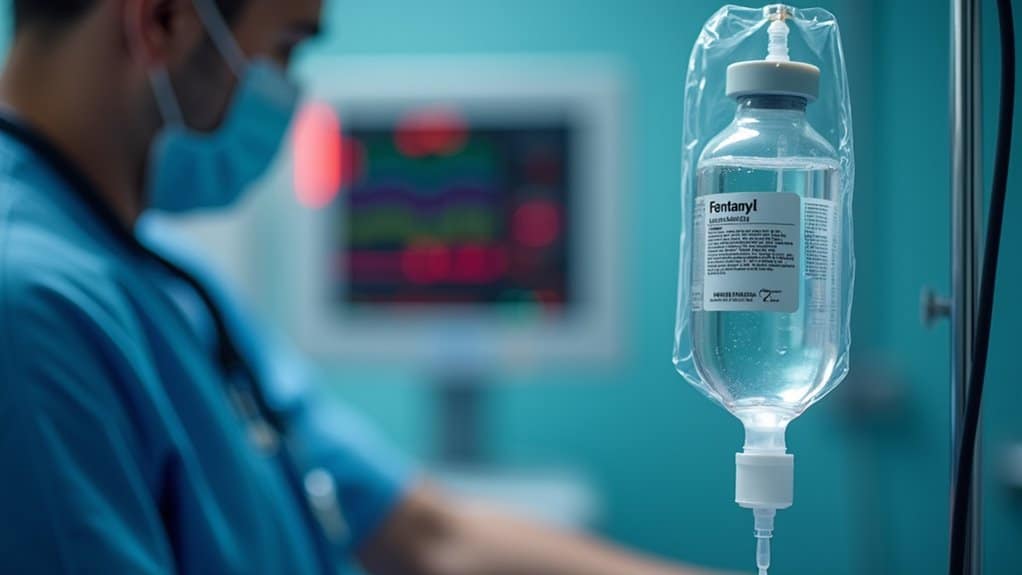
Fentanyl is a synthetic opioid analgesic that binds primarily to μ-opioid receptors in the central nervous system, producing potent pain relief and sedation at considerably lower doses than morphine. It’s approximately 50-100 times more potent than morphine, requiring careful dosing in clinical settings. When administered, fentanyl rapidly crosses the blood-brain barrier due to its high lipid solubility, achieving peak effects within minutes.
In pain management, fentanyl’s legitimate uses include treatment of breakthrough cancer pain, post-surgical analgesia, and chronic pain in opioid-tolerant patients. It’s available in multiple formulations including transdermal patches, lozenges, and injectable solutions. Your body metabolizes fentanyl primarily through the liver via CYP3A4 enzymes, converting it to norfentanyl and other metabolites. These metabolites are then excreted primarily through your kidneys into urine.
Detection Windows for Different Fentanyl Drug Tests
Fentanyl detection varies greatly across different testing methods, with blood tests typically identifying the drug for 1-2 days, urine tests for 1-4 days, hair tests for up to 90 days, and saliva tests for 1-4 days after use. Your detection timeline can be influenced by several physiological and consumption factors, including metabolism rate, kidney function, body mass, drug dosage, frequency of use, and hydration levels. Understanding these detection windows and influential factors is essential if you’re subject to drug testing, receiving medical treatment, or monitoring substance use recovery.
Detection Windows by Test Type
With regard to detecting fentanyl in your system, several drug tests offer different windows of detection based on their sensitivity and the biological sample they analyze.
Urine tests typically detect fentanyl for 24-72 hours after last use, though chronic users experiencing fentanyl withdrawal may test positive for up to 7 days. Blood screening offers a shorter window of 5-48 hours, primarily useful in emergency medical situations. Saliva tests detect the drug for 1-3 days, providing non-invasive monitoring options for fentanyl addiction treatment programs. Hair follicle analysis provides the longest detection period, up to 90 days, capturing even one-time use, though results aren’t immediate. Newer sweat patch tests can monitor continuously for 7-14 days, useful for compliance monitoring during recovery from fentanyl addiction.
Factors Affecting Detection Time
While detection windows provide general guidelines for fentanyl testing, numerous physiological and pharmacological factors can greatly alter how long the drug remains detectable in your system. Your metabolism rate, organ function (particularly liver and kidneys), maturity, and body mass considerably impact elimination speed. Hydration levels and urine pH also affect detection methods’ sensitivity, especially in urinalysis.
Dosage and frequency of use are critical determinants, chronic users experience longer detection periods due to drug accumulation in fatty tissues. During fentanyl withdrawal, detection times may fluctuate as your body eliminates stored metabolites. The potency of the specific fentanyl analog used also matters; some synthetic variants persist longer than pharmaceutical fentanyl. Genetic factors affecting your cytochrome P450 enzyme system can further extend or shorten detection windows by altering how quickly you metabolize the drug.
Factors That Affect How Long Fentanyl Stays in Your System
The duration fentanyl remains detectable in your system varies greatly based on metabolic rate and maturity, with older individuals typically eliminating the drug more slowly. Your dosage and the specific form of fentanyl used (patch, injection, or pill) directly impact detection timeframes, as higher doses and extended-release formulations persist longer. Body composition factors, including your weight, body fat percentage, and hydration status, further influence fentanyl’s elimination rate due to the drug’s lipophilic properties and distribution patterns.
Metabolism and Age
Metabolism and development greatly influence fentanyl’s elimination rate from your body. As you grow older, your metabolic rate typically decreases by 1-2% per decade after reaching 20, extending fentanyl’s half-life. Your liver function, primarily the CYP3A4 enzyme system, determines how quickly the drug converts to inactive metabolites that your kidneys can excrete.
- Elderly individuals (65+) experience 50% slower fentanyl clearance than younger adults
- Children metabolize fentanyl more rapidly due to higher liver-to-body mass ratios
- Age-related metabolism changes cause drug accumulation risk in senior patients
- Decreased renal function in older adults prolongs elimination of fentanyl metabolites
- Metabolic rates vary greatly, genetics can create up to 20-fold differences in CYP3A4 activity between individuals
Dosage and Form
Two critical factors, dosage strength and pharmaceutical form, significantly affect fentanyl’s detection window and clearance timeframe. Higher dosages of fentanyl prescription medications remain detectable longer than lower doses, with cumulative effects observed in regular users. A 100μg dose clears faster than a 300μg dose by approximately 30%.
The pharmaceutical delivery method directly impacts metabolic processing. Transdermal patches release fentanyl gradually over 72 hours, creating extended detection periods compared to intravenous administration, which produces rapid onset and shorter detection windows. Lozenges and sublingual tablets occupy intermediate positions in this spectrum.
Illicit fentanyl presents further intricacies due to unknown concentrations and adulterants that may alter metabolism. Street formulations often contain varying potencies, making clearance times unpredictable and potentially extending detection windows beyond clinical expectations.
Body Composition Variables
Several body composition factors greatly influence fentanyl’s elimination profile, creating considerable inter-individual variability in clearance rates. Your physiological characteristics directly impact how quickly you eliminate fentanyl from your system.
- Body mass index affects drug distribution volume, with higher adipose tissue percentages extending detection windows due to fentanyl’s lipophilic properties
- Lean muscle mass increases metabolic capacity, potentially accelerating drug clearance through improved enzymatic activity
- Hepatic fat content may impair liver function, reducing CYP3A4 enzyme efficiency and prolonging elimination half-life
- Total body water percentage influences initial distribution and subsequent redistribution kinetics
- Metabolic rate variations of ±20% between individuals with similar body mass can greatly alter clearance timelines
These variables explain why standardized elimination timeframes remain approximations rather than precise predictions for individual cases.
Fentanyl Detection in Urine: Timeline and Considerations

Urine tests remain the most common method for detecting fentanyl use, with standard screening typically identifying the drug for 24-72 hours after last use. However, detection windows can extend to 7-10 days in chronic users due to accumulation in fatty tissues. High-sensitivity immunoassays specifically designed for fentanyl can detect norfentanyl, the primary metabolite, even at low concentrations.
If you’re experiencing fentanyl addiction, your detection window will likely be longer than occasional users. Withdrawal symptoms may intensify during the detection period, particularly 12-30 hours post-use. Urinary pH affects detection, acidic urine accelerates elimination, while alkaline urine prolongs it. Hydration levels also impact concentration. Advanced testing methods using liquid chromatography-mass spectrometry can identify fentanyl use up to 14 days afterward in heavy users.
Blood and Saliva Testing: Short-Term Fentanyl Detection
Blood testing provides considerably shorter detection windows for fentanyl compared to urine screening, typically identifying the substance for only 5-48 hours after administration. This testing method offers higher accuracy for determining recent use or current intoxication levels. Saliva samples provide similar detection timeframes, generally capturing fentanyl presence for 1-3 days after exposure, depending on dosage and frequency of use.
- Blood samples drawn in red-topped vacuum tubes for thorough toxicology screening
- Specialized mass spectrometry equipment analyzing saliva specimens collected via oral swabs
- Laboratory technicians processing samples within 24 hours to prevent degradation
- Digital readouts displaying nanogram-per-milliliter concentration levels
- Chromatography equipment separating fentanyl metabolites from other substances
Both testing methodologies remain critical in emergency medical settings where determining recent fentanyl exposure impacts immediate treatment decisions.
Hair Follicle Testing: Long-Term Evidence of Fentanyl Use
While blood and saliva testing offer insights into recent fentanyl exposure, hair follicle analysis extends detection capabilities markedly, capturing evidence of use for up to 90 days after administration.
Hair analysis works by identifying fentanyl metabolites that become incorporated into the hair shaft as it grows. Each centimeter of hair represents approximately one month of your drug use history. This testing method requires specialized laboratory equipment and precise chromatography-mass spectrometry techniques to detect even trace amounts of fentanyl.
The long-term detection window makes hair testing particularly valuable for:
- Chronic use monitoring
- Legal proceedings
- Substance abuse treatment verification
- Employment screening
You should note that environmental contamination can occasionally yield false positives, and the test cannot precisely determine frequency or quantity of use, only that exposure occurred within the detection timeframe.
Fentanyl Metabolism and Half-Life Explained
Understanding how fentanyl moves through your body requires examining its metabolic pathway and elimination half-life. Fentanyl pharmacokinetics involve rapid distribution into tissues, with primary metabolism occurring in the liver through CYP3A4 enzymes. The drug’s elimination half-life ranges from 3-12 hours, though its effects typically last 30-90 minutes.
- Your liver transforms fentanyl into norfentanyl through N-dealkylation
- Fentanyl molecules bind tightly to plasma proteins (80-85%), extending detection time
- Your kidneys excrete 75% of metabolites within 72 hours
- Lipophilic properties allow fentanyl to accumulate in fatty tissues
- Individual fentanyl elimination pathways vary based on liver function, maturity, and genetics
These metabolic factors explain why detection windows differ dramatically between testing methods and why fentanyl can remain detectable long after its analgesic effects have subsided.
Clearing Fentanyl From Your System: Myths vs. Medical Facts
Many people desperately search for quick methods to eliminate fentanyl from their systems, especially when facing drug tests or experiencing withdrawal symptoms. However, myth debunking is essential in this area. Contrary to popular belief, “detox drinks,” excessive water consumption, or vigorous exercise won’t greatly accelerate fentanyl elimination.
Medical insights confirm that fentanyl clearance depends primarily on your liver’s metabolism and kidney function, biological processes that maintain relatively fixed rates. While staying hydrated supports normal kidney function, no scientifically validated method exists to rapidly flush fentanyl from your body. The drug follows its metabolic pathway and timeline regardless of home remedies.
If you’re concerned about fentanyl in your system, consult healthcare providers who can offer medically sound guidance rather than pursuing potentially dangerous quick-fix solutions.
Frequently Asked Questions
Can Fentanyl Be Detected in Sweat or Fingernail Tests?
Yes, fentanyl can be detected through specialized testing methods. Sweat testing can identify fentanyl use for up to 14 days, using adhesive patches that collect perspiration over time. Fingernail analysis provides an even longer detection window, up to 3-6 months, as drugs become trapped in the keratin structure during nail growth. Both methods offer advantages over traditional urine or blood screening, particularly for monitoring long-term drug exposure patterns or when conventional testing isn’t feasible.
How Does Fentanyl Testing Differ From Other Opioid Drug Tests?
Fentanyl testing differs greatly from other opioid tests due to its potency and unique metabolites. You’ll need specialized immunoassay tests specifically calibrated for fentanyl metabolites, as standard opioid screenings often miss them. Testing sensitivity matters critically – fentanyl requires detection at nanogram levels (1000x more sensitive than morphine tests). Laboratory confirmation typically employs LC-MS/MS techniques instead of GC-MS used for traditional opioids, offering greater precision when identifying fentanyl’s norfentanyl and despropionyl metabolites.
Can Secondhand Exposure to Fentanyl Cause a Positive Test Result?
Secondhand exposure to fentanyl is unlikely to cause a positive test result in standard drug screenings. Testing accuracy remains high when distinguishing between actual use and incidental exposure. You won’t typically test positive from simply being in the same room as fentanyl users or handling small amounts. However, healthcare workers, primary responders, and law enforcement may face higher exposure risks. If concerned about false positives, inform testing facilities about potential occupational or environmental exposures beforehand.
Are There Legal Protections for Prescribed Fentanyl Users During Testing?
Yes, legal protections exist for prescribed fentanyl users during drug testing. Your prescription rights are protected under the Americans with Disabilities Act and different state laws. You’ll need to disclose your valid prescription before testing to avoid legal ramifications. Testing facilities must differentiate between prescribed and illicit use, typically through Medical Review Officer verification of your documentation. Always carry proof of your prescription and inform testing administrators beforehand to guarantee your legitimate medical use is properly documented.
How Do Fentanyl Analogs Affect Standard Drug Testing Procedures?
Fentanyl analogs greatly challenge standard drug testing procedures due to their structural variations. You’ll find that many immunoassay screenings fail to detect these compounds or produce false negatives because they’re designed to identify specific molecular structures. Testing accuracy requires specialized methods like LC-MS/MS (liquid chromatography-tandem mass spectrometry) for proper detection. Newer analogs may completely evade detection until reference standards are developed, creating a continuous technical challenge for forensic toxicologists and clinical laboratories monitoring these potent synthetic opioids.