




Finding a qualified addiction specialist starts with verifying their credentials and certifications through your state’s portal. You’ll want to evaluate their treatment approaches, ensuring they offer evidence-based methods like MAT and CBT tailored to your needs. Consider their experience with your specific addiction, review success stories, and check insurance coverage. Don’t forget to assess the facility’s location and accessibility. The following seven steps will guide you toward making this important decision for your recovery journey.
Check Professional Credentials and Certifications

When searching for a qualified addiction specialist, verifying their professional credentials and certifications should be your first priority. Look for providers who hold current state-approved licenses or nationally recognized certifications. For entry-level specialists, they’ll need at least 155 hours of formal addiction education and 2,000 hours of clinical experience. The state’s credentialing portal offers public access to verify professionals’ qualifications and standing. During your credential verification process, check if they’ve completed required examinations like the ACE exam for RAS certification or NCAC exams for counseling roles. Regular security monitoring of professional licenses helps maintain treatment quality standards. If you’re seeking specialized care, such as treatment for problem gambling, make certain they have additional certifications under CASAC or CPS credentials. Remember that certification standards vary by state, some roles require master’s degrees while others accept associate’s degrees with equivalent experience. Due to enhanced protective services, many treatment centers now utilize advanced security measures to safeguard patient information. Don’t hesitate to ask potential providers about their specific qualifications and ongoing education commitments.
Evaluate Treatment Approaches and Methods
When researching addiction specialists, you’ll want to look for providers who offer evidence-based treatments like MAT, CBT, or 12-step facilitation that match your specific recovery needs. You should confirm the specialist provides all-encompassing, individualized care planning that considers your unique circumstances, including any co-occurring disorders or specific substance challenges. Ask potential providers about their approach to holistic recovery, including how they incorporate support networks, lifestyle changes, and relapse prevention strategies into their treatment programs. Understanding that success rates vary significantly between different substances and treatment methods can help you choose a specialist with proven expertise in addressing your particular addiction type. Since addiction affects brain structure and function, look for specialists who understand that recovery requires ongoing management rather than just short-term intervention.
Evidence-Based Treatment Models
Because choosing the right treatment approach greatly impacts recovery success, understanding evidence-based models can help you make informed decisions about care. The most effective addiction specialists integrate multiple evidence-based medications and behavioral therapies to optimize treatment outcomes. Many specialists incorporate experiential hands-on learning to help patients process complex emotions and trauma. You’ll want to look for providers who offer proven pharmacotherapy options like Buprenorphine or Naltrexone alongside therapy integration methods such as CBT and Contingency Management. Treatment outcomes from substance use disorders are comparable to chronic diseases like hypertension and type 2 diabetes in terms of management and success rates. Due to sophisticated online security measures, many treatment centers employ security services to protect sensitive patient information.
When evaluating service efficacy, consider that addiction models showing the strongest recovery metrics combine medical and behavioral approaches. The best specialists will assess your specific needs to create a personalized plan, potentially including 12-step programs which show impressive long-term abstinence rates of 42%. They’ll also emphasize extended care and aftercare programs, as longer treatment durations consistently demonstrate better outcomes.
Holistic Recovery Programs
Beyond traditional treatment models, holistic recovery programs offer a thorough mind-body-spirit approach to addiction recovery. You’ll find these programs combine evidence-based treatments with complementary holistic therapies like meditation, acupuncture, and nutritional counseling to address your complete well-being. For enhanced security, all communications about program details and admission processes are conducted through secure channels.
When evaluating holistic programs, look for those that create personalized treatment plans tailored to your specific needs. Creative art therapies provide powerful outlets for emotional healing and self-discovery during recovery. The best programs integrate medical care with alternative therapies while fostering strong community support through group activities and shared experiences. These comprehensive programs incorporate five key elements to support physical, emotional, social, spiritual, and intellectual healing. You’ll benefit from stress-management techniques, physical restoration through exercise, and spiritual practices that build lasting resilience.
Consider programs that offer ongoing support networks and structured routines, as they’re essential for maintaining long-term recovery and preventing relapse through sustainable lifestyle changes.
Individualized Care Planning
Although each person’s journey through addiction is unique, effective recovery demands a carefully tailored treatment approach. When seeking a specialist, look for professionals who conduct thorough personalized assessments that examine your physical health, mental well-being, and family dynamics. These extensive evaluations help identify the root causes of addiction and inform your recovery goals. Recovery centers offering medication-assisted treatment can provide vital support through personalized medication dosages and counseling.
Quality specialists will create dynamic treatment plans that adapt to your progress, incorporating evidence-based therapies like cognitive-behavioral techniques and trauma-focused interventions. A key focus should be establishing an environment of trust and safety during treatment sessions. They’ll address co-occurring mental health conditions and develop strategies for stress management. Your specialist should also establish regular check-ins to monitor your progress and adjust treatment methods as needed, ensuring you’re receiving the most effective care for your specific situation and evolving needs. Programs should include holistic care that nurtures mental, emotional, physical, and spiritual aspects of recovery.
Research Experience With Specific Addictions
When seeking help for addiction, you’ll want to find specialists whose experience aligns with your specific needs. Look for professionals who’ve focused their specific addiction research on your particular substance or behavior. For instance, if you’re dealing with opioid addiction, seek out providers with MAT certification and experience in medication-assisted treatments. Specialists utilize evidence-based practices to effectively manage cravings and address underlying conditions.
Different certifications signal varying levels of expertise. An addiction psychiatrist might be ideal if you’re struggling with both mental health and substance use, while a Nicotine Dependence Specialist would be better suited for smoking cessation. Don’t hesitate to ask about their supervised clinical hours with your type of addiction NCAC I certified counselors complete 6,000 hours of supervised experience, ensuring they’ve worked extensively with diverse addiction cases and treatment innovations. The field’s projected 18% growth through 2032 means more specialists are entering the profession with advanced training and specialized expertise.
Examine Client Success Stories and Reviews

Looking at real client success stories can illuminate the most effective paths to recovery. When examining client testimonials and recovery narratives, you’ll discover patterns that demonstrate which treatment approaches yield lasting results.
- Complete program adherence paired with 12-step engagement often leads to sustained sobriety
- Successful recovery stories frequently include structured sober living environments combined with outpatient care
- Women-specific programs show particularly strong outcomes, especially for mothers seeking to maintain custody
- Financial stability through employment programs proves essential for long-term recovery success
- Active sponsorship and peer support networks create significant accountability systems
Look for specialists whose clients report feeling safe and supported throughout their recovery journey. Pay attention to testimonials that highlight thorough care approaches, including therapy, housing assistance, and career development these elements consistently appear in successful recovery stories.
Verify Insurance Coverage and Payment Options
When you’re exploring treatment options, ask potential addiction specialists about their flexible payment plans and if they offer sliding scale fees to accommodate your financial situation. You’ll want to verify which insurance networks they participate in, as provider network restrictions can greatly impact your out-of-pocket costs and access to care. It’s helpful to request a detailed breakdown of payment expectations upfront, including information about deductibles, co-pays, and any available financial assistance programs that could make your treatment more affordable.
Payment Plans and Flexibility
Understanding the financial aspects of addiction treatment can feel overwhelming, but numerous payment options and flexible plans exist to help make care more accessible. Many facilities offer payment flexibility through various programs and cost transparency to guarantee you know exactly what to expect.
Here are key payment options to explore:
- Sliding fee scales based on your income, with some facilities reducing costs by up to 93%
- Weekly or monthly installment plans for outpatient treatment
- State and local grant programs targeting specific groups like veterans or new mothers
- Medicaid coverage for eligible individuals seeking treatment
- Scholarship programs through non-profit organizations and health departments
Remember to ask about written payment agreements and itemized billing to avoid unexpected charges. Public health clinics and non-profit centers typically offer more affordable rates than for-profit facilities.
Insurance Network Participation
Beyond exploring payment plans, verifying insurance coverage presents a complex but navigable path toward addiction treatment. You’ll find that insurance acceptance trends vary greatly, with solo practitioners typically accepting fewer insurance plans than group practices. When searching for specialists, it’s essential to understand current reimbursement disparities that may affect your out-of-pocket costs.
| Provider Type | Insurance Acceptance | Out-of-Network Risk | Cost Impact |
|---|---|---|---|
| Group Practice | Higher acceptance | Lower risk | More affordable |
| Solo Practice | Limited acceptance | Higher risk | Higher costs |
| Urban Specialist | Variable rates | Very high risk | Highest costs |
| Rural Provider | Limited options | Moderate risk | Variable costs |
Consider working with your insurance provider to identify in-network specialists, as behavioral health visits occur out-of-network over four times more frequently than medical visits. You’ll save greatly by prioritizing providers within your network.
Assess Facility Location and Accessibility
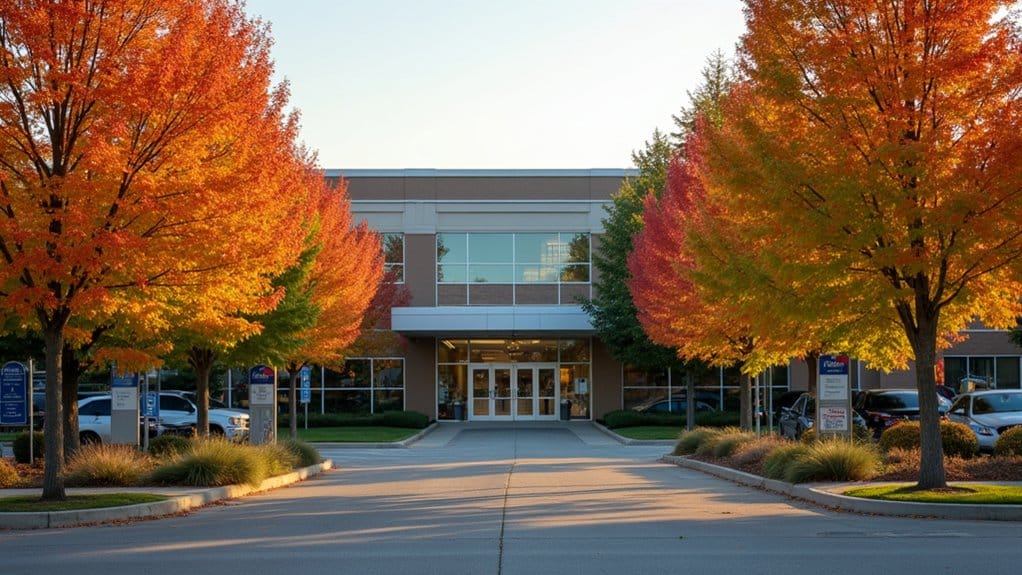
Locating the right addiction treatment facility requires careful consideration of both distance and accessibility factors. While most Americans live within 10 miles of a treatment center, facility proximity can vary greatly based on your location and specific treatment needs.
Consider these key accessibility factors when evaluating facilities:
- Check if you’re within 10 miles of facilities offering all three MOUD options (buprenorphine, methadone, and naltrexone)
- Verify whether the facility accepts your insurance, as Medicare patients often face additional accessibility challenges
- Look for treatment centers that offer “treatment on demand” with minimal wait times
- Compare options in both coastal and inland areas, as facility distribution can be uneven
- Consider travel time and transportation options, especially if you live in a rural area
Schedule Initial Consultations With Top Candidates
Once you’ve identified several promising treatment facilities, scheduling initial consultations marks an essential step toward recovery. Make the most of these meetings by preparing key questions and gathering necessary documentation about your medical history and insurance coverage.
| Initial Consultation Tips | Candidate Comparison Techniques |
|---|---|
| Bring medical records | Create a scoring matrix |
| List current medications | Compare treatment approaches |
| Note insurance details | Evaluate facility resources |
| Document substance use | Assess staff credentials |
| Prepare questions | Consider location/accessibility |
During consultations, you’ll discuss treatment options, undergo assessments, and explore payment plans. Don’t hesitate to ask about success rates, treatment philosophies, and dual-diagnosis capabilities. Take notes to help compare providers later. Remember, it’s perfectly fine to schedule multiple consultations before making your final decision finding the right fit is vital for your recovery journey.
Frequently Asked Questions
How Long Does the Average Addiction Treatment Program Last?
Treatment duration varies widely based on your specific needs, but you’ll typically find programs ranging from 30 to 90 days. Most standard programs start with a 30-day commitment, while more intensive treatment plans can extend to 60 or 90 days. There’s no one-size-fits-all approach; your program length will depend on factors like addiction severity, insurance coverage, and personal obligations. Some people benefit from longer stays, while others thrive in shorter, intensive programs.
Can Family Members Participate in the Treatment Process?
Yes, you can and should participate in your loved one’s treatment process. Family involvement is an essential component that greatly improves recovery outcomes. You’ll have opportunities to join family therapy sessions, educational workshops, and support groups. These experiences will help you understand addiction better, develop healthy communication skills, and strengthen your role as part of their support system. Most treatment centers actively encourage family participation throughout the recovery journey.
What Happens if I Relapse During or After Treatment?
If you experience a relapse, remember it’s a common part of recovery, not a failure. You’ll work with your treatment team to identify specific relapse triggers and strengthen your recovery strategies. Don’t isolate yourself; reach out to your support system immediately. Your treatment program can be adjusted to better address your needs, and you’ll learn valuable lessons about your recovery journey. Many people go on to achieve lasting sobriety after a relapse.
Are There Age-Specific Treatment Programs Available?
Yes, you’ll find many treatment centers offer age-specific programs tailored to your unique needs. Youth programs focus on peer influences, family dynamics, and school-related challenges, while senior services address medical concerns, medication management, and age-appropriate therapy approaches. Your age group’s specific challenges and experiences matter, and specialized programs can provide you with more relevant support and better outcomes. Don’t hesitate to ask treatment centers about their age-specific options.
How Often Will I Meet With My Addiction Specialist?
Your meeting frequency with an addiction specialist will typically start with more frequent sessions – usually weekly or bi-weekly and may adjust based on your progress and needs. You’ll work together to determine the best schedule that fits your recovery goals and your specialist’s availability. Early in treatment, you’ll likely meet more often to establish a strong foundation, but this can become more flexible over time as you progress in your recovery journey.