




Methamphetamine typically remains detectable in your blood for 1-3 days after use. Your metabolism, dosage, frequency of use, and general health greatly influence this timeframe. Standard blood tests can detect concentrations as low as 10 ng/mL, while advanced methods like LC-MS/MS identify even smaller amounts (1 ng/mL). Chronic users may test positive longer due to drug accumulation in tissues. The elimination half-life averages 10-12 hours, with pH levels affecting excretion rates. The full detection timeline varies based on multiple physiological factors.
The Basic Detection Timeline for Methamphetamine in Blood

When methamphetamine enters your bloodstream, it undergoes a predictable detection timeline governed by its pharmacokinetic properties. The drug typically becomes detectable in blood samples within minutes of consumption and remains identifiable for approximately 1-3 days in most users.
Advanced detection methods can identify methamphetamine in blood with high sensitivity, typically at concentrations as low as 10 ng/mL. The half-life of methamphetamine, roughly 10-12 hours, determines its clearance rate. This means your blood concentration decreases by approximately 50% during each half-life period.
Factors affecting detection duration include dosage, frequency of use, metabolism rate, and general health. Chronic users may test positive for longer periods due to drug accumulation in tissues that gradually releases back into the bloodstream.
Factors That Extend Meth’s Presence in Your Bloodstream
The pH level of your urine can greatly impact methamphetamine’s elimination rate, with alkaline urine slowing excretion while acidic urine accelerates clearance. Your metabolic rate, influenced by factors like maturity, liver function, and genetic variations in CYP2D6 enzymes, directly affects how quickly your body processes and eliminates meth from your bloodstream. Chronic or frequent methamphetamine use leads to accumulation in your system, potentially extending detection windows by days or even weeks compared to single-use scenarios.
Ph and Metabolism
Physiological factors such as blood pH and metabolic rate greatly influence methamphetamine’s detection window in your bloodstream. When your blood acidity increases (lower pH), meth becomes ionized and less able to exit your bloodstream, effectively trapping the compound within your circulatory system for extended periods. This process, called ion trapping, can greatly prolong detection times.
Your metabolic rate directly affects how quickly your body processes and eliminates methamphetamine. Higher metabolic rates accelerate hepatic enzyme activity, particularly CYP2D6, which is responsible for breaking down meth into amphetamine and other metabolites. Conversely, individuals with slower metabolisms retain methamphetamine longer. Genetic variations in CYP2D6 enzyme efficiency explain why some people clear meth from their bloodstream in 48 hours while others require 72+ hours for complete elimination.
Repeat Use Effects
Chronic consumption of methamphetamine greatly extends its detection window in your bloodstream through several physiological mechanisms. With repeat use, the drug accumulates in lipid-rich tissues, creating reservoirs that gradually release metabolites back into circulation. This phenomenon greatly prolongs detection periods beyond typical single-dose parameters.
Your body adapts to persistent methamphetamine exposure through:
- Decreased hepatic clearance rates as liver enzymes become saturated
- Competitive inhibition of CYP2D6 metabolic pathways, reducing elimination efficiency by 15-30%
- Altered renal filtration due to vasoconstriction and potential kidney damage
These physiological adaptations extend detection timeframes from 2-3 days to potentially 7+ days in chronic users. Health consequences of this prolonged presence include sustained neurotoxicity, cardiovascular strain, and impaired cognitive function as your system struggles to eliminate the compound and its active metabolites.
How Different Testing Methods Affect Detection Windows
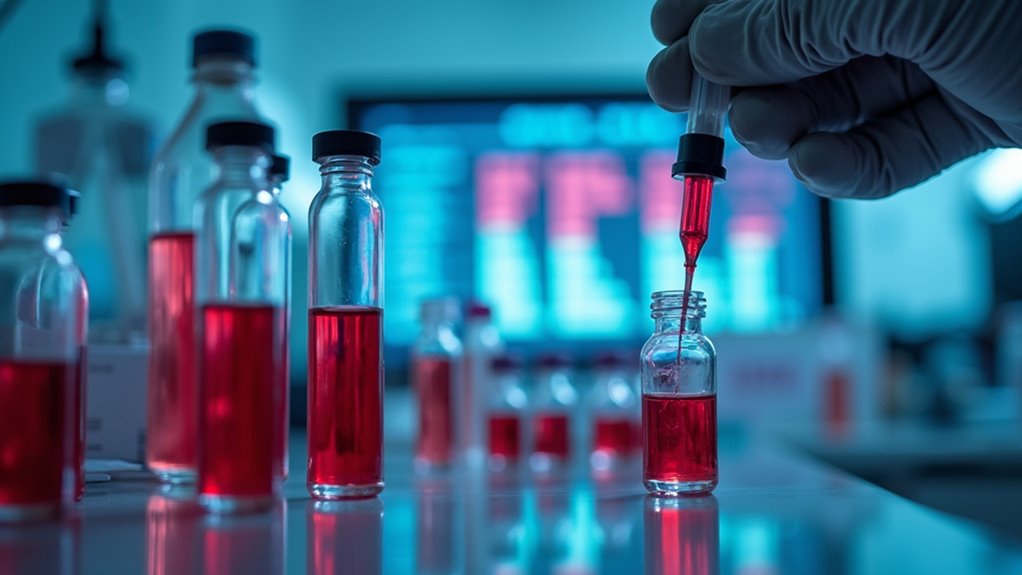
Blood testing for methamphetamine utilizes different methodologies that greatly impact detection timeframes. Standard blood tests typically detect meth for 1-3 days after use, employing immunoassay screening followed by confirmatory gas chromatography-mass spectrometry (GC-MS). Advanced technologies like liquid chromatography-tandem mass spectrometry (LC-MS/MS) can identify lower concentrations of methamphetamine in your bloodstream, potentially extending the detection window to 4-5 days.
Standard Blood Tests
Standard blood tests for methamphetamine detection utilize immunoassay technology as the initial screening method, with gas chromatography-mass spectrometry (GC-MS) or liquid chromatography-tandem mass spectrometry (LC-MS/MS) serving as confirmatory tests. These standard blood test types provide varying degrees of blood test accuracy depending on the specific methodology employed.
When you submit to testing, you’ll encounter these technical specifications:
- Enzyme immunoassay (EIA) tests detect meth at concentrations ≥500 ng/mL with 92-97% sensitivity
- GC-MS confirmation tests identify specific meth metabolites with detection limits of 2-5 ng/mL
- LC-MS/MS offers the highest sensitivity with detection thresholds as low as 1 ng/mL and can differentiate between d-methamphetamine (illicit) and l-methamphetamine (found in decongestants)
Blood testing provides a reliable detection window of 1-3 days after use, depending on dosage and frequency.
Advanced Testing Technologies
While standard tests offer reliable detection within typical timeframes, advanced technologies have greatly expanded methamphetamine detection capabilities in blood samples.
Modern advanced screening methods like liquid chromatography-tandem mass spectrometry (LC-MS/MS) can identify meth concentrations as low as 1-5 ng/mL, considerably below conventional detection thresholds. These testing innovations provide improved sensitivity, allowing detection up to 72 hours after use compared to standard 24-48 hour windows.
Pharmacogenomic screening represents another breakthrough, analyzing how your unique metabolism affects meth clearance rates. This personalized approach accounts for CYP2D6 enzyme variations that influence elimination timeframes. Moreover, advanced techniques can now differentiate between pharmaceutical methamphetamine (Desoxyn) and illicit variants through stereoisomer analysis, providing essential context for medical and legal interpretations of positive results.
Chronic vs. Occasional Use: Impact on Blood Test Results
Although detection windows are influenced by numerous factors, the frequency of methamphetamine use considerably affects how long the substance remains detectable in your bloodstream. Chronic users develop distinct metabolic patterns compared to occasional users, resulting in extended detection periods.
Chronic effects create cumulative testing implications:
- Metabolite accumulation – Regular use causes buildup of amphetamine metabolites in your system, extending detection windows from 2-3 days to potentially 7+ days
- Enzyme saturation – Frequent exposure can overwhelm hepatic cytochrome P450 enzymes, slowing metabolism rates
- Lipid sequestration – Long-term usage leads to methamphetamine storage in fatty tissues, creating a reservoir for gradual re-release
Occasional usage typically results in shorter detection periods, with complete elimination typically occurring within 48-72 hours post-consumption, assuming normal metabolic function.
Metabolism Variables: Why Detection Times Differ Among Individuals

Even when consumption patterns are identical, detection times for methamphetamine in blood samples can vary dramatically between individuals due to considerable metabolic differences.
Your genetic factors directly influence the efficiency of CYP2D6 enzymes, which metabolize methamphetamine into amphetamine. Polymorphisms in these enzymes can classify you as a poor, intermediate, extensive, or ultra-rapid metabolizer, potentially altering clearance rates by 20-40%.
Lifestyle choices further modify these timelines. Urinary pH considerably impacts elimination; acidic urine accelerates excretion while alkaline conditions extend detection windows. Hydration levels affect plasma concentration, with well-hydrated individuals typically clearing substances faster. Your maturity, body mass index, and organ function also contribute to metabolic variability. Compromised liver or kidney function can extend detection times beyond standard parameters as these organs are critical for drug clearance.
Medical Applications of Blood Testing for Methamphetamine
Blood testing for methamphetamine serves critical medical functions with detection windows typically ranging from 1-3 days after use. Clinical laboratories employ gas chromatography-mass spectrometry or liquid chromatography-tandem mass spectrometry techniques to quantify methamphetamine concentrations with sensitivity thresholds of 50-100 ng/mL. Your healthcare provider uses these test results to calibrate appropriate medical interventions, including detoxification protocols, medication management, and treatment timing based on pharmacokinetic clearance rates.
Detection Window Analysis
When healthcare providers analyze methamphetamine in blood samples, they typically detect the substance within 1-2 hours after use, with detection windows extending up to 72 hours in most cases. Advanced detection techniques can identify concentrations as low as 10 ng/mL, depending on blood volume and collection timing.
Your individual detection window varies based on:
- Metabolic rate – faster metabolism shortens detection time by 15-20%
- Dosage amount – higher doses (>500mg) extend detection by approximately 12-24 hours
- Frequency of use – chronic users maintain detectable levels 2-3 times longer than occasional users
You’ll find that blood tests provide more precise temporal information than urine screens. Most laboratories employ gas chromatography/mass spectrometry as the confirmatory method after initial immunoassay screening, offering detection accuracy exceeding 98% when properly administered.
Lab Testing Procedures
Although many medical facilities employ similar methodologies, the specific procedures for methamphetamine blood testing follow a standardized protocol to guarantee diagnostic reliability. When you provide a blood sample, lab technicians immediately process it using enzyme immunoassay (EIA) screening, followed by confirmatory tests utilizing gas chromatography-mass spectrometry (GC-MS) for improved lab accuracy.
| Testing Phase | Method | Detection Threshold |
|---|---|---|
| Initial Screening | Immunoassay | 500-1000 ng/mL |
| Confirmation | GC-MS | 250-500 ng/mL |
| Advanced Testing | LC-MS/MS | 10-50 ng/mL |
| Research Analysis | HPLC | 100-200 ng/mL |
| Forensic Testing | TOF-MS | 5-25 ng/mL |
Testing protocols require strict chain-of-custody documentation throughout the analytical process. Temperature-controlled storage prevents sample degradation while automated analyzers reduce human error. Most accredited laboratories maintain ISO certification standards, ensuring consistent results when monitoring methamphetamine levels in your bloodstream.
Medical Intervention Timing
Medical intervention for methamphetamine intoxication becomes most effective when healthcare providers understand the precise concentration-time relationship within the bloodstream. When you arrive at an emergency department with suspected meth toxicity, physicians require accurate temporal data to implement appropriate intervention strategies.
Critical timing factors in medical emergencies include:
- Peak concentration window (6-12 hours post-ingestion) – ideal timing for antagonist medications and detoxification procedures
- Half-life consideration (10-12 hours) – determines medication dosing schedules and monitoring frequency
- Metabolite presence (up to 72 hours) – influences treatment duration and discharge planning
You’ll receive more targeted care when medical teams can correlate your symptoms with blood concentration levels. This precision approach reduces complications and improves outcomes in acute methamphetamine toxicity cases, especially when treatment protocols incorporate pharmacokinetic principles aligned with your specific usage pattern.
Legal Implications of Positive Blood Tests for Meth
Testing positive for methamphetamine in your blood can trigger severe legal consequences depending on your jurisdiction, context of testing, and detected concentration levels. Most jurisdictions implement strict testing regulations that determine whether you’ll face criminal charges, employment termination, or loss of professional licensure.
| Context | Detection Threshold | Typical Consequences |
|---|---|---|
| DUI/DWI | >50 ng/mL | Immediate license suspension |
| Probation | Any detectable amount | Potential revocation |
| Workplace | >500 ng/mL | Termination possible |
| Child custody | >100 ng/mL | Loss of custody rights |
| Professional licensing | Varies by field | License suspension |
You’ll typically face more severe penalties when blood tests reveal higher concentrations, particularly in contexts involving public safety. Courts often view blood tests as highly reliable evidence, making them particularly damaging in legal proceedings compared to other testing methods.
How to Understand Your Test Results: Interpreting Blood Levels
When receiving methamphetamine blood test results, understanding the specific concentration values can help you interpret your legal and health status. Blood level analysis typically reports methamphetamine concentrations in nanograms per milliliter (ng/mL) or micrograms per liter (μg/L).
For proper test result interpretation, consider these critical thresholds:
- 5-25 ng/mL: Considered low levels; may indicate environmental exposure or recent medicinal use of certain products
- 25-100 ng/mL: Moderate levels; typically exceeds legal limits for driving in most jurisdictions
- >100 ng/mL: High concentration indicating significant recent use; associated with impairment and potential toxicity
You’ll notice different cutoff values between screening and confirmation tests. Confirmation tests use more specific methodologies (GC-MS or LC-MS/MS) and provide quantitative measurements that courts and clinicians rely on for definitive assessments.
Comparing Blood Testing to Other Detection Methods
Although blood tests remain the gold standard for determining current methamphetamine intoxication, they represent just one of several detection methods available in modern toxicology.
When comparing detection windows, urine testing identifies meth metabolites for 3-5 days after use, while blood testing only detects active compounds for 1-3 days. Hair analysis offers a considerably longer detection period of up to 90 days but cannot confirm recent usage. Saliva testing provides a 1-2 day window with collection simplicity, though it’s less reliable than blood analysis.
Blood testing excels in precision and legal admissibility but requires invasive collection by trained personnel. In contrast, urine screening offers cost-effective preliminary results, and sweat patch monitoring enables continuous detection over 7-14 days. Your testing needs should determine which method is most appropriate for your specific circumstances.
Recovery and Clearance: The Body’s Process of Eliminating Methamphetamine
Understanding how your body eliminates methamphetamine provides key insights beyond detection timeframes. Your liver serves as the primary clearance mechanism, metabolizing approximately 70% of the drug through N-demethylation and aromatic hydroxylation processes. The resulting metabolites, primarily amphetamine and 4-hydroxymethamphetamine, undergo subsequent conjugation before excretion.
Your liver processes 70% of methamphetamine through complex metabolic pathways before elimination from your body.
Three primary elimination pathways facilitate methamphetamine clearance:
- Renal excretion – 30-54% of the parent compound exits unchanged through urine
- Hepatic metabolism – Converting methamphetamine to more water-soluble compounds
- pH-dependent excretion – Acidic urine accelerates elimination by 2-3 times compared to alkaline conditions
Your body’s clearance efficiency depends on several factors including liver function, urinary pH, and genetic variations in CYP2D6 enzyme expression. These variables explain why elimination rates vary greatly between individuals despite consistent detection window estimates.
Frequently Asked Questions
Can Second-Hand Meth Smoke Exposure Cause a Positive Blood Test?
Second-hand meth smoke exposure can potentially cause a positive blood test, though it’s relatively uncommon. You’d need significant, concentrated exposure in enclosed spaces for detectable amounts to enter your bloodstream. Modern testing methods are sensitive enough for smoke detection at low levels. The risk increases with prolonged exposure in poorly ventilated areas. Variables affecting detection include proximity to the smoker, ventilation conditions, and the sensitivity of the specific testing methodology used.
Do Prescription Medications Trigger False Positives for Methamphetamine?
Yes, certain prescription medications can trigger false positives for methamphetamine in drug tests. Common culprits include bupropion (Wellbutrin), ranitidine (Zantac), labetalol, and over-the-counter decongestants containing pseudoephedrine or phenylephrine. These prescription interactions occur because of structural similarities to methamphetamine that immunoassay screening tests can’t distinguish. If you’re taking prescribed medications, inform testing facilities beforehand and request confirmatory testing methods like gas chromatography-mass spectrometry to eliminate false positives and verify results.
Can You Legally Refuse a Meth Blood Test?
You can legally refuse a blood test for methamphetamine in certain contexts, though legal implications vary by jurisdiction. Refusal may trigger consequences including license suspension in DUI scenarios or employment termination in workplace settings. Testing procedures require informed consent in most non-criminal situations. However, court orders can compel testing without consent, and some jurisdictions implement implied consent laws for drivers. Consider consulting with legal counsel before refusing any drug test.
How Accurate Are Home Methamphetamine Blood Testing Kits?
Home methamphetamine blood testing kits offer limited accuracy comparison with professional laboratory testing. You’ll find their testing reliability compromised by several technical factors: variable reagent quality, potential cross-reactivity with similar compounds, and sensitivity thresholds typically higher than lab equipment. These kits provide preliminary results only and can’t match the precision of gas chromatography-mass spectrometry methods used in clinical settings. For definitive results, laboratory testing remains the scientifically validated standard.
Can Hydration or Detox Products Reduce Detection Time?
Increased hydration offers minimal benefits for accelerating methamphetamine elimination. While adequate fluid intake maintains normal physiological processes, it cannot greatly alter the drug’s metabolic pathway or half-life in your bloodstream. Commercial detox products demonstrate poor effectiveness in clinical studies and lack scientific validation. Your body eliminates methamphetamine primarily through hepatic metabolism at a predetermined rate independent of these interventions. No credible evidence supports that either approach substantially reduces detection timeframes in blood testing procedures.